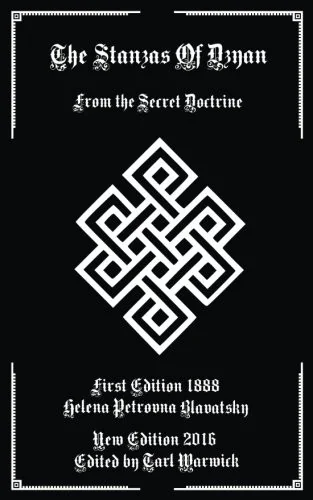
The Stanzas of Dzyan: From the Secret Doctrine
✍️ Blavatsky, HelenaHelena Blavatsky's enigmatic "Stanzas of Dzyan," unveiled within her *Secret Doctrine*, forms a foundational text for Theosophical thought. Allegedly derived from ancient Tibetan wisdom, these verses present a unique cosmic narrative. Though Blavatsky's personal credibility was debated, the Stanzas are a compelling fusion of esoteric concepts, deeply influenced by Buddhist and Eastern philosophies. This peculiar work remains a significant artifact in the evolution of modern occultism, offering a glimpse into the mystical underpinnings that shaped a new spiritual movement.


📝 Description: The Stanzas of Dzyan: From the Secret Doctrine
💎 Expert review
📖 Why choose it
Why this book is worth reading
Readers seeking to understand the mystical underpinnings of new spiritual movements will find this text indispensable. It offers a unique cosmic narrative allegedly derived from ancient Tibetan wisdom, appealing to those fascinated by the fusion of esoteric ideas and Eastern philosophy. Although its credibility was debated, the Stanzas remain a compelling artifact for scholars and enthusiasts exploring the historical development of Theosophy. This book is ideal for individuals eager to unearth ancient whispers of creation and delve into the cryptic verses that shaped a significant spiritual movement. It provides a deep dive into the allegorical traditions that continue to influence contemporary occult thought.
⭐ Reader reviews
Reader rating
This enigmatic volume stands as a pivotal artifact in Theosophical history, presenting a dense cosmic narrative rooted in alleged ancient Tibetan wisdom. While it offers a fascinating glimpse into the mystical synthesis of Buddhist and Eastern philosophies, its cryptic nature may alienate casual readers. It is not suited for those seeking straightforward historical accounts or empirical evidence, given the debated credibility of Blavatsky herself. However, for dedicated students of esoteric traditions, the text provides invaluable insight into the evolution of modern occultism. Readers expecting clear, accessible prose will likely find it frustrating, but those willing to navigate its complexity will discover a profound, albeit peculiar, window into the spiritual currents that shaped contemporary Theosophical thought.
❓ Frequently asked questions
📖 Who should read this
If you're drawn to the origins of modern esotericism, curious about the mystical roots of Theosophy, or simply captivated by ancient cosmic narratives, this seminal work invites deep contemplation. Prepare for a journey into the philosophical bedrock of a significant spiritual movement.
🎯 Key themes and symbolism
Ancient Origins & Wisdom
The Stanzas claim roots in an ancient, hidden Tibetan tradition, presenting a cosmology purportedly predating recorded history. This theme explores the allure of rediscovered wisdom and the idea of a universal, primordial spiritual knowledge that influenced early esoteric movements.
Cosmic Evolution & Esotericism
At its core, this work outlines a complex, symbolic account of universal creation and evolution. It delves into the processes by which consciousness and matter manifest, offering a framework for understanding cosmic cycles and the interconnectedness of all existence within a spiritual context.
Foundations of Theosophical Thought
Serving as a cornerstone for Blavatsky's Theosophy, these verses articulate fundamental principles of the movement, including reincarnation, karma, and the spiritual ascent of humanity. They provided a mystical narrative that helped define and shape this influential late 19th-century esoteric philosophy.
📜 Historical context
📚 Glossary
- Dzyan
- Theosophy
- Esoteric
📔 Questions to reflect on
- How do the concepts presented in the Stanzas resonate with or challenge your existing understanding of cosmic origins and spiritual evolution?
- Reflect on the idea of "ancient wisdom" and its role in modern spiritual movements. What responsibilities come with interpreting or channeling such knowledge?
- Consider the interplay between Eastern philosophies and Western occultism as exemplified by this work. How might this cross-cultural exchange enrich or complicate spiritual understanding?