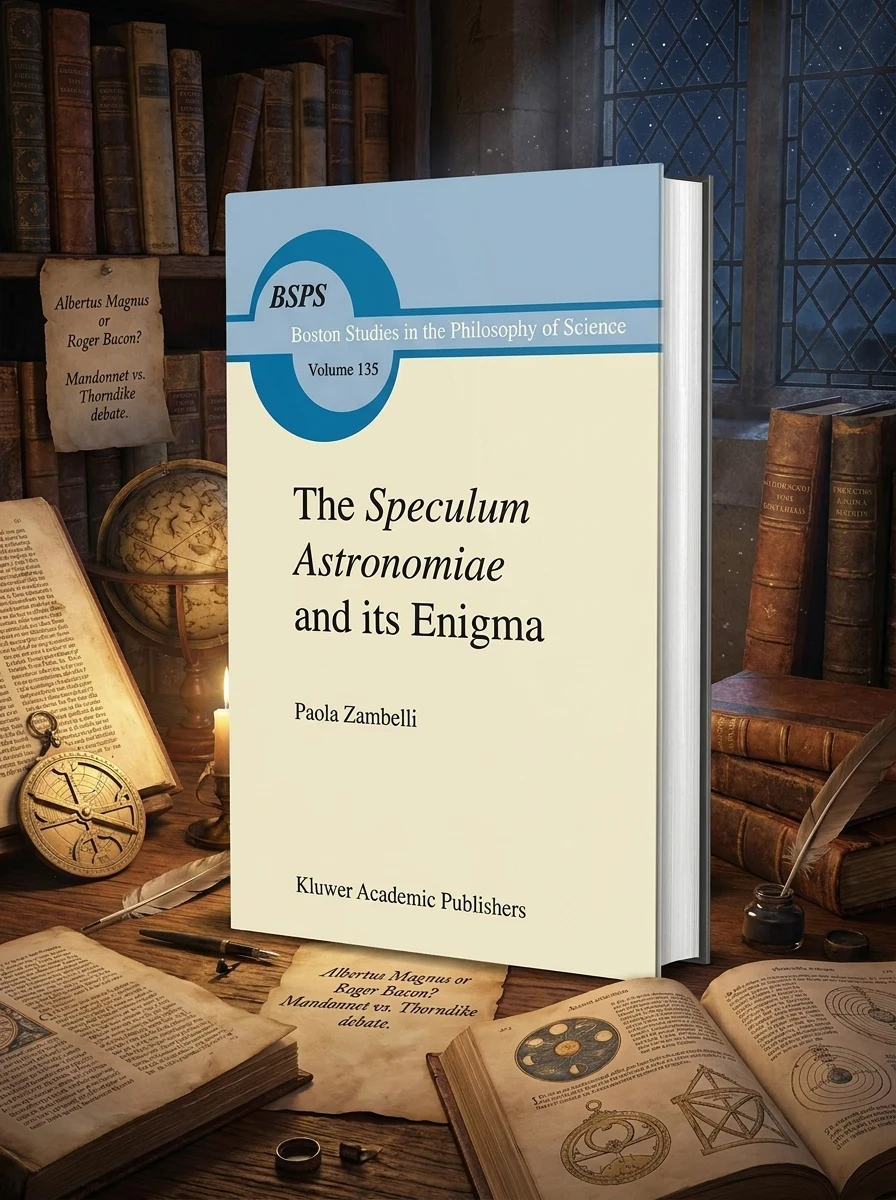
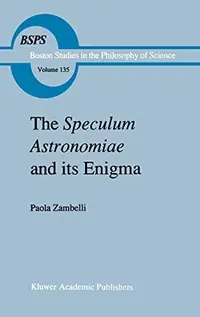
The Speculum Astronomiae and Its Enigma: Astrology, Theology and Science in Albertus Magnus and His Contemporaries (1992) Zambelli, P
 87
87
 Editorial score
How we rate
Editorial score
How we rate
Stock reported in the catalog; fulfillment is confirmed with your request.
Unravel the medieval mystery surrounding a foundational astrological text and its true author.
Paola Zambelli meticulously dissects the enduring scholarly debate surrounding the *Speculum Astronomiae*, a pivotal medieval work on celestial influence. This book scrutinizes the conflicting attributions to Albertus Magnus and Roger Bacon, ignited by Mandonnet and fiercely contested by Thorndike. Drawing upon a rich tapestry of contemporary texts from Bonaventura, Aquinas, and others, Zambelli reveals how deeply embedded astrological concepts were within 13th-century scientific thought. Her work positions the *Speculum* not merely as a text, but as a lens through which to understand the era's complex synthesis of astrology, theology, and emerging science.
This work sits at the intersection of medieval intellectual history and the history of science, exploring how astrological concepts were deeply embedded within 13th-century theological and scientific thought. It addresses the scholarly debate surrounding the attribution of a pivotal text to Albertus Magnus or Roger Bacon.


📝 Description: The Speculum Astronomiae and Its Enigma: Astrology, Theology and Science in Albertus Magnus and His Contemporaries (1992) Zambelli, P
💎 Expert review
📖 Why choose it
Why this book is worth reading
Scholars and historians of science will find immense value in this meticulous dissection of the enduring debate surrounding the *Speculum Astronomiae*. Zambelli offers a vital lens for understanding how medieval thinkers synthesized astrology, theology, and emerging scientific inquiry. By examining contemporary texts from figures like Bonaventura and Aquinas, she reveals the complex intellectual fabric of the era. Readers interested in the origins of astrological theory within religious frameworks will appreciate this rigorous analysis. It is essential for those seeking to unravel the mystery of a foundational text's authorship and its broader implications for medieval cosmology.
⭐ Reader reviews
Reader rating
Zambelli delivers a dense, scholarly examination that is indispensable for specialists but potentially impenetrable for casual readers. The book focuses heavily on attribution debates and theological contexts rather than practical astrology or narrative history. It does not suit those seeking accessible introductions to medieval science or readers uninterested in the nuances of 13th-century intellectual disputes. While the analysis of figures like Albertus Magnus is thorough, the academic tone may alienate anyone looking for a lighter exploration of esoteric topics. This is a work of rigorous historiography, not popular history.
❓ Frequently asked questions
📖 Who should read this
If you are captivated by medieval intellectual history, the evolution of scientific thought, or the complex interplay between astrology and academic discourse, this rigorous scholarly inquiry offers profound insights into a pivotal era. Essential for historians of science, philosophy, and esotericism.
🎯 Key themes and symbolism
Authorship & Attribution Debate
Zambelli delves into the spirited scholarly dispute over who truly authored the *Speculum Astronomiae*. She traces the origins of the controversy, from Mandonnet's provocative claim for Roger Bacon to Lynn Thorndike's robust refutations, examining how these arguments shaped our understanding of the text and the intellectual landscape of the High Middle Ages. It's a fascinating case study in historical detective work.
Astrology's Medieval Role
This study highlights the pervasive and foundational role of astrology in medieval thought, demonstrating how celestial influences were considered integral to scientific and philosophical understanding. The *Speculum Astronomiae* itself is presented as a crucial text that codified these ideas, becoming a standard reference point. Zambelli shows how these concepts permeated the writings of influential thinkers like Thomas Aquinas and Bonaventura.
Science, Theology, & Stars
The book explores the intricate interconnections between natural philosophy, theology, and astrological principles in the 13th century. It illustrates how these disciplines were not disparate but deeply interwoven, forming a coherent worldview. The *Speculum* serves as a prime example of this synthesis, offering a theoretical and bibliographical introduction to a field where divine order, celestial mechanics, and earthly events were conceptually linked.
💬 Quotes from the book
“The persistent challenge to the *Speculum's* authorship reveals not merely a bibliographical puzzle, but a deeper fault line in medieval intellectual history.”
“To truly grasp medieval scientific thought, one must acknowledge the omnipresent framework of celestial influence, a concept the *Speculum* masterfully encapsulated.”
📜 Historical context
📚 Glossary
- Speculum Astronomiae
- Albertus Magnus
- Roger Bacon
📔 Questions to reflect on
- How might the differing attributions of the *Speculum Astronomiae* (Albertus vs. Bacon) shift our understanding of 13th-century intellectual priorities?
- Reflect on Zambelli's methodology: how does analyzing contemporary texts illuminate a historical scholarly debate more effectively than focusing solely on the disputed work?
- Consider the historical integration of astrology, theology, and science. What modern parallels exist where seemingly disparate fields are fundamentally interconnected?
🏛 Books from this publisher Springer
All books from this publisher →
You might also like
See more → 91
91
![The Instant Astrologer [With CD]](/img/the-instant-astrologer-with-cd-scene.webp) 91
91
 91
91
 91
91