

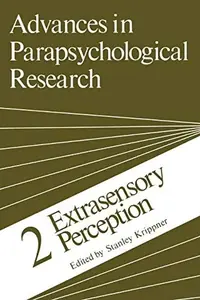
Advances in Parapsychological Research: 2 Extrasensory Perception (Softcover Reprint of the Original 1st 1978) Krippner, Stanley
Krippner, StanleyStock reported in the catalog; fulfillment is confirmed with your request.
Krippner curates vital essays charting the turbulent, promising evolution of ESP research into mainstream science.
This volume serves as the essential companion to its predecessor, offering a deep dive into the methodologies, empirical findings, and theoretical frameworks that define modern parapsychology. Contributors like Morris, Palmer, and Rao dissect the rapid expansion of experimental reports and the growing international infrastructure supporting psi studies. Together with the first volume, it provides a rigorous grounding in the field’s history and achievements. The text highlights a critical shift toward greater academic legitimacy and technological innovation, suggesting that parapsychology is finally bridging the gap with conventional science, potentially revolutionizing our understanding of the human organism and its place in the cosmos.
This volume emerges from the late 1970s academic landscape, marking a pivotal moment when parapsychology sought to shed its fringe status and establish rigorous empirical credentials within mainstream scientific discourse. It represents a bridge between esoteric curiosity and formalized psychological research during a period of significant institutional expansion for psi studies.


📝 Description: Advances in Parapsychological Research: 2 Extrasensory Perception (Softcover Reprint of the Original 1st 1978) Krippner, Stanley
💎 Expert review
📖 Why choose it
Why this book is worth reading
This book is an indispensable resource for serious scholars, researchers, and dedicated practitioners who view parapsychology not as mere fantasy, but as a legitimate field of empirical inquiry. Readers seeking to understand the methodological evolution of ESP research will find Krippner’s curation vital for grasping how experimental reports and international infrastructure have matured into a cohesive scientific discipline. It offers a rigorous grounding in the history and achievements of the field, appealing to those interested in the intersection of consciousness studies and conventional science. If you are committed to exploring the technological innovations and theoretical frameworks that define modern parapsychology, this text provides the essential academic backbone necessary for deep engagement with the subject.
⭐ Reader reviews
Reader rating
Needed this for my research. Some sections stopped me cold in the best way. There's real depth here that reveals itself on a second reading. My only quibble is the cover feels thinner than expected.
Arrived faster than expected and well packaged. Plenty of passages worth underlining; my copy is already full of margin notes. Great value for what you get.
My third book from this store and this one might be the best. There's real depth here that reveals itself on a second reading. I'd have loved an index, but that's on the original text. Good, with the caveats above.
Took a chance on this and glad I did. I appreciated how the argument builds steadily from first principles. Some chapters demand a slow, careful read, and that's exactly the point. The font runs small in the appendices. Recommended with reservations.
This has been on my wishlist for months. Not a light read, but far more accessible than I feared. One of my better finds this year.
Was skeptical at first. Challenging in places, but never needlessly obscure. Definitely recommend.
Krippner’s compilation serves as a robust academic companion, offering a dense yet rewarding exploration of ESP methodologies and empirical findings. It is particularly valuable for those interested in the institutional history and scientific legitimization of psi studies. However, this volume does not suit casual readers seeking accessible narratives or those expecting practical guides to harnessing psychic abilities. The text’s focus on theoretical frameworks and experimental data may alienate readers uncomfortable with dry academic prose or skeptical of parapsychology’s scientific validity. It is best approached by those willing to engage with complex arguments regarding the human organism's place in the cosmos through a strictly empirical lens.
❓ Frequently asked questions
📖 Who should read this
Researchers, skeptics seeking empirical data, and occultists interested in the scientific validation of psychic phenomena. It is ideal for those who want to move beyond anecdote into the structured, experimental history of ESP.
🎯 Key themes and symbolism
Methodological rigor in psi studies
Internationalization of research centers
Integration with mainstream biology
💬 Quotes from the book
“Work in parapsychology is moving toward a broader disciplinary base... promising signs of a rapprochement between parapsychological research and the mainstream of science.”
“Parapsychology will lead the way to a new view of the biological organism, one going beyond mechanism to 'a new vision of the human being.'”
📜 Historical context
📚 Glossary
- Psi
- Rapprochement
- Disciplinary base
📔 Questions to reflect on
- How does the increasing technological sophistication of psi research challenge your previous assumptions about the limits of human perception?
- In what ways might the 'rapprochement' between parapsychology and mainstream science alter the cultural perception of the mind-body connection?
- Reflect on the idea of a 'new vision of the human being.' What specific biological or spiritual aspects do you believe are currently ignored by mechanistic science?
✍️ More books by this author Krippner, Stanley
All books by this author →
🏛 Books from this publisher Springer
All books from this publisher →



You might also like
See more →





 91
91