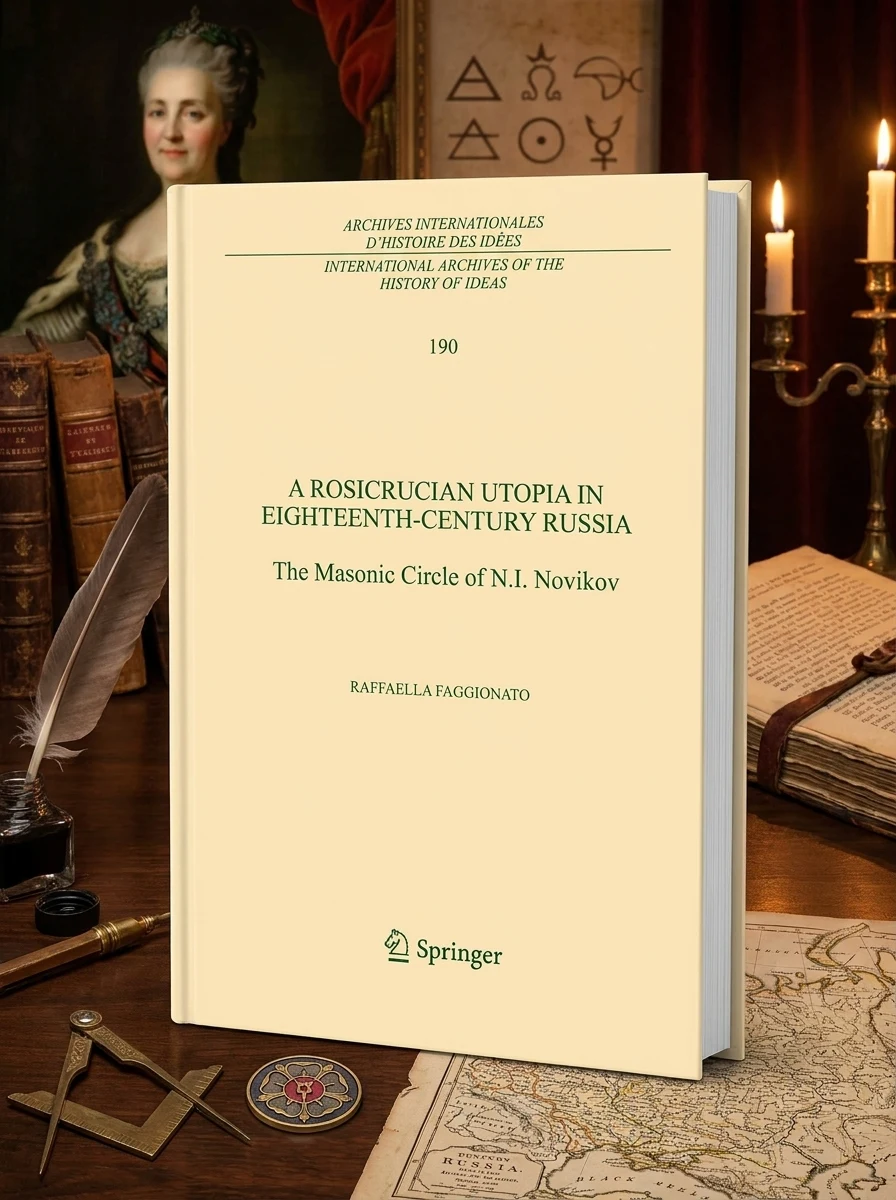
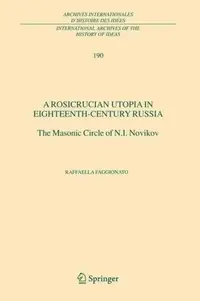
A Rosicrucian Utopia in Eighteenth-Century Russia: The Masonic Circle of N.I. Novikov (2005) Faggionato, Raffaella
 82
82
 Editorial score
How we rate
Editorial score
How we rate
Stock reported in the catalog; fulfillment is confirmed with your request.
Novikov's Moscow circle blended Rosicrucian ideals with political dissent, reshaping Russian esoteric history.
This groundbreaking study challenges Western-centric frameworks to reveal the unique trajectory of Russian Freemasonry. Faggionato meticulously traces the emergence of early Masonic lodges and the pivotal formation of Nikolai Novikov’s circle in Moscow. The text explores how Rosicrucian principles adapted into a distinct Russian variant, serving not merely as spiritual practice but as a vehicle for ethical and political discourse. By examining the eventual collision between these esoteric groups and the autocratic state, the author illuminates a previously overlooked dimension of the Russian Enlightenment, offering a nuanced portrait of intellectual resistance and mystical synthesis.
This scholarly work situates itself within the historiography of the Russian Enlightenment and esoteric sociology, challenging Western-centric narratives of Masonic history. It explores the intersection of mysticism and political dissent in eighteenth-century Russia during the rise of autocratic state power.


📝 Description: A Rosicrucian Utopia in Eighteenth-Century Russia: The Masonic Circle of N.I. Novikov (2005) Faggionato, Raffaella
💎 Expert review
📖 Why choose it
Why this book is worth reading
Scholars of esoteric history and students of Russian intellectual culture will find immense value in this text, which dismantles Eurocentric assumptions about Masonic development. Readers interested in the complex interplay between mystical societies and political resistance will appreciate how Faggionato illuminates Nikolai Novikov’s Moscow circle as a site of ethical and political discourse. This book is essential for those seeking to understand the nuanced portrait of intellectual resistance against autocracy. It offers a fresh perspective on how Rosicrucian ideals adapted within a distinct Russian context, providing critical insights into the formation of early Masonic lodges and their collision with state authority. For anyone dedicated to uncovering overlooked dimensions of the Enlightenment, this study serves as an indispensable resource.
⭐ Reader reviews
Reader rating
Faggionato delivers a rigorous academic analysis that successfully recontextualizes Russian Freemasonry beyond Western frameworks. The text is dense with historical detail regarding Novikov’s circle and its political undertones. However, readers seeking accessible popular history or general introductions to occultism may find the scholarly tone inaccessible and the focus on specific lodge formations overly technical. It is not suited for casual readers looking for mystical practices or biography; rather, it demands patience from those interested in structural historiography and the sociology of esoteric groups during the autocratic period.
❓ Frequently asked questions
📖 Who should read this
Scholars of Slavic history and esotericism, as well as readers interested in the intersection of mystical societies and political dissent in the eighteenth century.
🎯 Key themes and symbolism
Russian Freemasonry
Rosicrucian Adaptation
State vs. Esotericism
💬 Quotes from the book
“The Russian Enlightenment precludes the application of the interpretative framework commonly used for the history of western thought.”
“The clash between the Rosicrucians and the State marks a pivotal moment in the suppression of independent civic association.”
📜 Historical context
📚 Glossary
- Novikov Circle
- Rosicrucianism
- Russian Enlightenment
📔 Questions to reflect on
- How did the specific political climate of eighteenth-century Russia shape the ethical goals of its Freemasons?
- In what ways did Rosicrucian ideals serve as a covert language for political dissent?
- How does the 'Russian variant' of esotericism differ from its Western origins in terms of social function?
🏛 Books from this publisher Springer
All books from this publisher →


You might also like
See more →