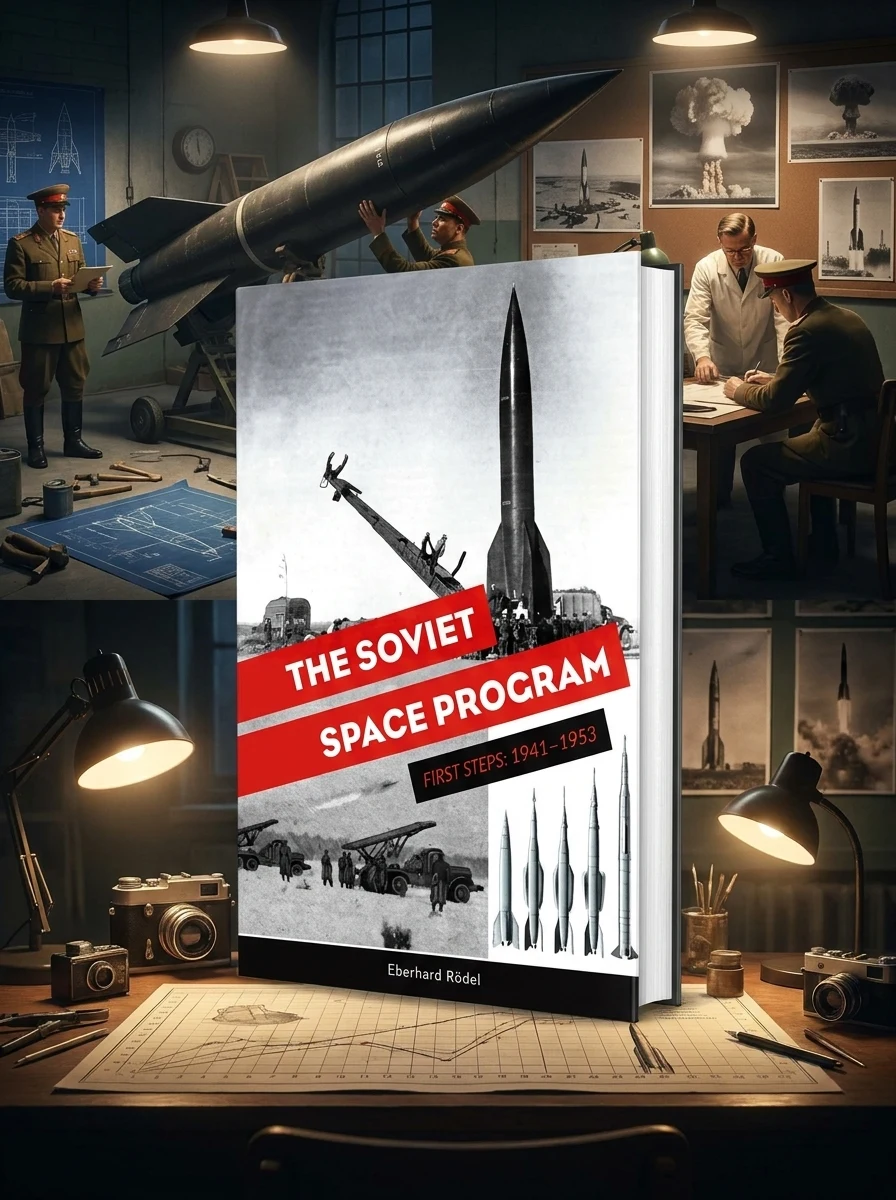
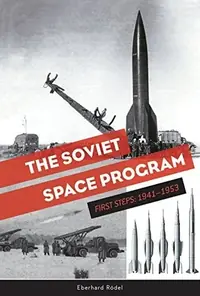
The Soviet Space Program: First Steps: 1941-1953 Rödel, Eberhard
This edition can be ordered. No arrival date is confirmed.
Uncover the dark origins of the Soviet space race through captured Nazi technology and nuclear urgency.
This volume illuminates the clandestine Soviet ascent into the cosmos, beginning with the stark realization that their rocketry lagged far behind German V-2 capabilities. As the atomic bombings of Japan demonstrated the necessity of missile delivery systems, Moscow accelerated its own nuclear and aerospace programs. Rödel traces this evolution from pre-war experiments to the meticulous reverse-engineering of Peenemünde’s artifacts. The narrative details the emergence of the R and G series missiles, revealing how military imperatives and the promise of peaceful orbital exploration intertwined to launch the space age.
This work situates itself within the historiography of Cold War technological espionage and the geopolitical race for nuclear deterrence during the early post-war period. It bridges the gap between military history and the nascent field of space exploration, highlighting the clandestine exchange of scientific knowledge amidst global tension.


📝 Description: The Soviet Space Program: First Steps: 1941-1953 Rödel, Eberhard
💎 Expert review
📖 Why choose it
Why this book is worth reading
Readers fascinated by the intersection of military strategy, scientific innovation, and Cold War intrigue will find this volume indispensable. It offers a compelling narrative for those interested in how the shadow of World War II directly shaped the future of space exploration. By detailing the reverse-engineering of Nazi technology, it provides insight into the urgent geopolitical pressures that drove the Soviet Union to accelerate its aerospace capabilities. This book is ideal for history buffs who appreciate the human and industrial effort behind monumental technological leaps, as well as those curious about the hidden connections between nuclear urgency and orbital ambition during a pivotal era of global transformation.
⭐ Reader reviews
Reader rating
Exactly what I was looking for. Solid binding, decent paper — holds up to heavy use. Not a light read, but far more accessible than I feared. A keeper.
Needed this for my research. The material is presented clearly and the structure makes it easy to revisit key passages. I found myself reading passages aloud just to sit with them. Definitely recommend.
This has been on my wishlist for months. Some sections stopped me cold in the best way. A text you study rather than simply read. Deserves a place on any esoteric bookshelf.
First purchase from this shop. Some sections stopped me cold in the best way.
Eberhard Rödel provides a rigorous account of the Soviet space program's origins, focusing heavily on the technical and political machinery that facilitated its rise. The narrative effectively connects the desperation of nuclear deterrence with the subsequent push for orbital dominance. However, readers seeking a romanticized or purely heroic tale of cosmonauts may find this focus on industrial reverse-engineering and military imperatives somewhat dry. It is strictly a history of technology and state policy, not a biography of individual astronauts. Those expecting dramatic personal anecdotes or philosophical musings on the cosmos might feel disconnected from the dense, factual presentation of missile development and captured artifacts.
❓ Frequently asked questions
📖 Who should read this
Readers fascinated by the intersection of military history, cold war espionage, and aerospace engineering will find this account of technological adaptation compelling and historically vital.
🎯 Key themes and symbolism
Reverse Engineering Legacy
The text explores how Soviet engineers dismantled and reconstructed V-2 components, transforming captured enemy technology into the foundation of their own ballistic capabilities.
Nuclear-Missile Nexus
It examines the strategic convergence of atomic warfare and rocketry, showing how the need for delivery systems drove rapid technological advancement.
Dual-Use Ambitions
The work analyzes the shift from purely military applications to the ideological push for peaceful space exploration, reflecting Soviet propaganda and scientific goals.
💬 Quotes from the book
“The path forward became clear: the development of a Soviet atomic bomb, and a suitable missile to carry it.”
“Soviet rocket experts examined the first Nazi V-2s... realizing their own technology was years behind.”
📜 Historical context
📚 Glossary
- Peenemünde
- R and G Series
- V-2 Rocket
📔 Questions to reflect on
- How does the theft of technology reshape a nation's scientific identity?
- In what ways does military necessity accelerate peaceful innovation?
- What ethical dilemmas arise from building future programs on captured enemy assets?
🏛 Books from this publisher Schiffer Publishing
All books from this publisher →
 89
89







You might also like
See more →


 91
91
 91
91