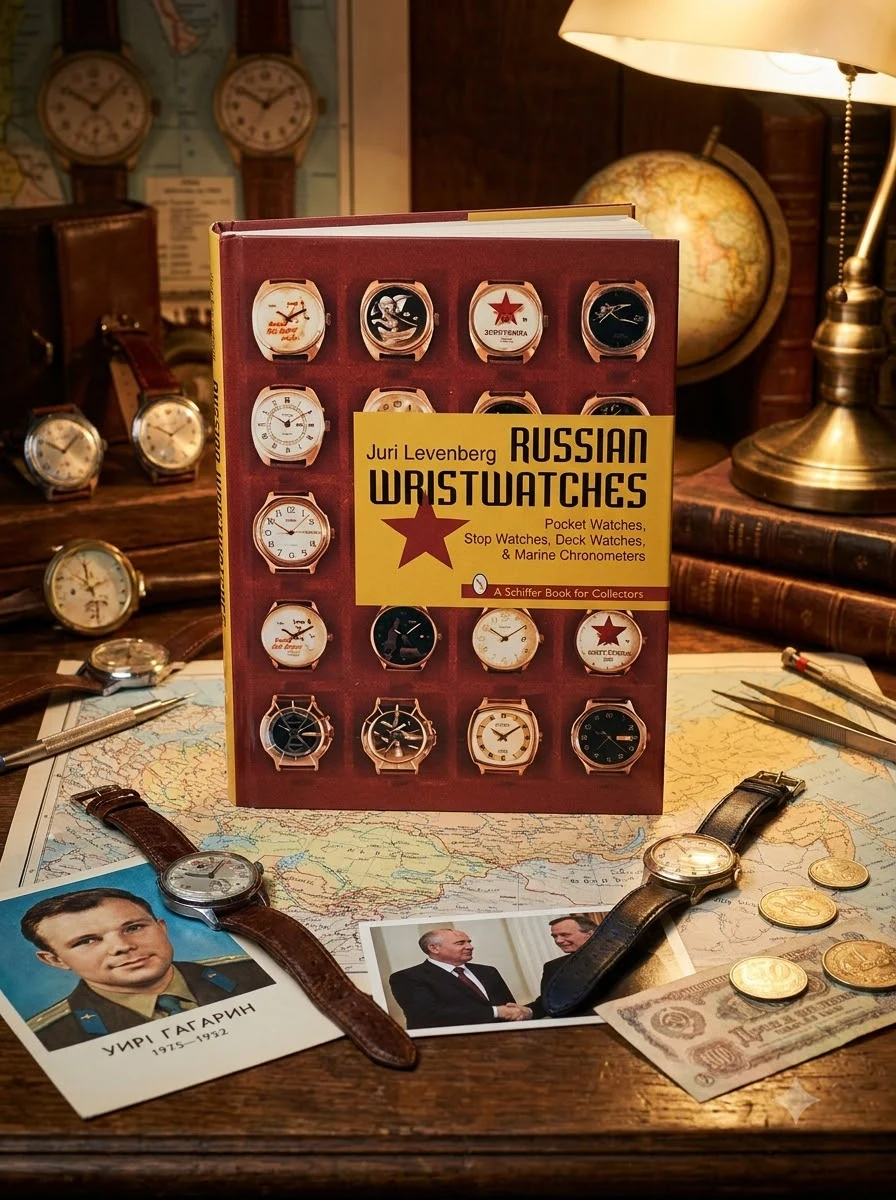

Russian Wristwatches: Pocket Watches, Stop Watches, Onboard Clock & Chronometers Levenberg, Juri
This edition can be ordered. No arrival date is confirmed.
Unearth Soviet horology's hidden gem: affordable history on your wrist.
For decades, Western collectors have sought a definitive guide to Soviet-era timepieces, and this volume delivers with authority. It chronicles the evolution of Russian watchmaking from the mid-twentieth century, offering detailed visual and technical analysis of over five hundred examples. You will explore the intricate mechanisms and aesthetic shifts of iconic brands like Poljot and Wostok, alongside rare marine chronometers. Each entry contextualizes the watch within broader cultural and political milestones, transforming mere horology into a tangible archive of geopolitical history.
This work sits at the intersection of specialized horological history and Soviet cultural archives, bridging the gap between mechanical engineering studies and geopolitical analysis. It reflects a growing scholarly interest in material culture as a lens for understanding mid-twentieth-century Eastern Bloc society.


📝 Description: Russian Wristwatches: Pocket Watches, Stop Watches, Onboard Clock & Chronometers Levenberg, Juri
💎 Expert review
📖 Why choose it
Why this book is worth reading
This volume serves as the definitive resource for Western collectors who have long sought an authoritative guide to Soviet-era timepieces. It is essential for those interested in the intricate mechanisms and aesthetic shifts of brands like Poljot and Wostok, offering detailed visual analysis of over five hundred examples. Readers will appreciate how each entry contextualizes watches within broader cultural and political milestones, transforming mere horology into a tangible archive of geopolitical history. For enthusiasts of affordable history on your wrist, this book unearths the hidden gems of Soviet horology with remarkable depth. It appeals to anyone wanting to understand the evolution of Russian watchmaking from the mid-twentieth century through technical precision and historical narrative.
⭐ Reader reviews
Reader rating
Ordered this after seeing it referenced in another book I was studying. Some sections stopped me cold in the best way. The symbolism is layered and generous to patient readers. Already eyeing my next order.
This edition finally does the material justice. The material is presented clearly and the structure makes it easy to revisit key passages. Shipping was quick too.
Added this to my reference shelf. A text you study rather than simply read. There's real depth here that reveals itself on a second reading. A keeper.
Bought this as a gift for my sister and ended up ordering a second copy for myself. It's become a regular reference in my practice. The print is clean and easy on the eyes for long sessions. Deserves a place on any esoteric bookshelf.
Levenberg delivers a comprehensive chronicle of Russian watchmaking, providing unparalleled visual and technical analysis for serious collectors. However, this book is not suited for casual readers seeking light entertainment or broad general history without specific interest in mechanical devices. It assumes a level of dedication to horological detail that may overwhelm those unfamiliar with terms like marine chronometers or onboard clocks. The text prioritizes technical accuracy and historical context over narrative flair, making it a dense but valuable reference. While it successfully transforms watch collecting into an exploration of geopolitical history, readers looking for simple biographies or non-technical appreciation may find the depth of mechanical analysis daunting rather than engaging.
❓ Frequently asked questions
📖 Who should read this
Dedicated horologists, Soviet history buffs, and vintage watch collectors seeking affordable, historically significant pieces with provenance and cultural depth.
🎯 Key themes and symbolism
Geopolitical Horology
The text meticulously maps watch designs to historical epochs, showing how state propaganda and scientific achievement were etched into dials. It treats these objects not just as tools, but as artifacts of ideological expression and national pride during the Cold War era.
Brand Identity Evolution
A deep dive into the technical lineage of Poljot, Wostok, and Slava, explaining how industrial policies shaped their movements. It clarifies the distinctions between civilian and military variants, providing collectors with the nuanced knowledge needed to authenticate and categorize these complex mechanical systems.
Cultural Iconography
The book analyzes the artistic choices on watch faces, from space race commemorations to ethnic folk costumes. It reveals how Soviet manufacturers used horology to broadcast cultural narratives, turning functional objects into portable museums of Soviet identity and international relations.
💬 Quotes from the book
“The dial becomes a canvas for state memory, freezing political triumphs in enamel and steel.”
“From Gagarin's orbit to the summit meetings, every tick records a geopolitical shift.”
📜 Historical context
📚 Glossary
- Poljot
- Deck Watch
- Soviet Surplus
📔 Questions to reflect on
- How does the material culture of timekeeping reflect the ideological priorities of a regime?
- Which Soviet historical event do you feel is most underrepresented in popular horological history?
- In what ways do the aesthetic choices of Wostok differ from those of Poljot?
🏛 Books from this publisher Schiffer Publishing
All books from this publisher →
 89
89







You might also like
See more →


 91
91
 91
91