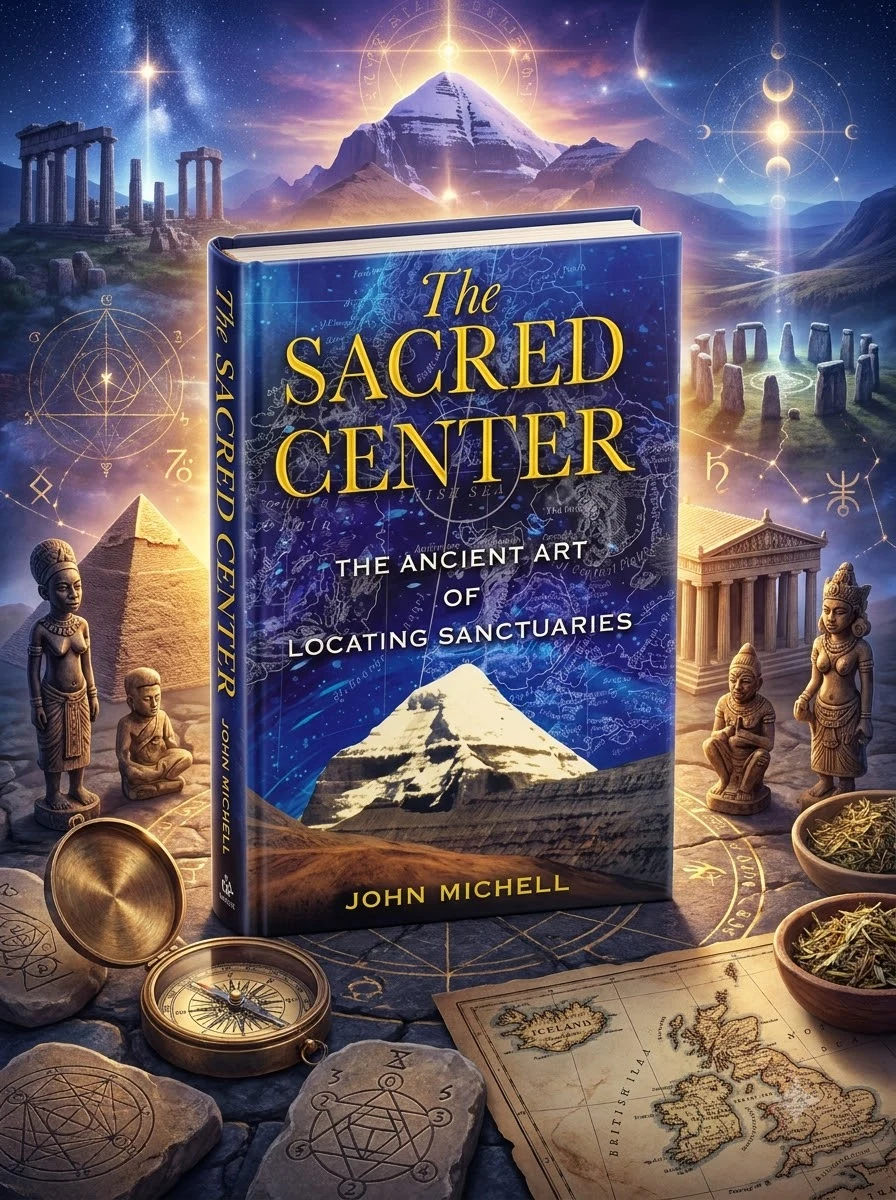
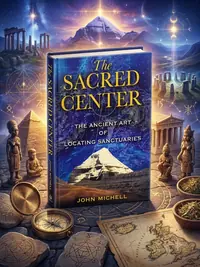
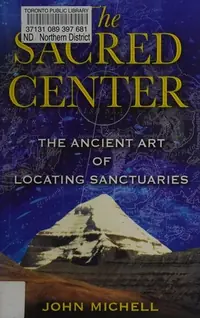
The Sacred Center: The Ancient Art of Locating Sanctuaries
Michell, John

This edition can be ordered. No arrival date is confirmed.
Unearth the cosmic blueprints embedded within the world's most revered ancient sites.
John Michell embarks on a captivating journey through the ancient art of consecrating sacred ground, revealing the profound symbolism and energetic power inherent in these locations. He meticulously uncovers the underlying principles that guided ancient civilizations in establishing their spiritual and territorial hubs. From the hallowed navel stones of Greece to the mystical centers of the British Isles, Michell demonstrates how these sites were not merely chosen but meticulously engineered according to a cosmic order, reflecting heavenly patterns on earth through precise number and geometry. This work illuminates the enduring human need for ritual centers, past and present.
Rooted in the tradition of sacred geometry and ley line theory popularized in the mid-20th century, this work explores the esoteric connection between terrestrial landmarks and celestial patterns. It sits within the broader occult philosophy movement that seeks to decode ancient spiritual engineering through mathematical precision.


📝 Description: The Sacred Center: The Ancient Art of Locating Sanctuaries
💎 Expert review
📖 Why choose it
Why this book is worth reading
This book is ideal for seekers drawn to the hidden architecture of history and those fascinated by the intersection of astronomy, geometry, and spirituality. Readers who enjoy uncovering the 'cosmic blueprints' behind ancient monuments will find Michell’s meticulous analysis deeply rewarding. It appeals to individuals interested in how past civilizations engineered their spiritual hubs to reflect heavenly patterns on earth. If you value understanding the energetic power and profound symbolism embedded in revered sites, from Greek navel stones to British Isles centers, this text offers a captivating journey into the ancient art of consecration. It satisfies the enduring human need for ritual centers by revealing the precise number systems that guided their creation.
⭐ Reader reviews
Reader rating
Michell presents a compelling, albeit niche, argument regarding the cosmic order behind sacred sites. While his enthusiasm is infectious and his geometric insights are detailed, this work demands patience from readers seeking rigorous academic archaeology. It may frustrate those preferring conventional historical narratives over esoteric interpretations of territorial hubs. However, for enthusiasts of alternative history who appreciate the aesthetic of sacred geometry, the exploration of ancient consecration techniques offers a unique perspective. The book succeeds in illuminating the symbolic weight of these locations, though its specific metaphysical claims require an open mind and interest in non-mainstream occult philosophy to fully appreciate.
❓ Frequently asked questions
📖 Who should read this
If you're drawn to the mysteries of ancient civilizations, the esoteric power of place, or the profound links between number, geometry, and belief, this book offers a compelling exploration into the very heart of sacred geography and human spirituality.
🎯 Key themes and symbolism
Sacred Site Geometry
Michell delves into the intricate numerical and geometric codes that underpin the placement and design of ancient sanctuaries. He shows how these patterns were not arbitrary but deliberate attempts to mirror celestial harmony on terrestrial landscapes, creating powerful focal points for spiritual and communal life, often based on ideal social structures.
Ancient Center Significance
This book explores the profound meaning behind ancient 'generation centers' — sacred heartlands believed to be the genesis points of cultures. It highlights the role of the 'omphalos' or navel stone, positioned at the core of these sanctuaries, symbolizing the world's axis and connecting the earthly realm with the cosmic order.
Ritual and Community
Michell emphasizes the vital function of ritual centers in fostering social cohesion and spiritual well-being. He explains how these sites hosted perpetual cycles of ceremonies and festivals, enchanting communities with a sense of a 'golden age' and anchoring their collective identity within a sacred landscape.
💬 Quotes from the book
“The very act of placing a stone, aligned with stellar patterns and terrestrial currents, transformed a mere location into a living nexus of cosmic energy.”
“Through perpetual cycles of ritual, these sacred hearts of the land wove an unbroken tapestry, binding communities to their mythical origins and the rhythms of the cosmos.”
📜 Historical context
📚 Glossary
- Omphalos
- Generation Center
- World-pole
📔 Questions to reflect on
- How might the concept of a 'sacred center' manifest in your own life or community today, beyond traditional religious sites?
- Reflect on a place you've visited that felt inherently powerful or 'sacred.' What qualities did it possess, and how might Michell's ideas explain your experience?
- Consider how the integration of art, science, and spirituality, as seen in ancient site design, contrasts with modern urban planning. What might we learn from it?
✍️ More books by this author Michell, John
All books by this author →
🏛 Books from this publisher Inner Traditions International
All books from this publisher →


You might also like
See more →