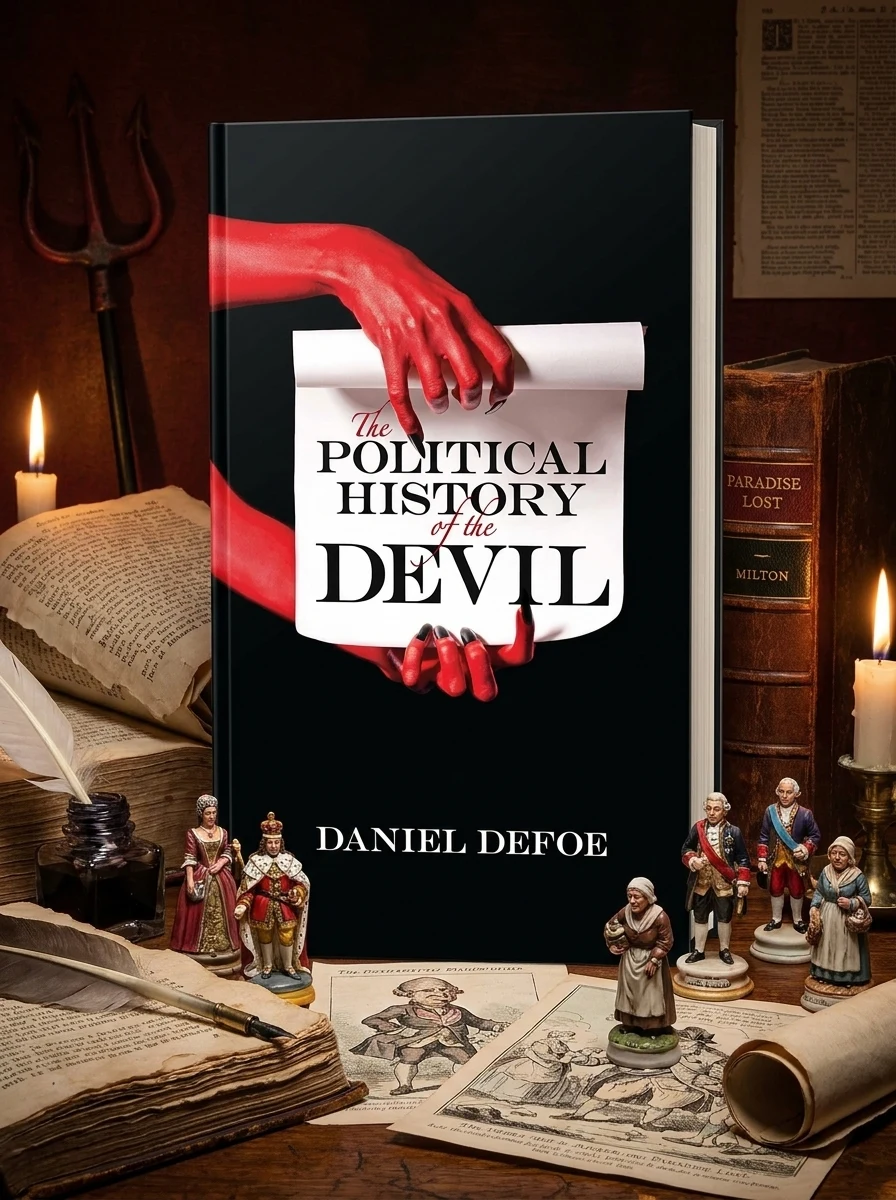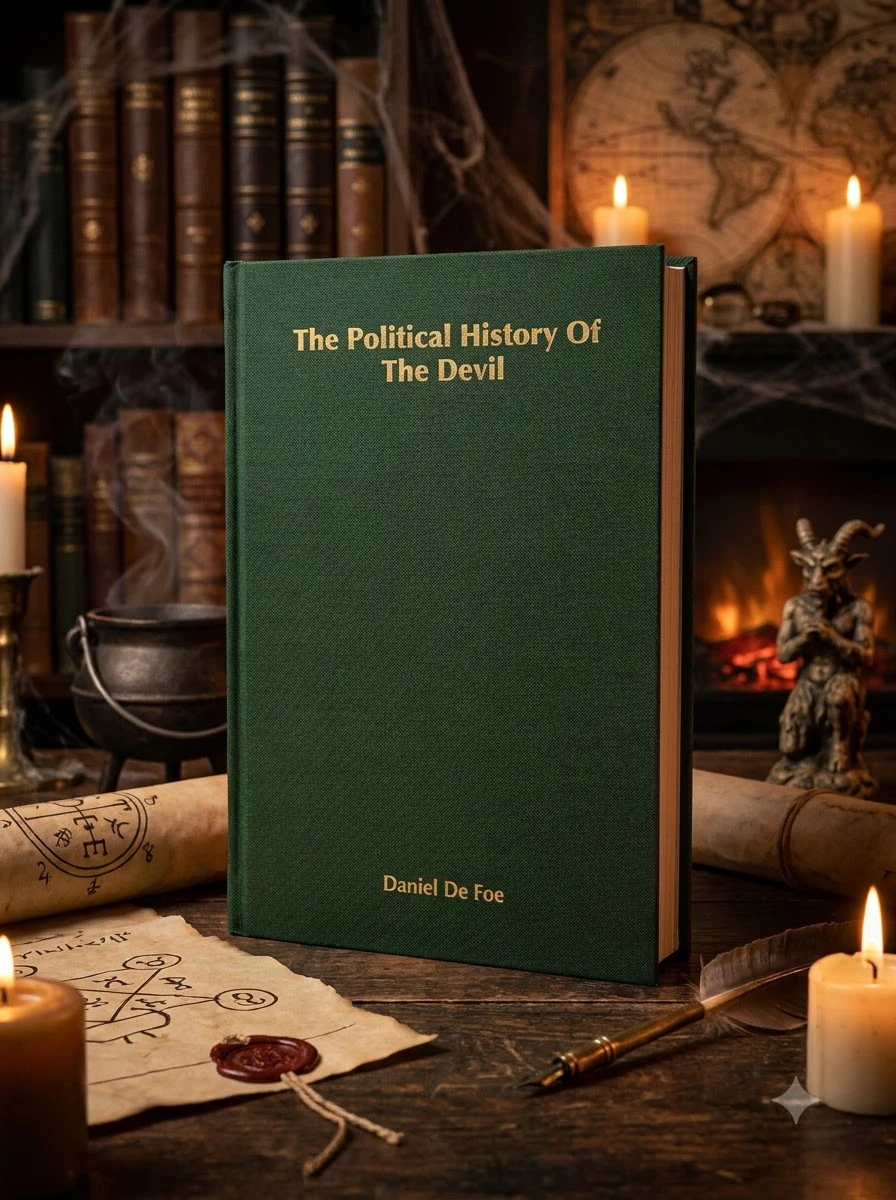
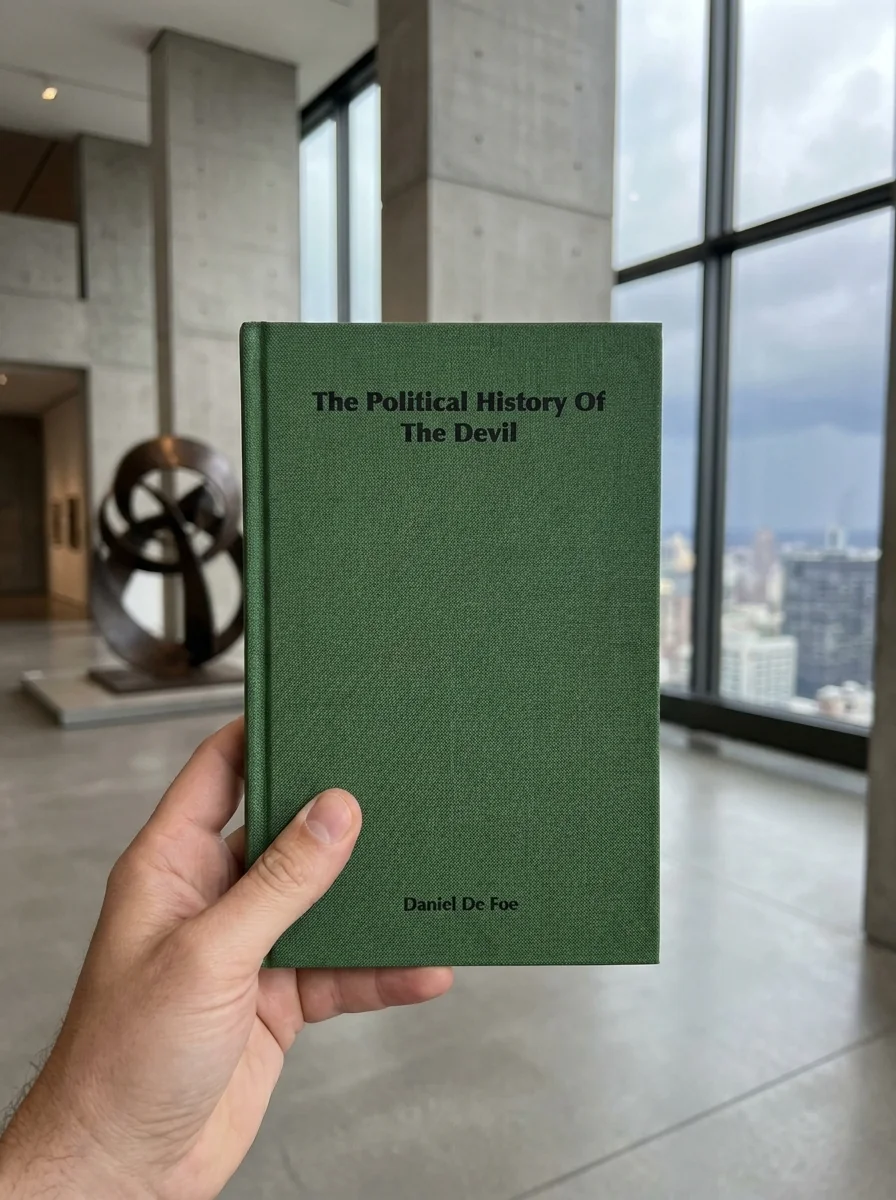

The Political History of the Devil
✍️ Defoe, DanielAn antiquarian treatise by Daniel Defoe examining the historical and political presence of the Devil.
This 496-page paperback volume provides a historical study on the entity known as the Devil, framing the figure as the tyrant of the air and god of the world. Published by Hesperides Press on November 17, 2006, the work approaches its subject through the lenses of political science and general biography. Author Daniel Defoe outlines the entity's influence on human history, examining how this aversion of mankind shapes global affairs. Readers gain an antiquarian perspective on early political demonology.
This work by Daniel Defoe sits within the tradition of antiquarian treatises on the Devil, published in this paperback format by Hesperides Press on November 17, 2006.


📝 Description: The Political History of the Devil
💎 Expert review
📖 Why choose it
Why this book is worth reading
Readers fascinated by the intersection of theology, history, and political theory will find this book profoundly rewarding. It offers a refreshing departure from standard religious texts by treating the Devil not as a mere spiritual symbol, but as a tangible political actor influencing human folly. Those who appreciate Daniel Defoe’s sharp wit and unconventional narrative structures will enjoy his meticulous 'biography' of evil. This text is ideal for those seeking to understand how ancient antagonists are framed within modern analytical frameworks, providing a compelling look at power dynamics without the burden of traditional dogma.
⭐ Reader reviews
Reader rating
While intellectually stimulating, this volume may frustrate readers seeking conventional theological instruction or straightforward historical records. It does not suit those who prefer literal interpretations of religious texts or expect a traditional narrative arc. The work demands an openness to Defoe’s satirical and analytical approach, which prioritizes political allegory over spiritual doctrine. Readers looking for easy answers about good versus evil might find the secular, strategic portrayal of Satan confusing or overly abstract. However, for those willing to engage with its unique perspective on the 'infernal architect,' it remains a thought-provoking exploration of human power struggles.
❓ Frequently asked questions
📖 Who should read this
If you're fascinated by the intersection of history, political thought, and the enduring concept of evil, or seek a fresh, unconventional take on a familiar figure, Defoe's incisive analysis offers a truly unique intellectual journey. Essential for those who appreciate critical thought.
🎯 Key themes and symbolism
Satan's Political Persona
Defoe explores how the Devil functions as a political entity, influencing governance and public affairs rather than purely spiritual matters. He dissects his strategies, showing how this 'god of the world' manipulates human ambition and societal structures to maintain his dominion, presenting a surprisingly pragmatic view of evil's operations within society and statecraft.
The Nature of Tyranny
The book positions the Devil as the ultimate archetype of tyranny. Defoe meticulously details how this 'terror of mankind' establishes and perpetuates his rule through deception, fear, and the exploitation of human flaws. This serves as a thinly veiled, yet potent, critique of earthly despots and oppressive systems, making the infernal a mirror for human power.
Secularizing Evil
Unlike traditional religious texts, Defoe largely divorces the Devil from strict theological interpretation. He positions him as a historical and psychological force, a personification of destructive tendencies inherent in human society. This offers a rationalistic, Enlightenment-era examination of a traditionally supernatural figure, viewing evil through a human-centric lens.
📜 Historical context
📚 Glossary
- Antiquarian
- Esoteric
- Tyrant
📔 Questions to reflect on
- How might Defoe's 'political' view of the Devil influence your understanding of current world events or power dynamics?
- Consider a historical figure or event: how could Defoe's framework explain the 'devilish' aspects at play in its unfolding?
- If the Devil is a 'tyrant of the air,' what modern 'airs' or invisible forces might he now inhabit in our contemporary society?