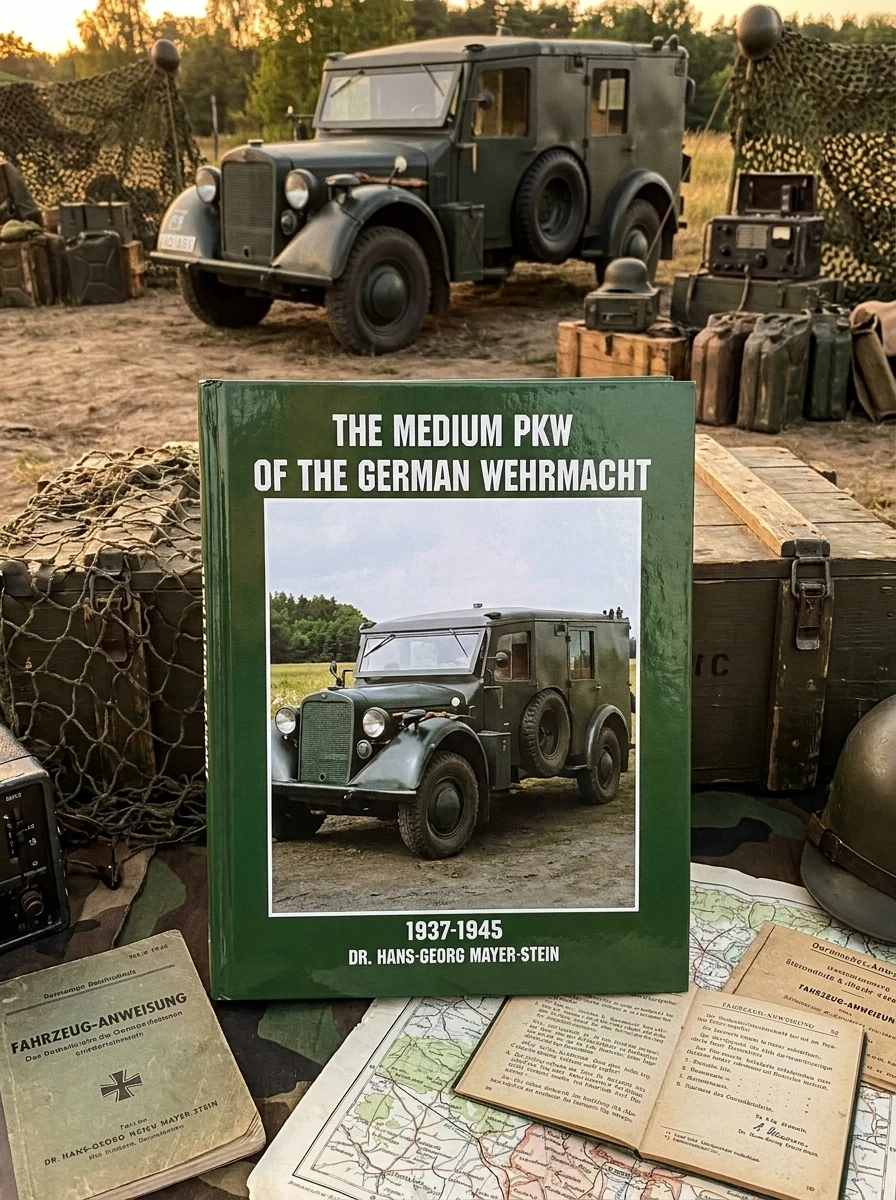
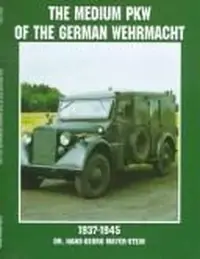
The Medium Pkw of the German Wehrmacht 1937-1945 Mayer-Stein, Hans-Georg
This edition can be ordered. No arrival date is confirmed.
A photographic archive of the Wehrmacht's vital medium transport vehicles from 1937 to 1945.
This volume serves as a meticulous visual and textual record of the German Wehrmacht's medium passenger cars, a critical yet often overlooked component of Axis logistics. Through extensive photography and detailed descriptions, the author catalogs the engineering specifics, operational roles, and mechanical evolution of these vehicles throughout the war years. It is not a narrative of combat, but a technical compendium that preserves the material history of military mobility, offering precise insights into the hardware that sustained the front lines.
This work belongs to the niche tradition of specialized military technical history, focusing on material culture and logistical infrastructure rather than strategic narratives. It documents the engineering evolution of Axis vehicles during the mid-20th century conflict.


📝 Description: The Medium Pkw of the German Wehrmacht 1937-1945 Mayer-Stein, Hans-Georg
💎 Expert review
📖 Why choose it
Why this book is worth reading
This volume is a treasure trove for the serious enthusiast of World War II logistics and automotive engineering. If you are fascinated by the intricate details of how armies moved, rather than just who fought whom, this book offers an unparalleled deep dive into the medium passenger cars that sustained the front lines. The extensive photographic archive provides a rare visual record of these often-overlooked vital transport vehicles. It is perfect for modelers seeking accuracy, historians studying Axis supply chains, or anyone with a passion for mechanical history. By focusing on engineering specifics and operational roles, it preserves the material reality of military mobility in a way that broad narratives cannot. It is essential for building a comprehensive understanding of the hardware that kept the Wehrmacht functioning.
⭐ Reader reviews
Reader rating
This exceeded my expectations. Some chapters demand a slow, careful read, and that's exactly the point. The historical context alone makes it worth the price. Will be gifting a copy to a friend.
This text serves as a meticulous technical compendium rather than an engaging narrative history. Readers seeking dramatic combat stories or biographical accounts will find it dry and uninspiring. It is strictly for those interested in mechanical evolution, logistical frameworks, and precise engineering data. The lack of narrative arc may alienate casual readers, but specialists will appreciate the rigorous documentation of medium passenger cars. It is a reference work first and foremost, demanding patience for its detailed descriptions. While not suitable for general audiences, it stands as a vital resource for understanding the material history of military mobility during the war years.
❓ Frequently asked questions
📖 Who should read this
Dedicated to military historians, scale modelers requiring accurate reference photos, and engineers interested in mid-century automotive design. It is essential for those who value technical precision over narrative drama in their study of World War II equipment.
🎯 Key themes and symbolism
Technical Specifications
The book delves deep into the mechanical heart of each vehicle, detailing engine types, chassis constructions, and armor modifications. It provides the exact data an engineer or modeler needs to understand the physical realities of these machines, separating myth from metal.
Logistical Infrastructure
By focusing on transport, the work highlights how the Wehrmacht maintained its vast armies. It illustrates the sheer scale of vehicle production and the critical role these medium cars played in connecting command centers with the chaotic reality of the battlefield.
Visual Documentation
Photographs are the primary source here, offering rare angles and close-ups of wear, tear, and adaptation. These images serve as historical evidence, capturing the vehicles in their operational environments rather than staged studio settings, preserving their authentic wartime condition.
💬 Quotes from the book
“The steel chassis bears the scars of the Eastern Front, a testament to endurance.”
“Every bolt and panel tells a story of industrial mobilization.”
📜 Historical context
📚 Glossary
- Wehrmacht
- PKW
- Schutzstaffel
📔 Questions to reflect on
- How does the design of military transport reflect the logistical priorities of a nation at war?
- What can the wear patterns on these vehicles reveal about the conditions of the front lines?
- In what ways does technical documentation preserve history more accurately than narrative accounts?
🏛 Books from this publisher Schiffer Publishing
All books from this publisher →
 89
89






You might also like
See more →




 91
91
 91
91