Free shipping over $49 Wide selection of books
👤 My Account
🕯️ Occult Philosophy

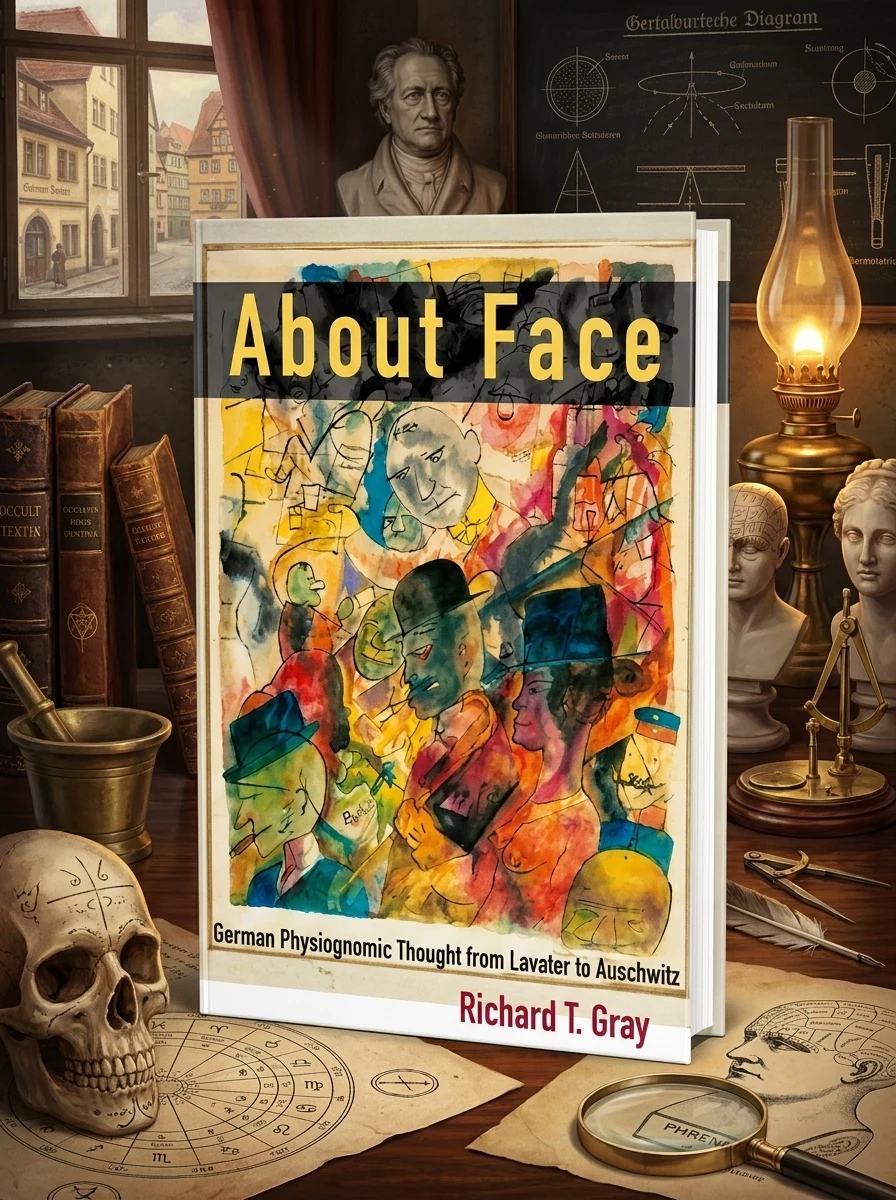
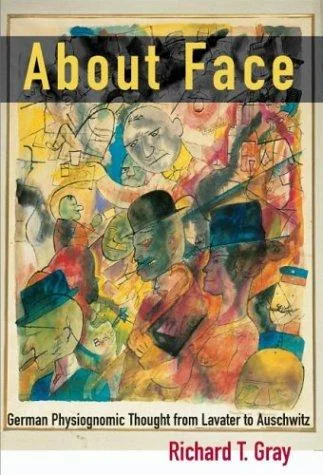
About Face: German Physiognomic Thought from Lavater to Auschwitz Gray, Richard T

✍️ Gray, Richard T
Reader Score
4.6
(2 reviews) 27 sold
$55.00
In stock — ready to ship
📚 WHAT THE BOOK IS ABOUT

Delve into the unsettling history of physiognomy, the practice of divining character from physical features. This compelling study charts its transformation from an ancient, often occult, art into an Enlightenment-era "science" championed by figures like Lavater. Richard T. Gray reveals how this once-benign pursuit, initially intended to foster connection, tragically morphed within German thought. It became a tool to codify "ideal" traits while labeling others as "deviant," providing a chilling pseudo-scientific basis for the racial and characterological prejudices that fueled the rise of Nazism.

🏛 Kritik: German Literary Theory and Cultural Studies Series 📅 2004 📖 453 pages 📔 Hardcover 📐 Hardcover ISBN: 9780814331798
Fun Fact
Richard T. Gray masterfully dissects the chilling transformation of physiognomy, demonstrating how intellectual curiosity can be twisted into ideological terror. This book excels in its meticulous historical tracing and incisive analysis, making it indispensable for scholars of German history, the Holocaust, and the history of science. Those seeking a light introduction to divination might find its academic rigor and dark subject matter challenging. It stands as a vital contribution to understanding the intellectual underpinnings of prejudice.

📝 Description: About Face: German Physiognomic Thought from Lavater to Auschwitz Gray, Richard T

Once associated with astrology and occultist prophecy, the art of interpreting personal character based on facial and other physical features dates back to antiquity. About Face tells the intriguing story of how physiognomics became particularly popular during the Enlightenment, no longer as a mere parlor game but as an empirically grounded discipline. The story expands to illuminate an entire tradition within German culture, stretching from Goethe to the rise of Nazism. In About Face, Richard T. Gray explores the dialectical reversal--from the occult to the scientific realm--that entered physiognomic thought in the late eighteenth century, beginning with the positivistic writings of the Swiss pastor Johann Caspar Lavater. Originally claimed to promote understanding and love, physiognomics devolved into a system aimed at valorizing a specific set of physical, moral, and emotional traits and stamping everything else as "deviant." This development not only reinforced racial, national, and characterological prejudices, but lent such beliefs a presumably scientific grounding. In the period following World War I, physiognomics experienced yet another, unprecedented boom in popularity. Gray explains how physiognomics had by then become a highly respected "super-discipline" that embraced many prominent strands of German thought: the Romantic philosophy of nature, the "life philosophy" propagated by Dilthey and Nietzsche, the cultural pessimism of Schopenhauer, Husserl's method of intuitive observation, Freudian psychoanalysis, and early-twentieth-century eugenics and racial biology. A rich exploration of German culture, About Face offers fresh insight into the intellectual climate that allowed the dangerous thinking of National Socialism to take hold.

💎 Expert review

💎
Esoterica Books editorial team
Occult literature desk
Gray delivers a rigorous academic analysis that may feel dense to casual readers seeking narrative flair. This book is not for those looking for light reading or practical self-help advice on body language. It is specifically tailored for academics and serious students of German history who appreciate theoretical depth over accessibility. Readers expecting a straightforward biographical account of Lavater may find the focus on broader cultural shifts tedious. However, for those willing to engage with complex literary theory and historical critique, it offers indispensable insights into the mechanisms of prejudice and the tragic trajectory of scientific inquiry when corrupted by political agendas.
✓ EDITOR'S REVIEW

📖 Why choose it

📖

Why this book is worth reading

Readers interested in the dark undercurrents of intellectual history will find profound value in this study. It offers a crucial examination of how benign intentions can curdle into dangerous ideologies when wrapped in the guise of science. Those seeking to understand the roots of Nazi pseudo-science and the manipulation of facial features as political tools will gain essential context. The book serves as a warning about the ease with which cultural prejudices become codified. It is ideal for historians, sociologists, and anyone concerned with how knowledge systems can be weaponized against marginalized groups. By tracing the lineage from Lavater to Auschwitz, it provides a sobering perspective on the responsibility of scholars and the dangers of unexamined assumptions in cultural studies.

⭐ Reader reviews

The starting rating comes from the team Esoterica Books —
⭐ Esoterica editorial review Editorial rating 4.6/5
★★★★
If you're fascinated by the intersection of history, pseudo-science, and the darker aspects of human thought, this book is essential. It offers a profound look at how seemingly innocent ideas can be twisted into instruments of oppression, challenging your perceptions of categorization and prejudice.

Reader rating

4.6
Based on 1 reviews
5
0
4
1
3
0
2
0
1
0
E
Esoterica Books editorial team

Gray delivers a rigorous academic analysis that may feel dense to casual readers seeking narrative flair. This book is not for those looking for light reading or practical self-help advice on body language. It is specifically tailored for academics and serious students of German history who appreciate theoretical depth over accessibility. Readers expecting a straightforward biographical account of Lavater may find the focus on broader cultural shifts tedious. However, for those willing to engage with complex literary theory and historical critique, it offers indispensable insights into the mechanisms of prejudice and the tragic trajectory of scientific inquiry when corrupted by political agendas.

❓ Frequently asked questions

The book primarily explores the historical development and cultural impact of physiognomy, particularly its transformation from an ancient interpretive art into a tool for scientific racism within German society.
Absolutely not. Instead, it critically analyzes how physiognomy, initially a neutral or even positive concept, was distorted and exploited to justify prejudice and discrimination, culminating in its use by the Nazi regime.

📖 Who should read this

If you're fascinated by the intersection of history, pseudo-science, and the darker aspects of human thought, this book is essential. It offers a profound look at how seemingly innocent ideas can be twisted into instruments of oppression, challenging your perceptions of categorization and prejudice.

🎯 Key themes and symbolism

Physiognomy's Shifting Guises

Explore how physiognomy transitioned from a mystical, ancient practice, often linked to astrology, into a supposedly empirical discipline during the Enlightenment. This critical shift marked its move from parlor entertainment to a perceived scientific method for assessing human character and destiny.

The Peril of Categorization

Witness the tragic perversion of physiognomic ideals. What began as a means to foster human understanding and love, particularly through Lavater's work, ultimately deteriorated into a system for classifying and devaluing perceived "deviant" traits, thereby reinforcing existing societal biases.

Germany's Dark Reflection

Trace the unique and disturbing trajectory of physiognomic thought within German intellectual history, from its embrace by figures like Goethe to its profound and sinister misappropriation during the rise of Nazism. The book illuminates how it provided a "scientific" veneer for racial and nationalistic ideologies.

💬 Quotes from the book

“The seemingly benign pursuit of reading faces, once a parlor game, metastasized into a rigorous system designed to delineate human worth based on superficial traits.”

“From Goethe's curious observations to the architects of the Third Reich, the German intellectual landscape provided fertile ground for physiognomic theory to take root and bear bitter fruit.”

📜 Historical context

This work sits within the rich, yet often fraught, tradition of examining esoteric practices through a critical historical lens. It meticulously charts physiognomy's journey from ancient divination to its Enlightenment-era "scientific" revival by Lavater, and its subsequent, horrifying weaponization within German culture, particularly during the Holocaust. It highlights a recurring human impulse to categorize and judge.

📚 Glossary

Physiognomy
Enlightenment
Johann Caspar Lavater

📔 Questions to reflect on

  1. How do contemporary societal biases or stereotypes still rely on physical appearances, even if subtly?
  2. Can a discipline or idea, initially intended for positive ends, ever be truly safeguarded from harmful appropriation?
  3. Reflect on instances where "scientific" justifications have been used to legitimize prejudice throughout history.

You might also like

See more →
Haunted Southern Nights Vol.2, The Haunted Backyard
★★★★★
★★★★★
4.7
1
Collard, Deborah
Haunted Southern Nights Vol.2, The Haunted Backyard
$55.00
91
Paranormal Claims: A Critical Analysis
★★★★★
★★★★★
4.8
1
Farha, Bryan; , Shermer, Michael; , Barrett, Stephen
Paranormal Claims: A Critical Analysis
$53.00
91
Narratives of Sorcery and Magic: From the Most Authentic Sources Wright, Thomas
★★★★★
★★★★★
4.7
1
Wright, Thomas
Narratives of Sorcery and Magic: From the Most Authentic Sources Wright, Thomas
$53.00
91
Higgins: Poetry in Glass
★★★★★
★★★★★
4.8
1
Johnson, Donald-Brian; , Pina, Leslie
Higgins: Poetry in Glass
$60.00
91
The Diloggún: The Orishas, Proverbs, Sacrifices, and Prohibitions of Cuban Santería
★★★★★
★★★★★
4.8
1
Lele, Ócha'ni
The Diloggún: The Orishas, Proverbs, Sacrifices, and Prohibitions of Cuban Santería
$50.00
91
The Drilling Klups, Norbert
★★★★★
★★★★★
4.7
1
Klups, Norbert
The Drilling Klups, Norbert
$50.00
91
Silver Masters of Mexico: Héctor Aguilar and the Taller Borda
★★★★★
★★★★★
4.8
1
Morrill, Penny C
Silver Masters of Mexico: Héctor Aguilar and the Taller Borda
$50.00
91
The Wizard of Oz Collector's Treasury
★★★★★
★★★★★
4.8
1
Scarfone, Jay
The Wizard of Oz Collector's Treasury
$60.00
91
Anomalous Cognition: Remote Viewing Research and Theory
★★★★★
★★★★★
4.8
1
May, Edwin C; , Marwaha, Sonali Bhatt
Anomalous Cognition: Remote Viewing Research and Theory
$50.00
91
Home Genres
Cart
Wishlist