US shipping Secure card payment Occult and esoteric books

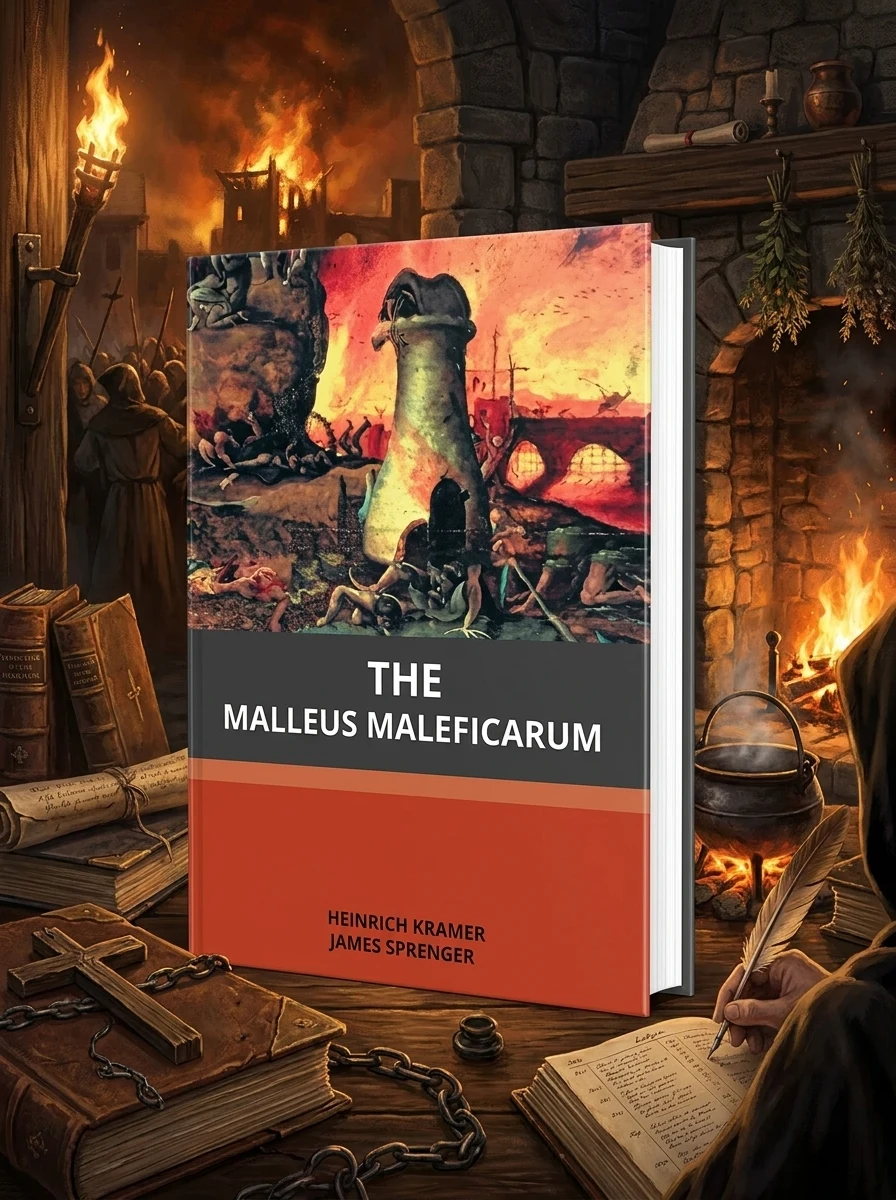
The Malleus Maleficarum

Kramer, Heinrich; , Sprenger, James
Reader rating
4.6
(1 reviews) 51 sold
In stock

Stock reported in the catalog; fulfillment is confirmed with your request.

📚 ABOUT THE BOOK

Uncover the chilling medieval manual that ignited centuries of witch hunts.

This infamous 15th-century text, authored by two prominent Inquisitors, served as the definitive guide for identifying, prosecuting, and eradicating alleged witches. Born from a papal decree, it meticulously details the perceived reality of witchcraft, its diabolical origins, and its manifestations, particularly among women. From lurid accounts of demonic pacts and malevolent enchantments to precise instructions for interrogations and sentencing, this volume offers an unsettling window into the fervent fears and draconian justice systems of late medieval Europe, shaping the persecution that followed for generations.

Key themes
The Scourge of Witchcraft Inquisitorial Justice Protocols Gender and Diabolical Influence
Historical context

This text stands as the definitive legal and theological manual of the late medieval Inquisition, born directly from papal decree to systematize the persecution of alleged witches in Europe.

Difficulty
●●● Demanding
Fans will love it
The Malleus Maleficarum's historical impact · Medieval Inquisition records · Early modern demonology studies
🌙 Witchcraft & Wicca
🏛 Rt Books 📅 2022 📖 330 pages 📔 Paperback 📐 Paperback ISBN: 9787331767666
Fun fact
While undeniably difficult to read due to its horrific content and deeply flawed logic, the Malleus Maleficarum remains an indispensable primary source for understanding the darkest chapters of European history. It excels as a chilling document of its time, detailing the theological justifications and brutal methodologies of the witch hunts. Readers seeking a magical grimoire or a sympathetic view of witchcraft will be sorely disappointed. However, for historians, sociologists, or anyone interested in the roots of religious extremism and judicial abuse, this tome is a profoundly insightful, if disturbing, cornerstone of its field.

📝 Description: The Malleus Maleficarum

For nearly three centuries Malleus Maleficarum (The Witches' Hammer) was the professional manual for witch hunters. This work by two of the most famous Inquisitors of the age is still a document of the forces of that era's beliefs. Under a Bull of Pope Innocent VIII, Kramer and Sprenger exposed the heresy of those who did not believe in witches and set forth the proper order of the world with devils, witches, and the will of God. Even if you do not believe in witchcraft, the world of 1484 did. Contemporary cases illustrate methods by which witches attempt to control and subvert the world: How and why women roast their first-born male child; the confession of how to raise a tempest by a washwoman suspended "hardly clear of the ground" by her thumbs; methods of making a formal pact with the Devil; how witches deprive men of their vital member; and many others. Methods of destroying and curing witchcraft, such as remedies against incubus and succubus devils, are exemplified and weighed by the authors. Formal rules for initiating a process of justice are set down: how it should be conducted and the method of pronouncing sentence; when to use the trial by the red-hot-iron; how the prosecutor should protect himself; how the body is to be shaved and searched for tokens and amulets, including those sewn under the skin. As Summers says, it was the casebook on every magistrate's desk. Montague Summers has given a very sympathetic translation. His two introductions are filled with examples of witchcraft and the historical importance of Malleus Maleficarum. This famous document should interest the historian, the student of witchcraft and the occult, and the psychologist who is interested in the medieval mind as it was confronted with various forces which could be explained only by witchcraft.

💎 Expert review

💎
Esoterica Books editorial team
Occult literature desk
While historically significant, this work is not suitable for those seeking comfort or gentle historical narratives. It is a dense, grim manual designed for prosecution, not entertainment, filled with lurid accounts and harsh judgments that may disturb sensitive readers. Those looking for sympathetic portrayals of witchcraft will find none here; instead, they encounter a cold, systematic dehumanization of its subjects. However, for academic researchers or those studying the evolution of legal systems and religious dogma, it remains an unflinching, crucial document. Readers expecting light fare or apologetic defenses should look elsewhere, as this text is a stark artifact of intolerance rather than a bridge to understanding.
✓ EDITOR'S REVIEW

📖 Why choose it

📖

Why this book is worth reading

Readers deeply interested in the historical mechanics of religious persecution will find this volume indispensable for understanding how institutional fear shaped centuries of social justice. It offers a chilling, primary-source window into the fervent mindset that drove the witch hunts, revealing the specific legal and theological frameworks used to justify draconian measures against women. By examining the meticulous details of interrogation and sentencing provided by these prominent Inquisitors, scholars and history enthusiasts can grasp the tangible reality of late medieval European fears. This book is essential for anyone seeking to comprehend the origins of modern concepts regarding heresy, demonic pacts, and the societal mechanisms that allowed such widespread tragedy to unfold under the guise of divine justice.

⭐ Reader reviews

The starting rating comes from the team Esoterica Books —
⭐ Esoterica editorial review Editorial rating 4.7/5
★★★★
If you are a student of history, an occult scholar, or simply fascinated by the darker currents of human belief and judicial abuse, this primary source offers unparalleled, albeit disturbing, insight into a pivotal era. It is essential reading for understanding the origins of mass hysteria and…

Reader rating

4.6
Based on 1 reviews
5
0
4
1
3
0
2
0
1
0
E
Esoterica Books editorial team

While historically significant, this work is not suitable for those seeking comfort or gentle historical narratives. It is a dense, grim manual designed for prosecution, not entertainment, filled with lurid accounts and harsh judgments that may disturb sensitive readers. Those looking for sympathetic portrayals of witchcraft will find none here; instead, they encounter a cold, systematic dehumanization of its subjects. However, for academic researchers or those studying the evolution of legal systems and religious dogma, it remains an unflinching, crucial document. Readers expecting light fare or apologetic defenses should look elsewhere, as this text is a stark artifact of intolerance rather than a bridge to understanding.

❓ Frequently asked questions

Absolutely not. This text is a historical artifact, a chilling document reflecting the oppressive beliefs and legal practices of its era. It is a manual for witch hunters, not a grimoire for practitioners of contemporary witchcraft or magic.
Its significance lies in its profound historical impact, shaping centuries of persecution and fear. It serves as a stark reminder of how religious fundamentalism, misogyny, and unchecked judicial power can combine to create widespread terror and injustice, offering insights into human psychology and societal control.

📖 Who should read this

If you are a student of history, an occult scholar, or simply fascinated by the darker currents of human belief and judicial abuse, this primary source offers unparalleled, albeit disturbing, insight into a pivotal era. It is essential reading for understanding the origins of mass hysteria and religious persecution.

🎯 Key themes and symbolism

The Scourge of Witchcraft

The book firmly establishes witchcraft not as superstition, but as a tangible, insidious heresy born from pacts with the Devil. It provides extensive theological justifications and anecdotal evidence to convince readers of its pervasive danger, detailing how witches supposedly inflict harm, control elements, and subvert natural order through demonic assistance. It aims to eliminate all doubt concerning the existence and malevolence of sorcery.

Inquisitorial Justice Protocols

This work lays out a detailed, systematic framework for the detection, trial, and punishment of accused witches. It covers everything from gathering evidence and conducting interrogations (including the use of torture) to pronouncing sentences. It reflects a rigid judicial mindset, where the accused is often presumed guilty and the primary goal is confession, ensuring the proper order of the world through the eradication of heresy.

Gender and Diabolical Influence

A significant portion of the text focuses on women as inherently more susceptible to demonic temptation and witchcraft. It attributes this vulnerability to perceived female weaknesses, such as carnal lust and intellectual feebleness, providing grim examples of how women engage in malevolent acts, from sacrificing children to causing impotence. This theme reveals the deep-seated misogyny woven into the era's religious fundamentalism.

💬 Quotes from the book

“Indeed, all witchcraft comes from carnal lust, which in women is insatiable.”

“The judge must proceed with diligence, for the salvation of souls and the eradication of heresy depend upon his unwavering resolve.”

📜 Historical context

Published in 1487, following a papal bull by Innocent VIII, the Malleus Maleficarum emerged during a period of profound religious anxiety and social upheaval in late medieval Europe. It codified existing fears about witchcraft into a coherent, authoritative doctrine, providing a theological and legal foundation for the subsequent centuries of witch hunts, thus becoming a foundational text for the Inquisition's campaign against perceived heresy.

📚 Glossary

Malleus Maleficarum
Inquisitors
Incubus/Succubus

📔 Questions to reflect on

  1. How does the Malleus Maleficarum reflect the societal anxieties and power structures of late medieval Europe?
  2. Consider the psychological impact of a text like this on both the accusers and the accused. What does it reveal about belief and fear?
  3. In what ways can the themes of fundamentalism, 'othering,' and institutionalized persecution found in this book still resonate in modern contexts?

You might also like

See more →