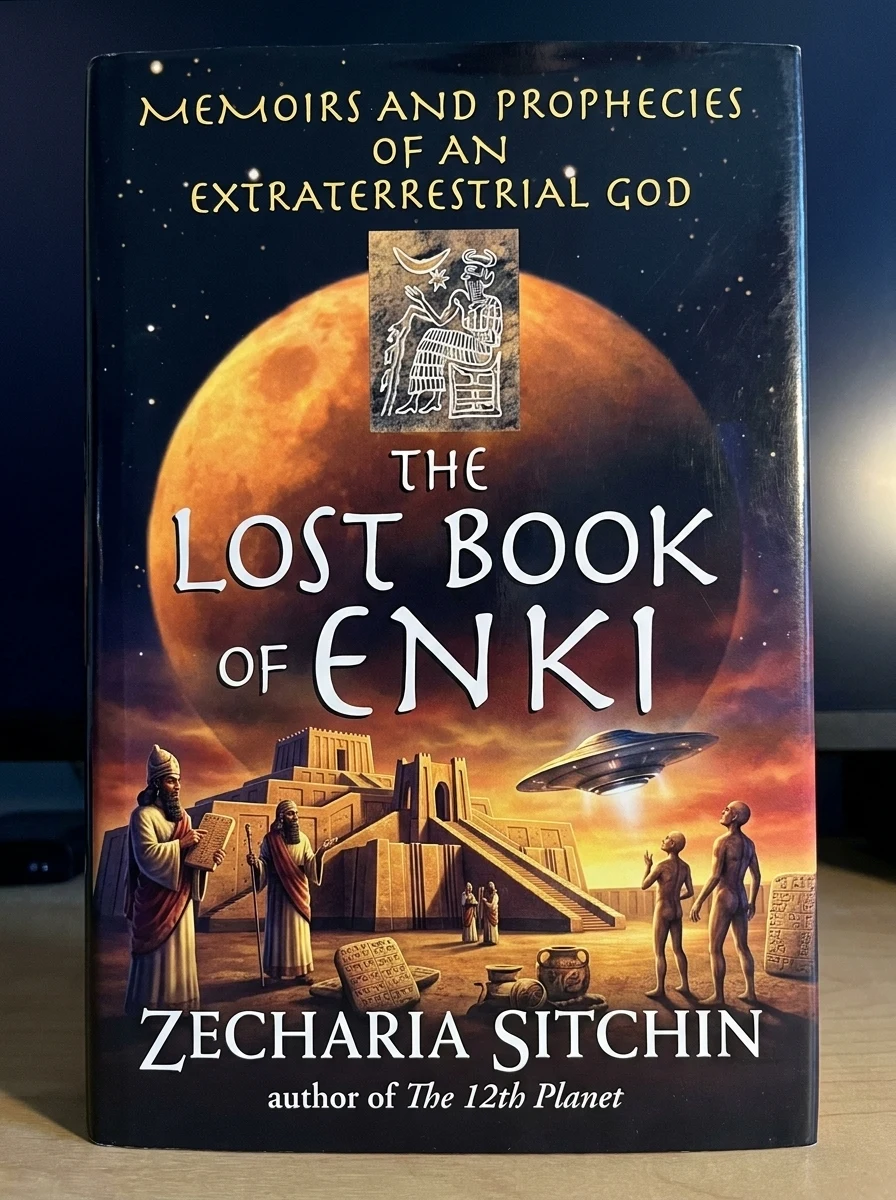
The Lost Book of Enki: Memoirs and Prophecies of an Extraterrestrial God
Sitchin, ZechariaStock reported in the catalog; fulfillment is confirmed with your request.
Enki narrates the Anunnaki's desperate flight from dying Nibiru to Earth.
This volume shifts the ancient narrative lens to Lord Enki, offering the Anunnaki’s intimate account of their arrival on our world. Sitchin reconstructs this perspective from fragmented Sumerian and Babylonian texts, revealing how these celestial beings engineered humanity as a labor force to save their dying home planet. The text details their technological prowess, genetic experiments, and the political intrigue that shaped early civilization. By giving voice to the 'gods,' the book provides a chillingly logical, albeit controversial, origin story for human consciousness and societal structures, framing our history as a biological and cultural inheritance from extraterrestrial architects.
This work sits firmly within the tradition of ancient astronaut theory and esoteric reinterpretation of Sumerian mythology. It challenges conventional historical narratives by framing ancient religious texts as literal records of extraterrestrial intervention.


📝 Description: The Lost Book of Enki: Memoirs and Prophecies of an Extraterrestrial God
💎 Expert review
📖 Why choose it
Why this book is worth reading
Readers fascinated by the intersection of mythology, genetics, and speculative history will find this volume deeply engaging. It offers a compelling alternative origin story for humanity, shifting the perspective from divine mystery to biological engineering. Those who enjoy decoding ancient texts through a modern scientific lens will appreciate Sitchin’s attempt to reconstruct the Anunnaki’s narrative. The book provides a chillingly logical framework for understanding early civilization, making it essential for anyone interested in how extraterrestrial architects may have shaped our societal structures and consciousness. It is not just a history book but a reimagining of our place in the cosmos.
⭐ Reader reviews
Reader rating
Bought this as a gift for my sister and ended up ordering a second copy for myself. It pairs well with more modern commentaries on the same tradition. I appreciated how the argument builds steadily from first principles. Highly recommend to serious students.
Arrived faster than expected and well packaged. It's become a regular reference in my practice. The font runs small in the appendices. Happy enough with the purchase.
Sitchin’s narrative is provocative, presenting a controversial origin story that frames human history as a biological inheritance from celestial beings. While the reconstruction of Sumerian texts into a coherent extraterrestrial account is intellectually stimulating for believers in ancient astronaut theories, it lacks academic rigor for skeptics. This book does not suit readers seeking peer-reviewed archaeological evidence or those who prefer traditional theological interpretations of mythology. It is best appreciated as speculative fiction rooted in linguistic analysis rather than factual history. Readers unwilling to suspend disbelief regarding genetic experiments and political intrigue among gods may find the premise too fantastical.
❓ Frequently asked questions
📖 Who should read this
Readers fascinated by the intersection of paleoanthropology and mythology will find this compelling. It appeals to those questioning mainstream historical narratives and seeking alternative explanations for the sudden emergence of complex human societies and technological leaps in antiquity.
🎯 Key themes and symbolism
Ancient Astronaut Theory
Sumerian Cuneiform Decoding
Genetic Engineering Origins
💬 Quotes from the book
“We came from the sky to the earth. We are the gods.”
“The Earth was our refuge, our new mine.”
📜 Historical context
📚 Glossary
- Anunnaki
- Nibiru
- Enki
📔 Questions to reflect on
- How does viewing ancient gods as biological entities change your interpretation of religious texts?
- If human origins were industrial, what ethical implications does that hold for modern bioethics?
- Which mythological narrative feels most like a distorted memory of technology rather than divine intervention?
✍️ More books by this author Sitchin, Zecharia
All books by this author →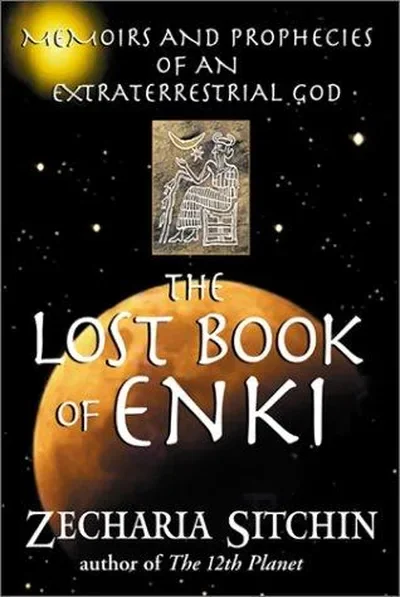
 75
75
🏛 Books from this publisher Bear & Company
All books from this publisher →
You might also like
See more →