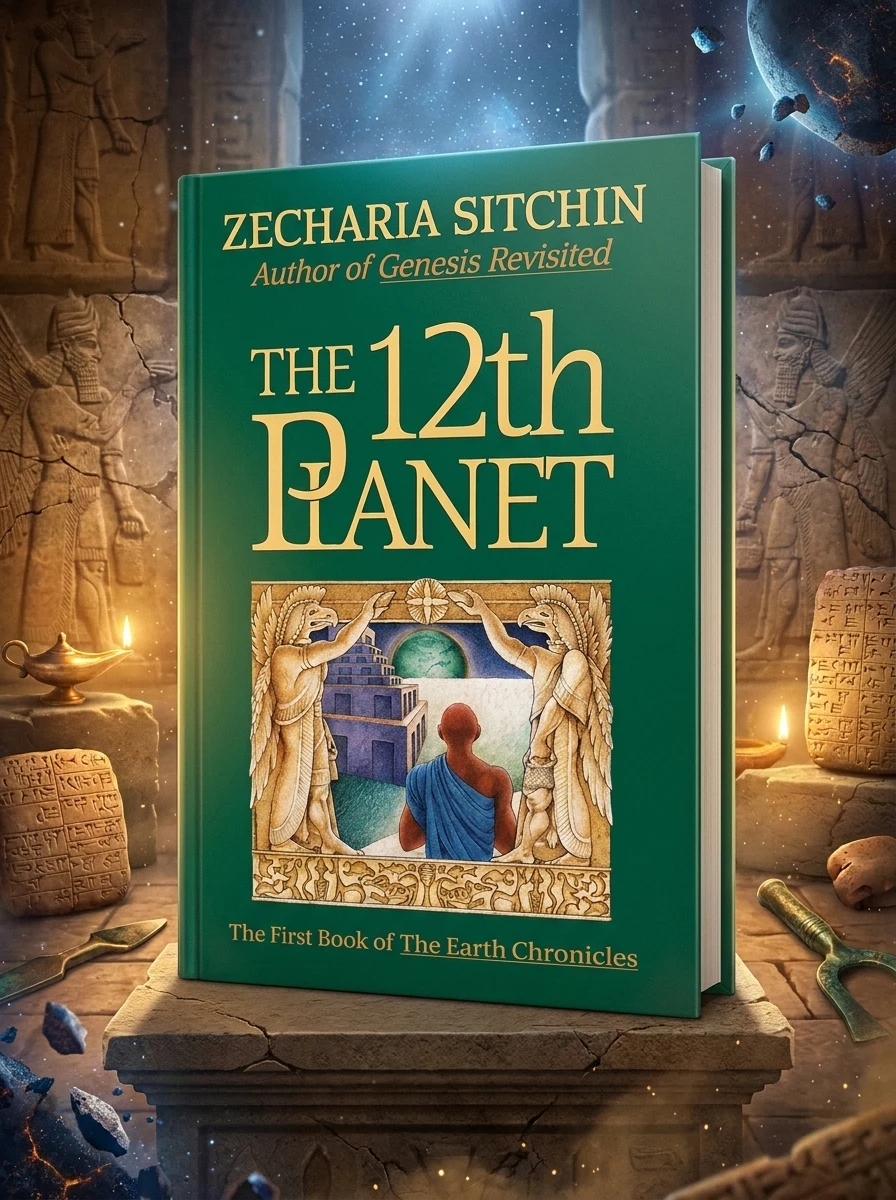
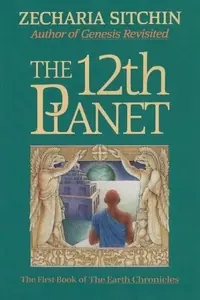
The 12th Planet (Book I) (Revised) Sitchin, Zecharia
Sitchin, ZechariaStock reported in the catalog; fulfillment is confirmed with your request.
Sitchin deciphers ancient Sumerian tablets to reveal humanity's extraterrestrial origins.
This foundational text challenges mainstream archaeology by interpreting cuneiform tablets as literal historical records rather than myth. Sitchin argues that the Anunnaki, beings from a hypothetical planet called Nibiru, visited Earth millennia ago to mine gold. They genetically engineered Homo sapiens as a slave workforce. The book presents a radical cosmology where Earth is part of a twelve-planet solar system. It claims these sky gods returned every 3,600 years, leaving behind a legacy that shaped human civilization, religion, and genetics. It is a dense, controversial reconstruction of prehistory based on alternative translations of ancient Near Eastern texts.
This work sits firmly within the tradition of ancient astronaut theory and alternative archaeology, challenging mainstream historical narratives through esoteric interpretation. It emerges from the late twentieth-century resurgence of interest in connecting modern science with mythological origins.


📝 Description: The 12th Planet (Book I) (Revised) Sitchin, Zecharia
💎 Expert review
📖 Why choose it
Why this book is worth reading
Readers fascinated by the intersection of mythology, genetics, and astronomy will find this book a provocative exploration of human origins. It offers a compelling alternative narrative for those disillusioned with conventional archaeological accounts, inviting them to view ancient history through a literalist lens. Those interested in how religious myths might encode scientific or historical truths will appreciate the detailed reconstruction of events involving the Anunnaki. The book serves as an essential primer for understanding the foundational arguments of the ancient astronaut movement, providing a dense but rewarding puzzle for enthusiasts eager to piece together a different version of prehistory.
⭐ Reader reviews
Reader rating
Took a chance on this and glad I did. Solid binding, decent paper — holds up to heavy use. One of my better finds this year.
As someone who reads a lot in this field, I can be picky. It connects ideas I'd only seen treated separately elsewhere. Five stars from me.
Been hunting for a decent copy of this text for ages. I appreciated how the argument builds steadily from first principles. My only regret is not ordering it sooner.
This text is a polarizing cornerstone of alternative history that demands skepticism alongside curiosity. While its linguistic methodology is rejected by mainstream scholars, it remains influential within its specific niche. It does not suit readers seeking peer-reviewed academic rigor or those who prefer established archaeological consensus. The dense cosmology and controversial claims may frustrate casual readers looking for light entertainment. However, for those open to radical reinterpretations of cuneiform tablets, it offers a systematic, albeit disputed, framework that connects Sumerian texts to broader cosmic theories, making it a necessary, if contentious, read for the genre.
❓ Frequently asked questions
📖 Who should read this
Readers fascinated by alternative history, conspiracy theories, and the intersection of archaeology and science fiction. It appeals to those who question mainstream historical narratives and enjoy speculative non-fiction that blends astronomy with ancient myths.
🎯 Key themes and symbolism
Ancient Astronauts
Sumerian Mythology
Human Genetics
💬 Quotes from the book
“The Sumerians were not primitive dreamers; they were scientists who recorded history.”
“Man was created by the Anunnaki to relieve them of their toil.”
📜 Historical context
📚 Glossary
- Anunnaki
- Nibiru
- Cuneiform
📔 Questions to reflect on
- How does the idea of extraterrestrial origins change your perception of human uniqueness?
- What evidence would convince you that ancient myths are literal history rather than allegory?
- Why do you think alternative histories like this persist despite academic rejection?
✍️ More books by this author Sitchin, Zecharia
All books by this author →

 75
75
🏛 Books from this publisher Bear & Company
All books from this publisher →

You might also like
See more →
 75
75