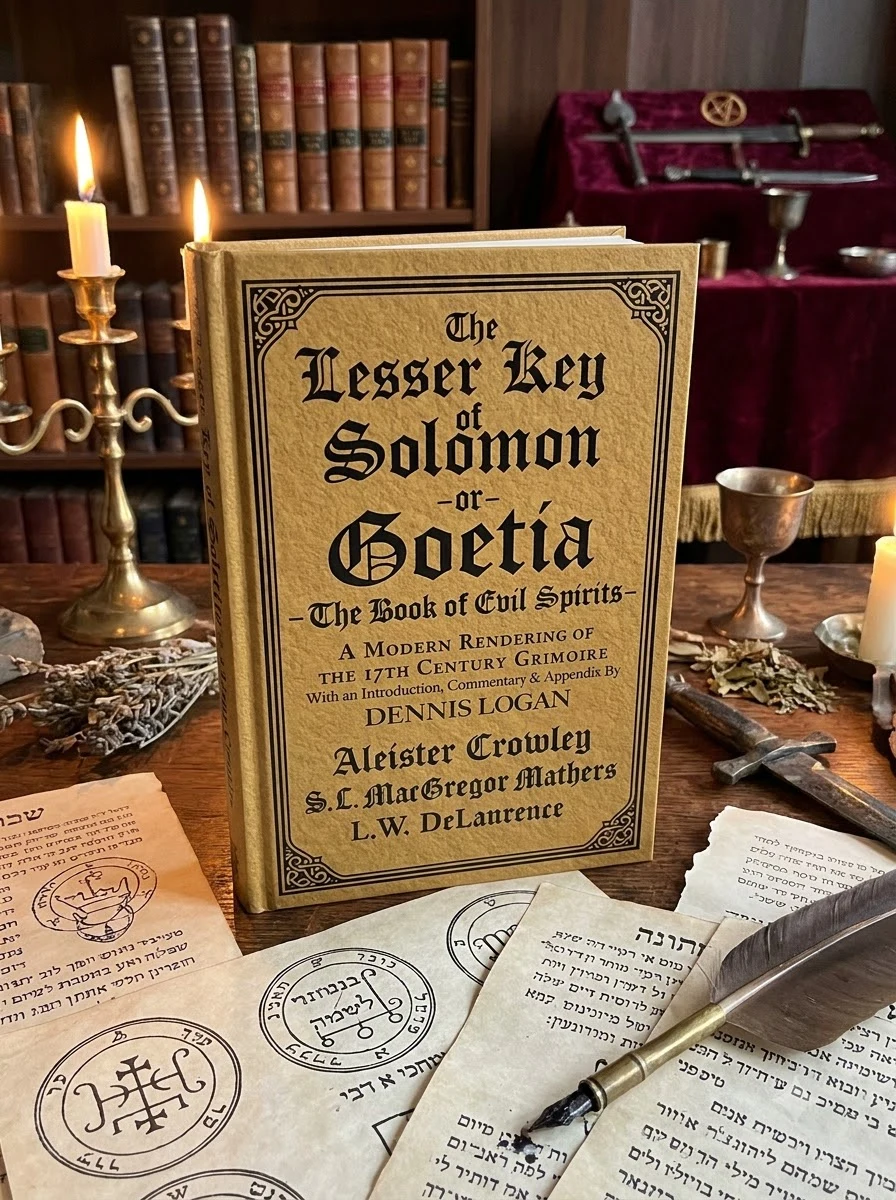
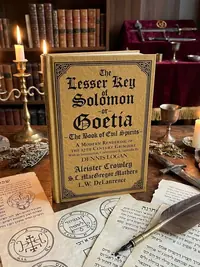
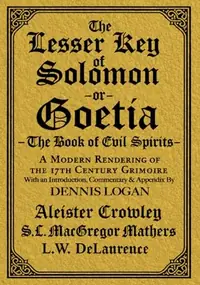
The Lesser Key of Solomon: A Modern Rendering of the 17th Century Grimoire
Stock reported in the catalog; fulfillment is confirmed with your request.
Unlock the ancient secrets of spirit evocation and arcane power.
This authoritative edition of "The Lesser Key of Solomon," also known as Lemegeton, meticulously presents a foundational 17th-century grimoire. It offers a complete facsimile of the original Goetia text, enriched with profound scholarly insights and annotations. Logan's work contextualizes this infamous text within its broader religious and historical landscape, revealing its deep connections to biblical and apocryphal traditions. It explores the linguistic and theological underpinnings, offering an unparalleled understanding of its complex ritual structures and the seventy-two spirits contained within.
This work anchors itself within the rich tradition of Western ceremonial magic, serving as a critical bridge between the arcane practices of the seventeenth century and contemporary esoteric study. It stands as a vital artifact in the lineage of grimoires that seek to systematize spiritual evocation through rigorous historical and theological frameworks.


📝 Description: The Lesser Key of Solomon: A Modern Rendering of the 17th Century Grimoire
💎 Expert review
📖 Why choose it
Why this book is worth reading
This edition is essential for the serious student of occult history who seeks more than mere ritual instruction; they desire a profound understanding of the text's origins. By providing scholarly insights and contextualizing the Lemegeton within its biblical and apocryphal landscape, it offers an unparalleled view into the complex ritual structures and linguistic underpinnings of the seventy-two spirits. Readers who value historical accuracy alongside arcane power will find this modern rendering indispensable for grasping the deep religious significance behind the famous Goetia text.
⭐ Reader reviews
Reader rating
While this volume serves as an authoritative resource for those interested in the theological and historical dimensions of ceremonial magic, it may not suit readers seeking straightforward, step-by-step ritual guides without academic overhead. The dense scholarly insights and focus on linguistic analysis might feel obstructive to casual enthusiasts looking for immediate practical application. However, for those willing to engage with the profound connections to biblical traditions, it offers a rigorous and enlightening experience that elevates the understanding of this infamous grimoire beyond simple superstition.
❓ Frequently asked questions
📖 Who should read this
Essential for students of occult history, practitioners of ceremonial magic, and scholars of comparative religion or demonology. If you seek a deeper, academically rigorous understanding of one of history's most infamous grimoires, beyond mere practical instructions, this volume is indispensable.
🎯 Key themes and symbolism
Art of Spirit Conjuration
This volume meticulously details the processes and formulae for summoning and commanding various spirits, often referred to as demons. It outlines specific prayers, seals, and ritual components, presenting a structured system for interaction with entities from the unseen realms, rooted deeply in ancient magical practices and traditions.
Sacred Text Connections
Far from purely pagan, the grimoire's invocations and spirit names are shown to possess profound links to canonical and apocryphal scriptures. Examining connections to YHVH, Adonai, and figures like Michael, the text reveals how biblical patterns and epithets from Psalms and Exodus are woven into its magical fabric.
Diverse Spiritual Origins
The seventy-two spirits described within are not monolithic; their names and attributes emerge from a fascinating blend of traditions. This edition traces their origins to ancient gods, condemned idols in the Hebrew Bible, and elements from Islamic, Roman, and various folk traditions, creating a rich tapestry of spiritual synthesis.
💬 Quotes from the book
“I conjure thee, Spirit [NAME], by the holy and powerful names of YHVH, Adonai, Elohim, that thou appear before me in a fair form, without harm.”
“The First Spirit is Bael, a King ruling in the East, he maketh men invisible, and ruleth over sixty-six Legions of Spirits. He appeareth in diverse shapes.”
📜 Historical context
📚 Glossary
- Grimoire
- Goetia
- Syncretism
📔 Questions to reflect on
- Considering the biblical roots of this grimoire, how do you reconcile traditional religious belief with the practice of spirit evocation?
- If you were to adapt these ancient rituals for a modern context, what ethical considerations would guide your approach to working with such powerful entities?
- Reflect on the idea of "commanding" spirits: What does this imply about the magician's role, and what personal transformations might such an endeavor entail?
You might also like
See more →
 91
91
 91
91