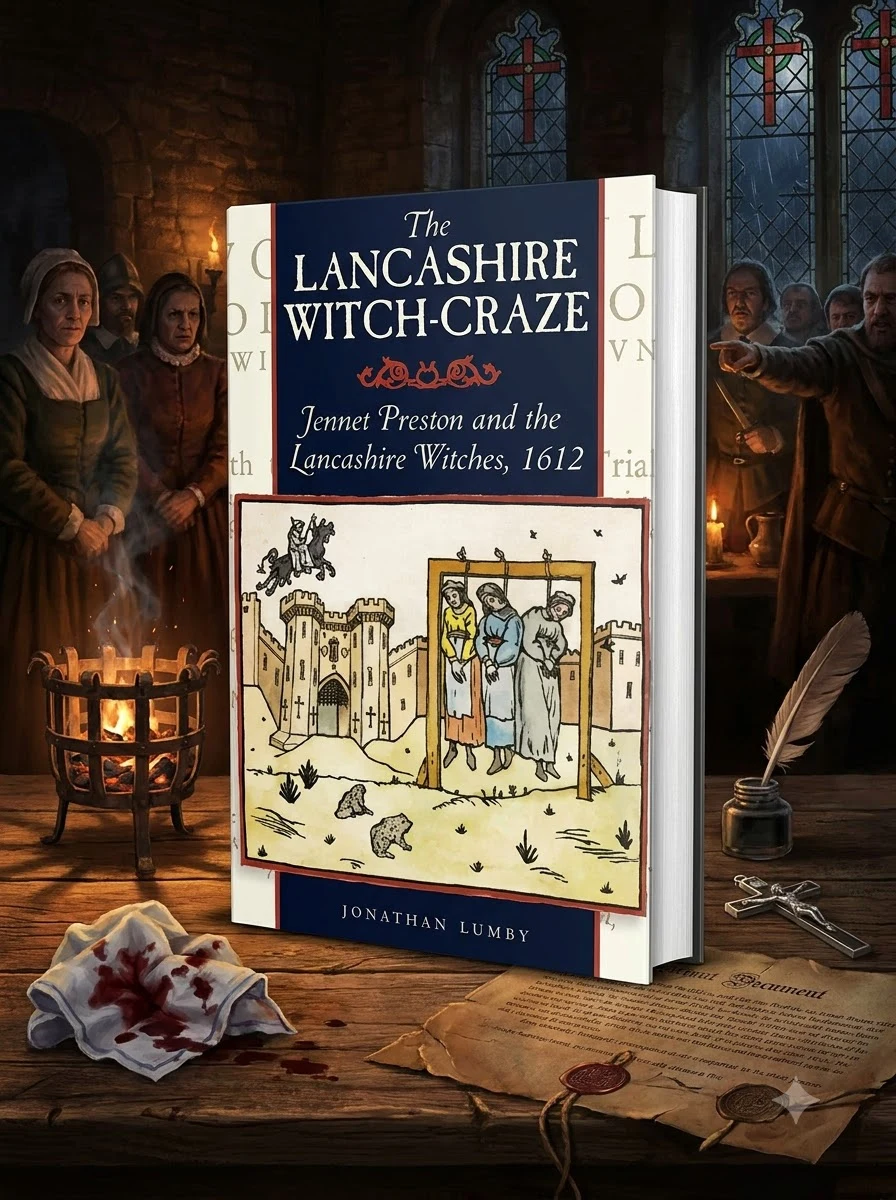
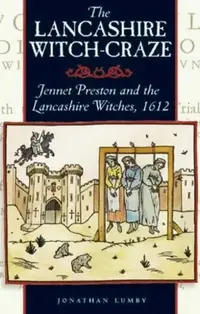
The Lancashire Witch Craze: Jennet Preston and the Lancashire Witches, 1612
This edition can be ordered. No arrival date is confirmed.
Uncover the bloody truth behind Pendle's most infamous witch trial and the chilling power of Jennet Preston.
Jonathan Lumby dissects the harrowing 1612 Pendle witch trials, focusing on Jennet Preston and the Lister family feud. He challenges the traditional narrative of a Satanic coven, suggesting instead that religious persecution and personal vendettas drove the hysteria. By examining the political and theological landscape of Jacobean England, Lumby reveals how legal mechanisms were weaponized against the vulnerable. This meticulous historical reconstruction offers a fresh perspective on a notorious case, exposing the fear and manipulation that fueled the convictions and executions of these accused women.
This work sits firmly within the historiography of Jacobean England, specifically examining the intersection of religious persecution, legal history, and early modern witchcraft trials in Lancashire. It contributes to the broader scholarly discourse on how local feuds and theological anxieties were weaponized through judicial mechanisms during the 17th century.


📝 Description: The Lancashire Witch Craze: Jennet Preston and the Lancashire Witches, 1612
💎 Expert review
📖 Why choose it
Why this book is worth reading
Readers with a deep interest in the socio-political underpinnings of historical hysteria will find immense value in this meticulous reconstruction. It is particularly suited for those seeking to move beyond sensationalist tropes and understand the complex machinery of Jacobean justice that targeted the vulnerable. By focusing on Jennet Preston and the Lister family feud, Lumby provides a nuanced look at how personal vendettas masqueraded as Satanic conspiracy. If you appreciate rigorous historical analysis that challenges traditional narratives of Satanic covens, this book offers a compelling, evidence-based perspective on the fear and manipulation that fueled these convictions.
⭐ Reader reviews
Reader rating
Jonathan Lumby delivers a scholarly dissection of the 1612 Pendle witch trials, prioritizing historical context over mystical intrigue. This approach will likely alienate readers seeking supernatural explanations or dramatic, fictionalized accounts of witchcraft. Those looking for easy entertainment or confirmation of traditional Satanic narratives may find the focus on legal mechanisms and religious persecution dry. However, for historians and serious enthusiasts of early modern English history, it offers a vital corrective to popular myths. It is an intellectual exercise in uncovering how political and theological landscapes were exploited, making it essential for academic collections but potentially tedious for casual readers interested only in the occult aspects.
❓ Frequently asked questions
📖 Who should read this
Readers fascinated by true crime history, Jacobean England, and the sociological roots of witch hunts will find this compelling. It is essential for those seeking to understand the intersection of law, faith, and fear in early modern Europe.
🎯 Key themes and symbolism
Historical Witchcraft Trials
Religious Persecution
Legal Injustice
💬 Quotes from the book
“Jennet Preston lies heavy upon me... his corpse bled when she touched it.”
“Was Jennet framed by Lister's son?”
📜 Historical context
📚 Glossary
- Satanic Coven
- Maleficium
- Jacobean Era
📔 Questions to reflect on
- How does the fear of the unknown shape legal systems in times of political instability?
- In what ways can personal grudges be amplified into public panics?
- How might historical narratives of witchcraft reflect societal anxieties rather than actual magical practices?
🏛 Books from this publisher Carnegie Pub.
All books from this publisher →
You might also like
See more →

 91
91
 91
91