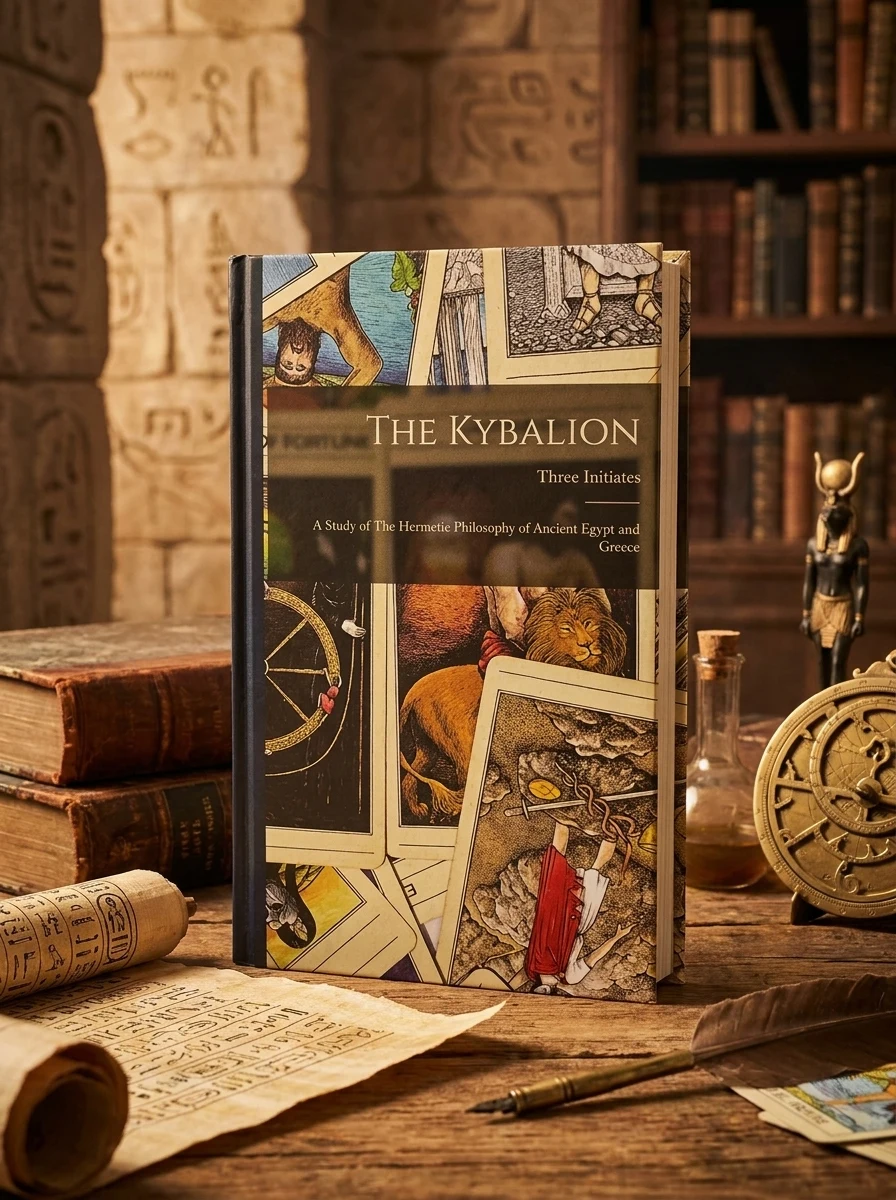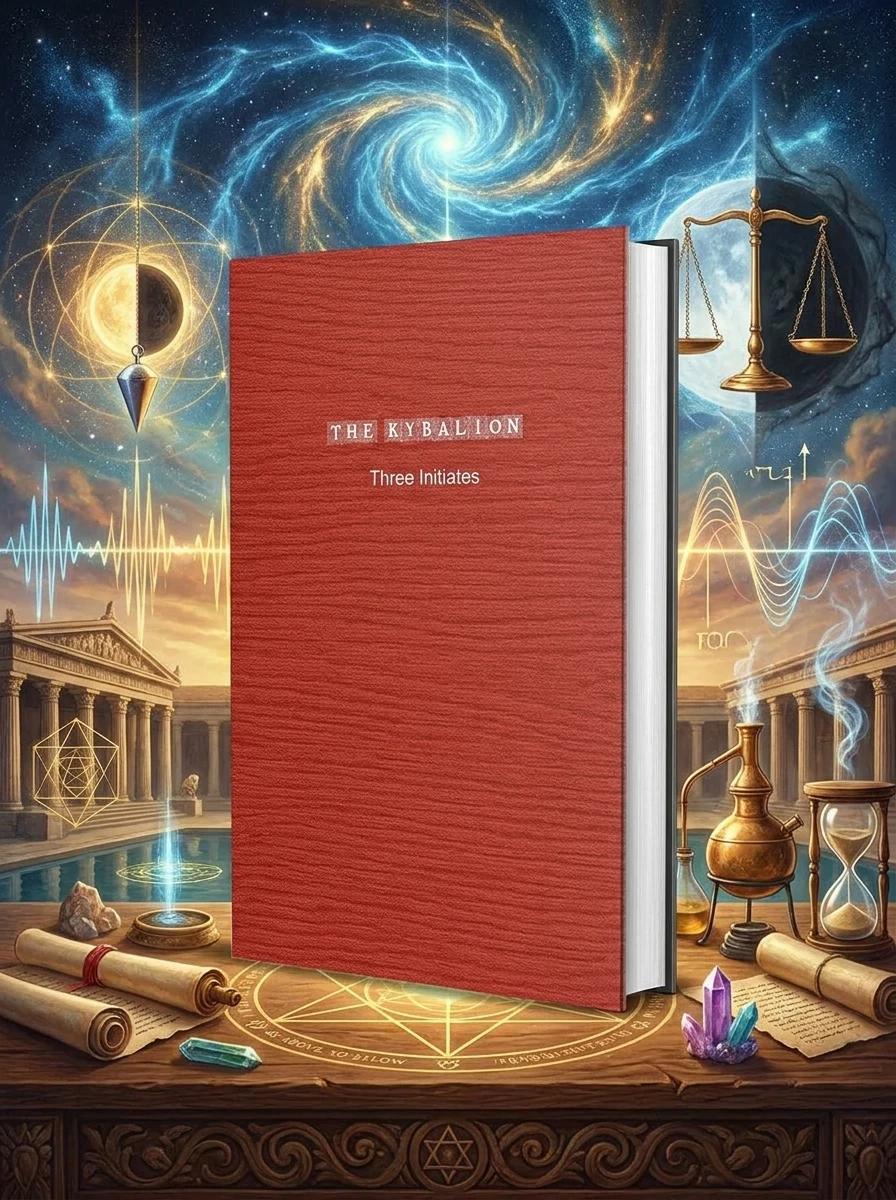


The Kybalion: A Study of The Hermetic Philosophy of Ancient Egypt and Greece
✍️ Initiates, ThreeAuthored by the mysterious "Three Initiates," "The Kybalion" serves as an essential primer on Hermetic philosophy, distilling ancient wisdom into a set of seven profound universal principles. This compact yet potent work guides readers through foundational concepts like the mental nature of reality, the law of correspondence, and the dynamic interplay of vibration and polarity. It offers a clear, accessible framework for understanding the underlying structure of existence, empowering seekers to gain deeper insight into themselves, the cosmos, and the immutable laws governing all phenomena.


📝 Description: The Kybalion: A Study of The Hermetic Philosophy of Ancient Egypt and Greece
💎 Expert review
📖 Why choose it
Why this book is worth reading
Seekers drawn to the intricate mechanics of reality will find this compact volume an empowering primer on Hermetic philosophy. By outlining seven timeless keys, it offers a clear framework for understanding existence's underlying structure. Readers interested in the mental nature of reality, vibration, and polarity will appreciate its accessible approach to profound concepts. It is ideal for those wishing to gain deeper insight into themselves and the cosmos without getting lost in dense academic jargon. This work serves as a potent guide for anyone looking to grasp the immutable laws governing all phenomena, making ancient wisdom feel immediately relevant and applicable to personal growth.
⭐ Reader reviews
Reader rating
While 'The Kybalion' successfully distills complex Hermetic ideas into digestible principles, it may disappoint readers seeking rigorous historical scholarship or academic depth. The attribution to the anonymous 'Three Initiates' remains mysterious, which might frustrate those demanding verifiable authorship. Furthermore, its abstract nature could alienate skeptics who prefer empirical evidence over metaphysical speculation. However, for casual occult enthusiasts and spiritual explorers, it provides a valuable entry point. It is not suited for those looking for detailed historical context of ancient Egypt or Greece, nor for readers who dislike generalized esoteric statements. Ultimately, it stands as a functional tool rather than a scholarly treatise.
❓ Frequently asked questions
📖 Who should read this
For seekers yearning to peel back the veil of ordinary perception, this concise guide offers a profound framework. If you're curious about universal laws and wish to align with higher truths, or are beginning your journey into esoteric philosophy, this book is an indispensable starting point.
🎯 Key themes and symbolism
The Cosmic Mind
The book posits that the entire universe is a manifestation of a singular, all-encompassing Mind. Every thought, object, and experience originates from this universal consciousness, implying that reality itself is a mental construct. Understanding this principle fundamentally shifts one's perception, revealing the power of thought in shaping individual and collective existence.
As Above, So Below
This principle, known as Correspondence, illustrates the profound interconnectedness of all planes of existence. It suggests that patterns, laws, and phenomena observed at one level—whether spiritual, mental, or physical—are mirrored at all other levels. This insight provides a lens through which to decode the mysteries of the macrocosm by observing the microcosm, and vice versa.
Dynamic Vibration and Rhythm
The Kybalion asserts that everything in the universe is in a constant state of vibration, with differences in frequency accounting for the diversity of forms and energies. Complementing this, the principle of Rhythm explains that everything flows and ebbs in cyclical patterns, manifesting and withdrawing. Together, these concepts reveal the active, oscillating nature of all reality.
📜 Historical context
📚 Glossary
- Hermeticism
- Mentalism
- Correspondence
📔 Questions to reflect on
- How might viewing the universe as fundamentally 'mental' alter your daily perception and decision-making?
- Reflect on the principle of Correspondence. Where do you observe 'as above, so below' in your personal life, relationships, or the natural world?
- Consider the principle of Polarity. How can acknowledging the opposing forces within a situation lead to a more balanced understanding or resolution?