US shipping Secure card payment Occult and esoteric books

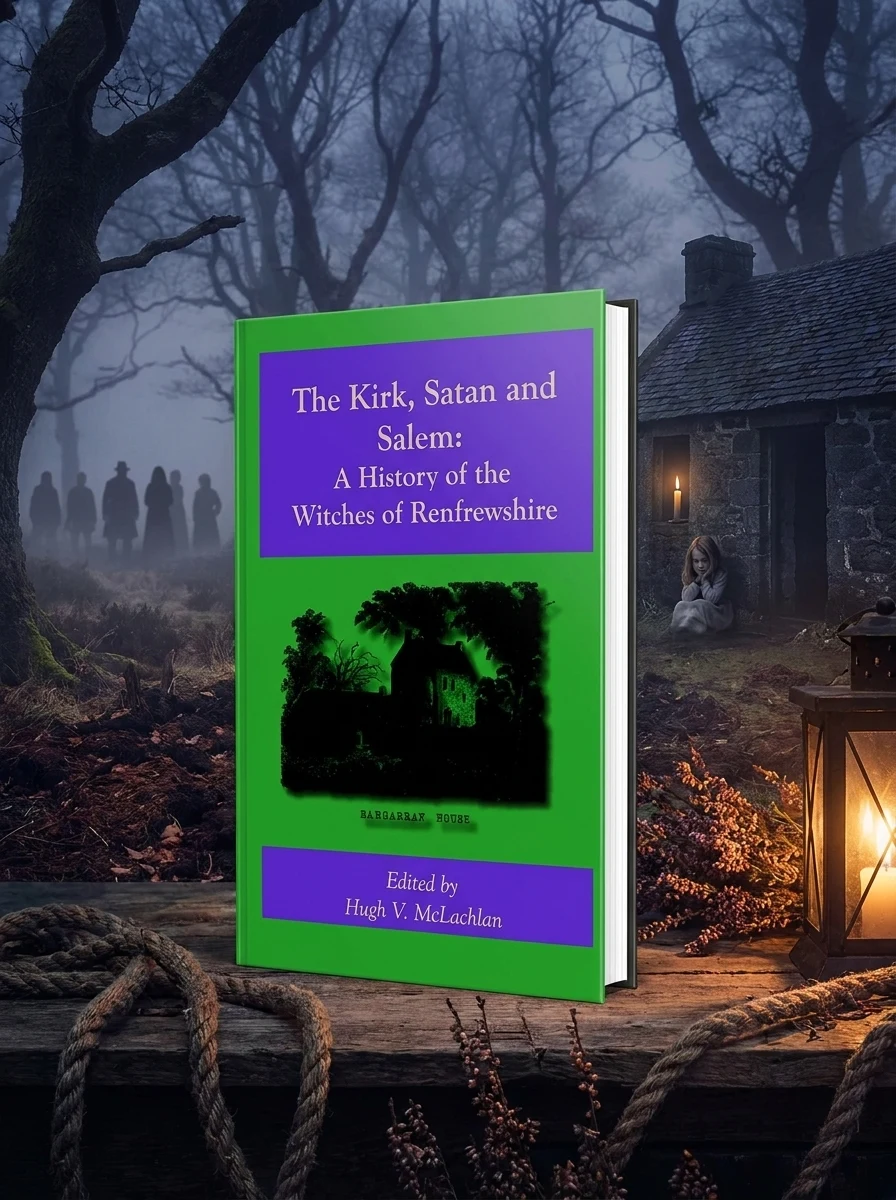
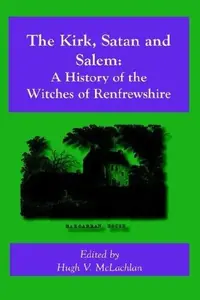
The Kirk, Satan and Salem: A History of the Witches of Renfrewshire

McLachlan, Hugh V
Reader rating
4.2
(6 reviews) 156 sold
In stock

Stock reported in the catalog; fulfillment is confirmed with your request.

📚 ABOUT THE BOOK

Uncover the dark parallels between Scottish witch trials and Salem’s hysteria in this chilling historical account.

This volume investigates the infamous 1690s Renfrewshire witchcraft accusations centered on Christian Shaw, known as the Bargarran Impostor. Drawing heavily from contemporary primary sources, including the pivotal trial narratives of the seven executed women, the text reveals striking structural similarities to the Salem trials. Both events feature possessed children, influential clergy, and identical physical symptoms, suggesting a shared cultural panic. By juxtaposing these cases, the author demonstrates that understanding one illuminates the other, offering a rare, grounded look at the social mechanics of early modern demonic obsession.

Key themes
Cross-cultural hysteria Primary trial accounts Child possession narratives
Historical context

This work situates itself within the historiography of early modern European witchcraft trials, specifically examining the intersection of Scottish and North American legal and religious hysteria. It contributes to the scholarly understanding of how localized demonic obsessions in Renfrewshire parallel the broader cultural panic seen in Salem.


Difficulty
●●● Demanding
Fans will love it
Brian P. Levack · Stuart Clark · Catharine MacLeod's historical analyses of Scottish witchcraft · Nathaniel Philbrick's works on Salem
🌙 Witchcraft & Wicca
🏛 Grimsay Press 📖 508 pages 📔 Paperback 📐 Paperback ISBN: 9781845300340
Fun fact
McLachlan excels at weaving dry legal transcripts into a coherent narrative of shared cultural trauma. The comparative approach is its strongest asset, offering fresh insight into Salem by looking west. However, readers seeking modern Wiccan practice will find this purely historical and legalistic. It sits firmly in the field of academic social history rather than esoteric instruction, making it essential for serious researchers of early modern demonology.
📚 This book appears in Esoterica Books

📝 Description: The Kirk, Satan and Salem: A History of the Witches of Renfrewshire

This book is about the famous outbreak of witchcraft allegations and prosecutions associated with Christian Shaw, the so-called 'Bargarran Impostor' in Renfrewshire, Scotland in the 1690s. Much of the material it comprises was written then, in particular, the pivotal publication: A True Narrative of the Sufferings and Relief of a Young Girle; Strangely molested by Evil spirits and their instruments in the West: With a preface and postscript containing Reflections on what is most Material or Curious either in the history or trial of the Seven Witches who were Condemn'd to be Execute in the country There are similarities and links between this Renfrewshire case and the prior Salem case in New England in 1692. For instance, the sorts of fits that Christian Shaw and the other New England and Scottish alleged victims of witchcraft were said to have experienced are remarkably similar. Both cases involve children as alleged victims. Clergymen play important parts in both cases. The material presented here shows that the Salem case and the Renfrewshire one are better understood with reference to each other. The core of this book was first published as A History of the Witches of Renfrewshire in 1809 and again in 1877 with additional material. This 3rd edition of A History of the Witches of Renfrewshire reprints the 2nd edition and contains, as well as additional material about the Salem case and about the Renfrewshire case, a new, comprehensive introduction to witchcraft in New England and in Scotland. Therein, it is shown that although they are of great interest in their own rights, the Salem and Renfrewshire cases were not typical ones and that witch-hunting in New England and in Scotland was not as irrational, unjust, cruel and unfair as it is commonly thought to have been. Dr McLachlan is a Reader in the School of Law and Social Sciences, Glasgow Caledonian University. He is the author of Social Justice, Human Rights and Public Policy (Humming Earth, 2005) and joint author of A Source-book of Scottish Witchcraft (The Grimsay Press, 2005). He is an elder in the Church of Scotland and worships at Paisley Abbey.

💎 Expert review

💎
Esoterica Books editorial team
Occult literature desk
McLachlan provides a rigorous, source-driven examination of the Bargarran Impostor case, effectively linking it to Salem’s hysteria. However, this text is strictly for those with an academic or serious historical interest; it will likely bore readers seeking atmospheric ghost stories or general occult practice guides. The dense analysis of trial narratives and structural similarities may feel dry to casual historians. It does not suit those looking for modern Wiccan interpretations or fictionalized accounts of the trials. Readers expecting a light, narrative-driven popular history might find the focus on legal and social mechanics too technical. It is best suited for serious researchers analyzing the specific mechanics of early modern demonic obsession and cross-cultural panic.
✓ EDITOR'S REVIEW

📖 Why choose it

📖

Why this book is worth reading

Readers with a deep interest in the sociological and theological underpinnings of early modern demonology will find this volume indispensable. It offers a rare, grounded look at the social mechanics of demonic obsession by meticulously drawing parallels between the Renfrewshire accusations centered on Christian Shaw and the subsequent events in Salem. By analyzing primary sources like trial narratives, the book illuminates how possessed children, influential clergy, and specific physical symptoms created a shared framework for hysteria across continents. It is ideal for scholars and dedicated enthusiasts who wish to understand the structural similarities of these tragedies rather than just their sensationalized folklore, providing clarity on how one case helps explain the other.

⭐ Reader reviews

The starting rating comes from the team Esoterica Books —
⭐ Esoterica editorial review Editorial rating 4.6/5
★★★★
Readers fascinated by comparative religious history, the sociology of mass hysteria, and the specific legal proceedings of early modern Scotland. Ideal for those studying the transatlantic links between European and American witchcraft trials.

Reader rating

4.2
Based on 6 reviews
5
2
4
1
3
3
2
0
1
0
F
Felix E. ✓ Verified purchase
December 31, 2025
Decent

A friend in my study group recommended this one. Plenty of passages worth underlining; my copy is already full of margin notes. Solid, if not essential.

I
Ivy M.
August 3, 2025
Deep and rewarding

As someone who reads a lot in this field, I can be picky. I found myself reading passages aloud just to sit with them. The ideas are old but land with surprising force today.

R
Rachel M.
May 10, 2025
Excellent find

Was skeptical at first. Every rereading turns up something I missed. A text you study rather than simply read.

T
Thomas N. ✓ Verified purchase
December 12, 2024

My third book from this store and this one might be the best. It's become a regular reference in my practice. The typesetting is comfortable for study, with good margins for notes. I'd have loved an index, but that's on the original text.

O
Owen N. ✓ Verified purchase
December 10, 2024
Good but demanding

Ordered this after seeing it referenced in another book I was studying. The material is presented clearly and the structure makes it easy to revisit key passages. The font runs small in the appendices. Happy enough with the purchase.

E
Esoterica Books editorial team

McLachlan provides a rigorous, source-driven examination of the Bargarran Impostor case, effectively linking it to Salem’s hysteria. However, this text is strictly for those with an academic or serious historical interest; it will likely bore readers seeking atmospheric ghost stories or general occult practice guides. The dense analysis of trial narratives and structural similarities may feel dry to casual historians. It does not suit those looking for modern Wiccan interpretations or fictionalized accounts of the trials. Readers expecting a light, narrative-driven popular history might find the focus on legal and social mechanics too technical. It is best suited for serious researchers analyzing the specific mechanics of early modern demonic obsession and cross-cultural panic.

❓ Frequently asked questions

No, it is a serious historical analysis based on primary legal documents and contemporary accounts of real trials.
While centered on Renfrewshire, it constantly compares events to Salem to highlight their interconnected nature.

📖 Who should read this

Readers fascinated by comparative religious history, the sociology of mass hysteria, and the specific legal proceedings of early modern Scotland. Ideal for those studying the transatlantic links between European and American witchcraft trials.

🎯 Key themes and symbolism

Cross-cultural hysteria

Primary trial accounts

Child possession narratives

💬 Quotes from the book

“The fits experienced by Shaw and her New England counterparts were remarkably similar, suggesting a shared script of demonic oppression.”

“Clergymen played pivotal roles in both the Scottish and American cases, guiding the interpretation of supernatural events.”

📜 Historical context

Situated within the late seventeenth-century peak of European witch hunts, this work bridges the gap between British and American occult history. It challenges isolated regional narratives by highlighting how shared theological frameworks and social anxieties fueled parallel prosecutions in Scotland and New England, revealing a transatlantic network of fear and judgment.

📚 Glossary

Bargarran Impostor
Transatlantic Hysteria
Primary Narrative

📔 Questions to reflect on

  1. How might social pressure shape the physical symptoms reported by accusers?
  2. What parallels do you see between historical witch trials and modern moral panics?
  3. How does the role of clergy influence the community's perception of evil?
You might also like

See more →