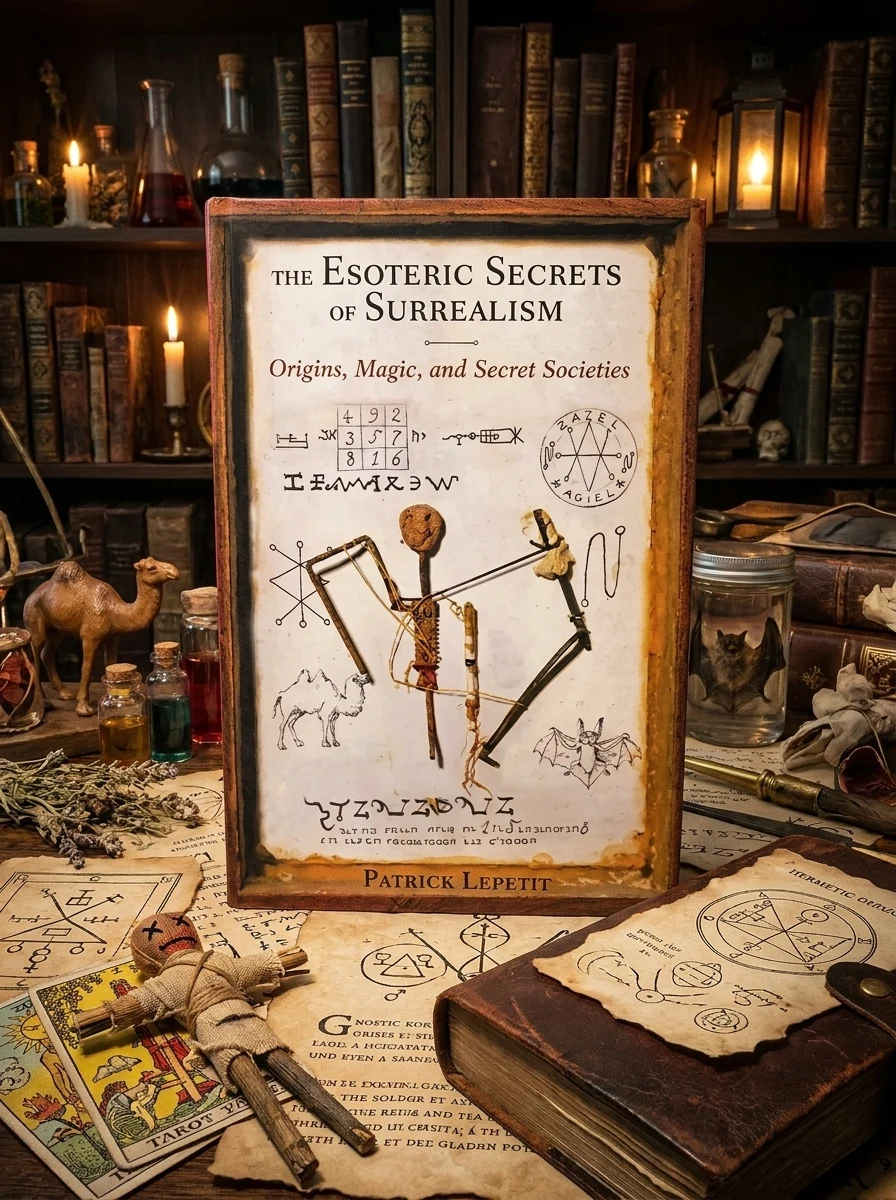
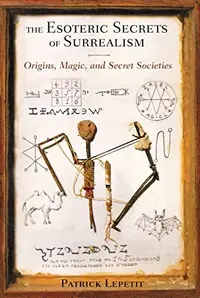
The Esoteric Secrets of Surrealism: Origins, Magic, and Secret Societies


This edition can be ordered. No arrival date is confirmed.
Uncover the hidden rituals and alchemical quests veiled within Surrealism's iconic masterpieces.
This groundbreaking study by Lepetit and Roger unearths the profound esoteric undercurrents that shaped the Surrealist movement. Moving beyond conventional art history, it reveals how these artists, often self-identifying as magicians or alchemists, consciously employed ancient mystical traditions—from Gnostic principles and Tarot to Voodoo and alchemy—to explore uncharted territories of the human mind. The book meticulously demonstrates how their creative output served as a vehicle for recovering dormant psychic and magical abilities, aiming for a "supreme point" where all contradictions dissolve into unity.
This work bridges the intersection of avant-garde art history and Western esotericism, specifically examining how mid-20th-century Surrealist artists integrated occult practices into their creative processes. It situates the movement within a broader tradition of magical philosophy where artistic creation is viewed as a form of spiritual alchemy.


📝 Description: The Esoteric Secrets of Surrealism: Origins, Magic, and Secret Societies
💎 Expert review
📖 Why choose it
Why this book is worth reading
Readers fascinated by the hidden spiritual dimensions of modern art will find this text indispensable. It offers a profound look at how artists consciously used Tarot, Gnosticism, and Voodoo to unlock psychic abilities. If you seek to understand the 'supreme point' where contradictions dissolve into unity, this book provides the necessary esoteric framework. It is ideal for those who view creativity not just as aesthetic expression but as a magical quest for inner transformation and hidden knowledge within the Surrealist canon.
⭐ Reader reviews
Reader rating
Lepetit and Roger deliver a meticulous scholarly examination of Surrealism’s occult undercurrents, successfully linking artistic output to ancient mystical traditions like alchemy and Gnosticism. However, this is not a casual introduction to Surrealism; it demands familiarity with both art history and esoteric concepts. Readers seeking simple biographical sketches or purely aesthetic analysis will find little here. It is strictly for those willing to engage with dense theoretical connections between magic and modernist creativity, requiring patience and an open mind to the authors' specific interpretive lens.
❓ Frequently asked questions
📖 Who should read this
If you're drawn to the intersection of avant-garde art, hidden spiritual paths, and the mysteries of consciousness, this book is for you. It's ideal for those who suspect there's more to Surrealism than meets the eye, and for seekers interested in magic, mysticism, and the power of creative expression.
🎯 Key themes and symbolism
Alchemy of the Mind
The authors illuminate how Surrealists perceived their artistic process as a form of alchemical transformation. Far from merely symbolic, their works were crafted to transmute ordinary consciousness, guiding practitioners and viewers alike toward profound inner revelations and the unlocking of latent mental faculties, mirroring the alchemist's quest for spiritual gold.
Secret Societies & Symbolism
This volume extensively details the Surrealists' deep engagement with various secret societies and their symbolic languages. It explores how Gnostic principles, mythological archetypes, and divinatory systems like the Tarot were not just influences but integral tools used to embed hidden meanings and activate spiritual pathways within their art and poetry, connecting to ancient wisdom traditions.
Art as Magical Practice
Rejecting labels of mere artists or writers, many Surrealists saw themselves as active practitioners of magic. The book argues that their creations were deliberate magical acts, designed to penetrate unexplored psychic realms and reclaim lost powers. This perspective redefines their art as potent instruments for spiritual exploration and empowerment, rather than just aesthetic expressions.
💬 Quotes from the book
“Not merely an artistic or literary movement as many believe, the surrealists rejected the labels of artist and author bestowed upon them by outsiders, accepting instead the titles of magician, alchemist, or--in the case of Leonora Carrington and Remedios Varo--witch.”
“Their paintings, poems, and other works were created to seek out unexplored regions of the mind and recover lost "psychic" and magical powers.”
📜 Historical context
📚 Glossary
- Hermetic Sciences
- Supreme Point
- Psychic Powers
📔 Questions to reflect on
- Consider an artwork or creative piece you've encountered. How might it be interpreted as a magical act, designed to evoke a specific transformation or insight within the viewer?
- If you were to shed societal labels, what 'magical' or 'alchemical' title would you choose for yourself, and how would that shift your approach to daily life or creative pursuits?
- Reflect on André Breton's 'supreme point.' Where in your own experience have you glimpsed moments where opposites ceased to be contradictions, and what did that feel like?
🏛 Books from this publisher Inner Traditions International
All books from this publisher →

You might also like
See more →