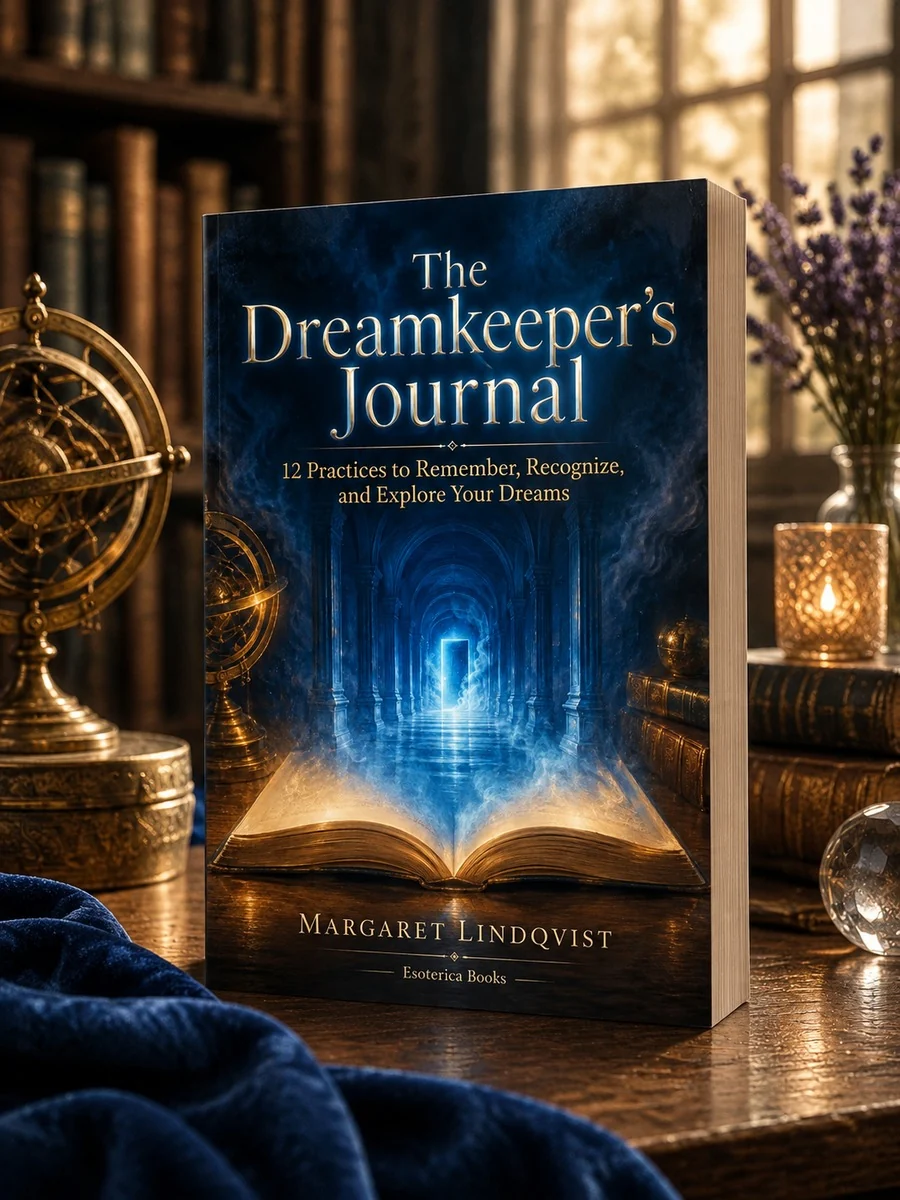
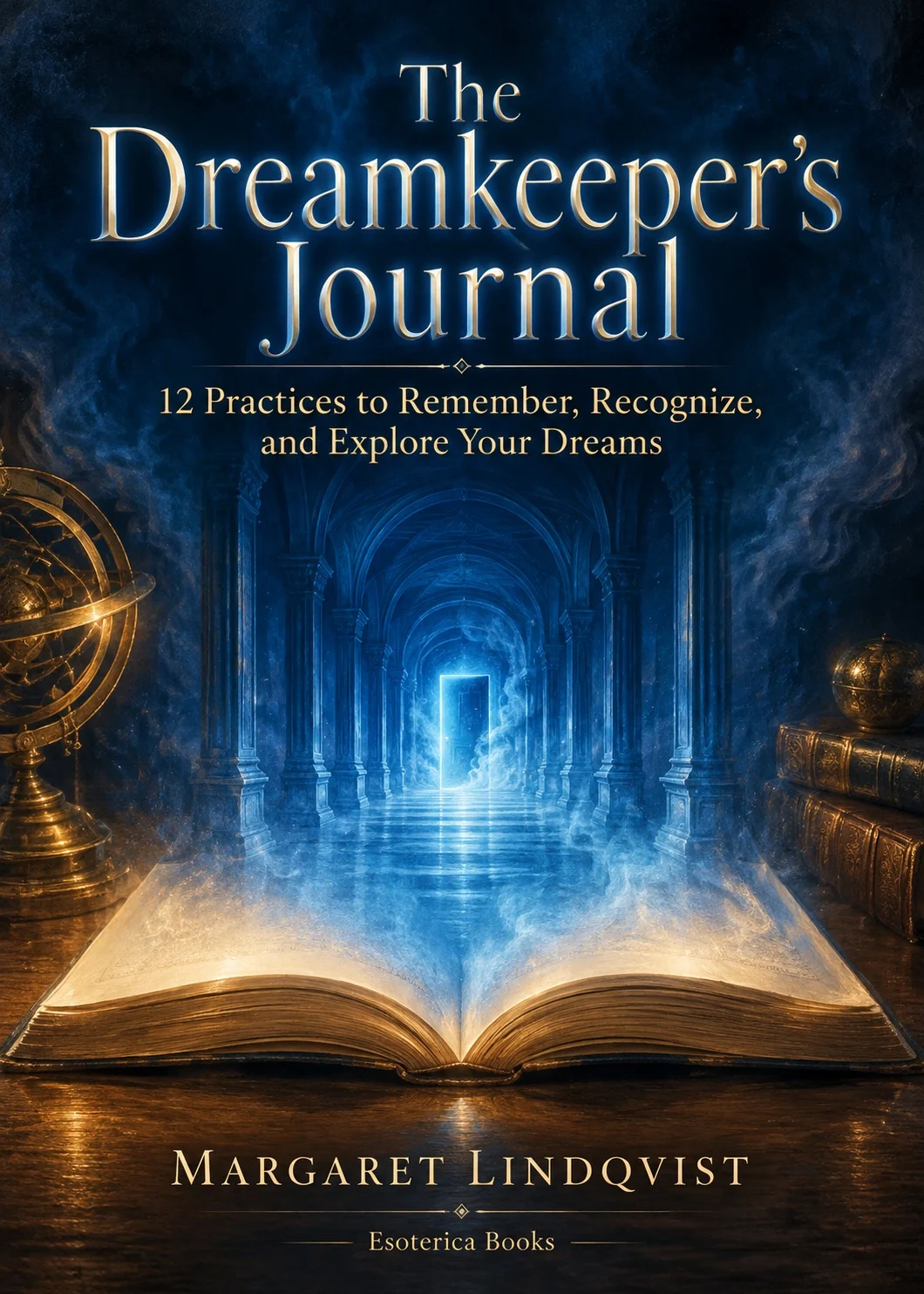
The Dreamkeeper's Journal
Turn forgotten dream fragments into a personal journal for recognizing dream signs and exploring lucid dreaming.
The Dreamkeeper's Journal introduces beginners to dream journaling as a practical foundation for exploring lucid dreaming. Through the six-step Dreamkeeper Path—Capture, Discover, Question, Prepare, Explore, and Reflect—you will learn to record dream fragments, identify recurring settings and unusual details, practice reality checks, and establish simple bedtime intentions. Twelve approachable chapters guide you from your first five-minute morning entry to a personal dream archive. With sample entries, reflection prompts, visualization, and practical exercises, Margaret Lindqvist offers a structured way to observe, remember, and explore your individual dream experiences.
Dream journaling belongs to a broad tradition of personal dream observation, reflection, and interpretation. Lucid dreaming adds the particular experience of recognizing that one is dreaming while the dream is still unfolding, while leaving the meaning of individual dream images open to personal interpretation.


📝 Description: The Dreamkeeper's Journal
📖 Why choose it
Why this book is worth reading
The appeal of this book is its practical starting point. Instead of asking beginners to remember elaborate dreams or master complicated techniques, it shows them how to work with whatever remains after waking. Its combination of dream-sign lists, simple reality checks, bedtime intentions, and recurring-setting indexes creates a recognizable routine. The distinction between dreaming about lucidity and actually becoming aware within a dream is especially useful. Readers receive a method they can adapt to their own memories, habits, and observations.
⭐ Reader reviews
Reader rating
Margaret Lindqvist takes a refreshingly practical approach to a subject that can easily become unnecessarily mysterious. The six-step Dreamkeeper Path gives the reader a clear progression from recording morning fragments to recognizing dream signs and exploring possible lucidity. The sample morning exercise is particularly useful: its instructions for recording a blue doorway, a staircase, or an incomplete conversation make the method immediately understandable. Chapter 6 also addresses a worthwhile distinction between dreaming about lucid dreaming and actually experiencing lucidity. The preview is accessible and carefully worded, though readers seeking advanced lucid dreaming techniques, extensive theoretical discussion, or a detailed survey of dream traditions may find the approach too introductory. Its strength is structured personal practice.
❓ Frequently asked questions
📖 Who should read this
This book is for beginners who want to start a lucid dreaming journal, remember their dream fragments, and learn to recognize recurring dream signs. It also suits readers who prefer a structured morning, daytime, and evening routine over abstract discussions of dream symbolism.
🎯 Key themes and symbolism
Dream Recall
Lucid Awareness
Reality Checks
Bedtime Intentions
📜 Historical context
📚 Glossary
- Dream Recall
- Lucid Dream
- Dream Sign
- Reality Check
- False Awakening
- Dream Incubation
📔 Questions to reflect on
- Which places, people, objects, or unusual situations appear repeatedly in my remembered dreams, and what personal associations do I have with them?
- If I recognize one of my recurring dream signs during the day, what question could I use to examine whether I am dreaming?
- What simple bedtime intention would I like to carry into sleep, and what familiar dream setting or detail would I like to recognize?
📖 Read on the blog
✍️ More books by this author Margaret Lindqvist




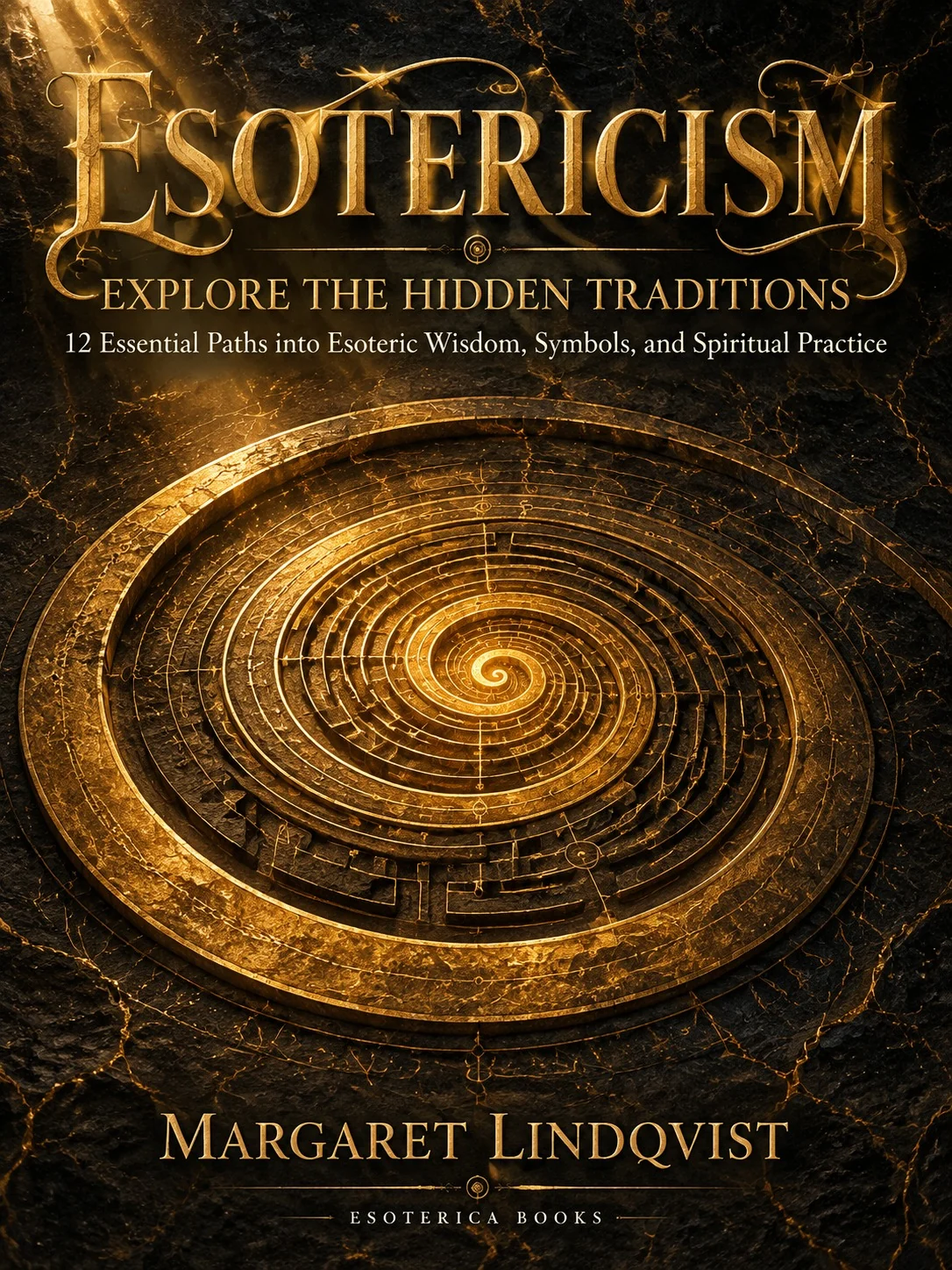

🏛 Books from this publisher Esoterica Books
All books from this publisher →







You might also like
See more →







Have a question about this item?
Ask about the edition, condition, delivery or anything else — we reply by email or phone, usually within a day.
