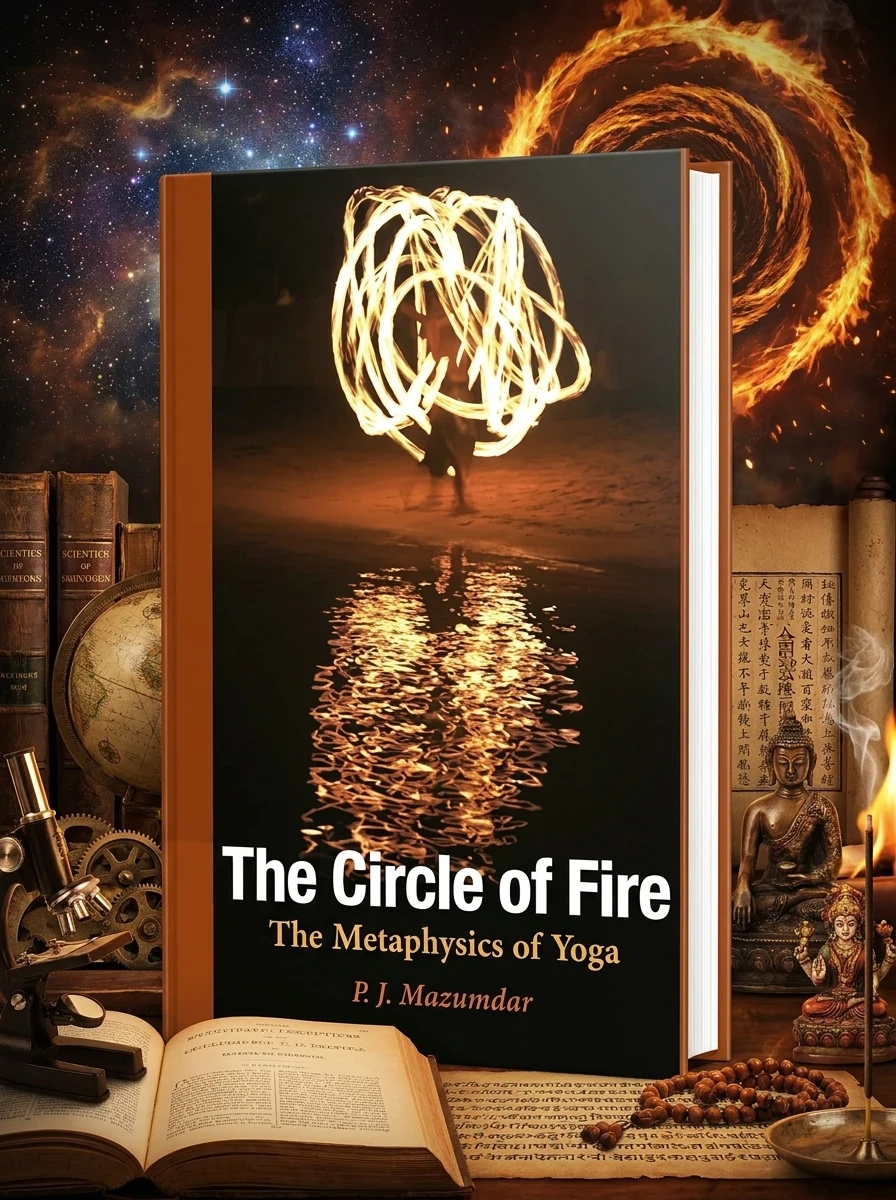
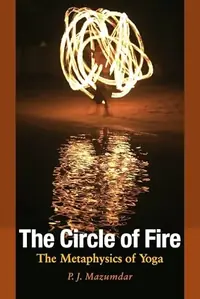
The Circle of Fire: The Metaphysics of Yoga


This edition can be ordered. No arrival date is confirmed.
Unite ancient wisdom with modern inquiry to uncover life's profound purpose.
P.J. Mazumdar's "The Circle of Fire" offers a compelling exploration of existence's ultimate questions, bridging the perceived gap between scientific understanding and spiritual insight. Drawing on his unique background as a physician steeped in Hindu tradition, Mazumdar deftly synthesizes Western scientific thought with the rich tapestry of Indian philosophies, including both Hindu and Buddhist perspectives. The work particularly illuminates Advaita Vedanta, Hinduism's highest philosophical school, demonstrating its practical relevance through the lens of Yoga. It's an essential read for those seeking a coherent framework that integrates the analytical with the transcendent.
This work resides within the tradition of syncretic esoteric philosophy, specifically bridging Hindu metaphysics with Western scientific inquiry. It reflects a period where Eastern spiritual frameworks, particularly Advaita Vedanta, were being interpreted through the lens of modern analytical thought.


📝 Description: The Circle of Fire: The Metaphysics of Yoga
💎 Expert review
📖 Why choose it
Why this book is worth reading
Readers seeking a coherent framework that integrates analytical rigor with transcendent spiritual insight will find profound value here. Those interested in bridging the gap between scientific understanding and spiritual experience will appreciate the author’s unique perspective as a physician steeped in Hindu tradition. It is ideal for individuals eager to explore Advaita Vedanta not just as abstract theory, but through the practical lens of Yoga. By uniting ancient wisdom with modern inquiry, this book helps uncover life's profound purpose, offering a compelling exploration of existence's ultimate questions for the intellectually curious seeker.
⭐ Reader reviews
Reader rating
P.J. Mazumdar offers a sophisticated synthesis of Western science and Indian philosophy, particularly Advaita Vedanta. The text is intellectually dense, appealing to those who enjoy rigorous metaphysical debate and cross-cultural analysis. However, it does not suit readers seeking simple devotional practices or straightforward religious dogma without philosophical underpinning. Those looking for purely anecdotal spiritual stories may find the analytical approach dry or overly academic. It requires patience and a willingness to engage with complex theoretical frameworks rather than immediate emotional resonance or practical ritual guidance.
❓ Frequently asked questions
📖 Who should read this
If you are a seeker intrigued by the intersection of scientific rationalism and ancient spiritual wisdom, or if you wish to understand the philosophical depth behind Yoga and non-dual traditions, this book is for you. It's perfect for the analytical mind yearning for spiritual meaning.
🎯 Key themes and symbolism
Science & Spirituality
This book masterfully examines how empirical science and profound spiritual truths, often seen as disparate, can converge to offer a more complete understanding of reality. Mazumdar, himself a medical professional, navigates this complex terrain to show their underlying harmony rather than conflict, seeking a unified perspective on life's deepest mysteries.
Atheistic Indian Traditions
Delving into the philosophical foundations of both Hinduism and Buddhism, the text highlights their "atheistic" dimensions, focusing on liberation achieved through self-realization rather than external deity worship. It provides a nuanced view of these traditions, emphasizing their rational and experiential paths to understanding consciousness and existence, beyond conventional religious dogma.
Advaita Vedanta & Yoga
The author places a special emphasis on Advaita Vedanta, the non-dualistic school of Hindu thought, as the pinnacle of philosophical inquiry. He then meticulously connects these profound Advaitic insights to the practical discipline of Yoga, demonstrating how yogic practices serve as a direct path to experiencing the non-dual reality described in Advaita.
💬 Quotes from the book
“The chasm between empirical observation and spiritual realization narrows when viewed through the lens of a unified consciousness.”
“True liberation isn't found in dogma, but in the direct experience of non-dual reality, made accessible through dedicated yogic practice.”
📜 Historical context
📚 Glossary
- Advaita
- Metaphysics
- Jnanakanda
📔 Questions to reflect on
- How do you personally reconcile scientific understanding with your spiritual or philosophical beliefs about the purpose of life?
- Reflect on a time when a 'non-dual' experience (a sense of oneness or interconnectedness) shifted your perspective. How does it relate to the book's themes?
- Consider the idea of 'atheistic' spiritual traditions. What does this concept mean to you, and how might it challenge conventional definitions of religion?
🏛 Books from this publisher North Atlantic Books
All books from this publisher →



You might also like
See more →