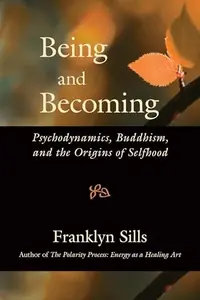
Being and Becoming: Psychodynamics, Buddhism, and the Origins of Selfhood


This edition can be ordered. No arrival date is confirmed.
Unravel the enigma of selfhood where ancient wisdom meets modern psychology.
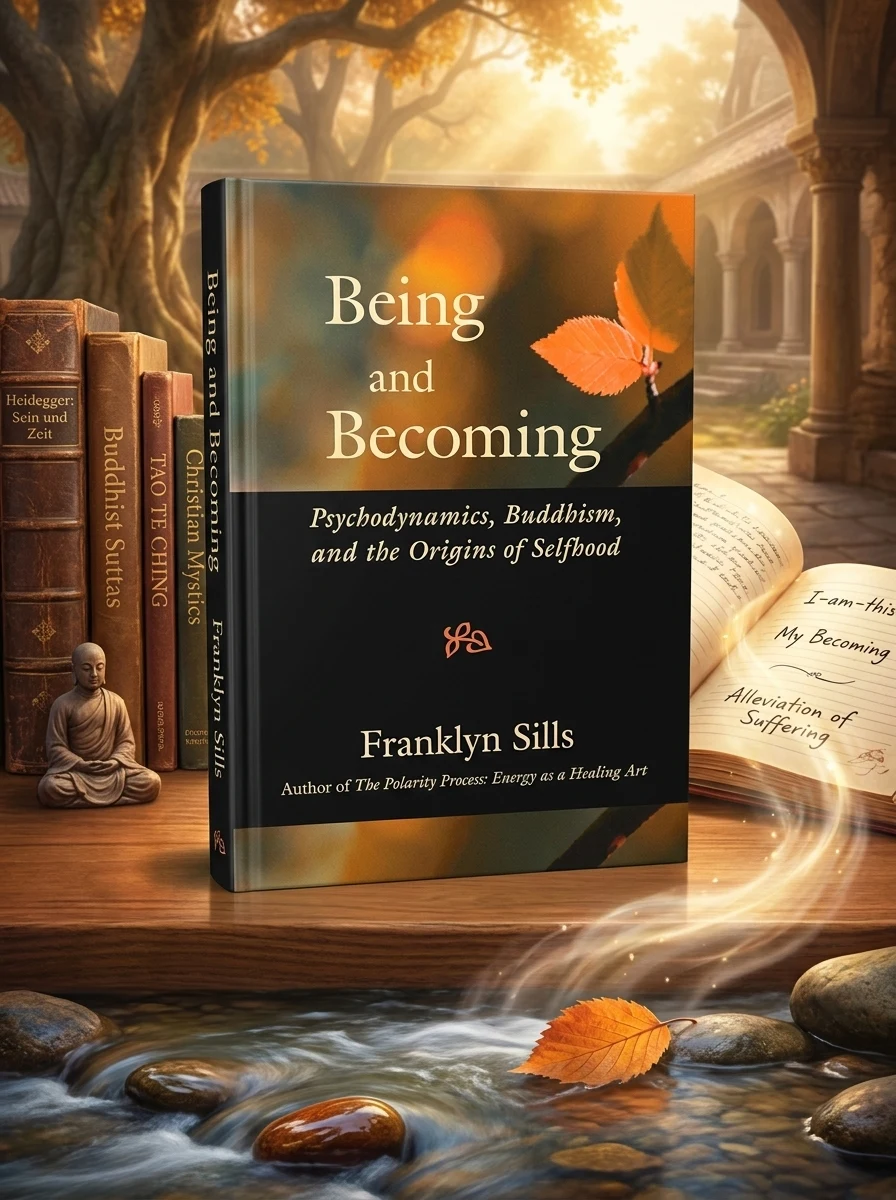
This profound work by Franklyn Sills and Maura Sills navigates the intricate landscape of what it means to be human, presenting a cohesive framework for understanding the nature of the self. By seamlessly integrating psychodynamic theories, pre- and perinatal psychology, and Buddhist self-psychology with insights from Heidegger, Taoism, and Christianity, the authors challenge static notions of identity. They propose that selfhood is an active process of "becoming" rather than a fixed state of "being," offering a comprehensive approach to alleviate suffering through deeper self-understanding.
This text resides at the intersection of contemporary transpersonal psychology and comparative philosophy, bridging Western psychodynamic theory with Eastern contemplative traditions. It reflects a modern esoteric synthesis that seeks to demystify human consciousness through interdisciplinary dialogue rather than dogmatic adherence.


📝 Description: Being and Becoming: Psychodynamics, Buddhism, and the Origins of Selfhood
💎 Expert review
📖 Why choose it
Why this book is worth reading
This book is an essential guide for seekers who feel that traditional psychological models or rigid religious doctrines fail to capture the fluid, dynamic nature of human identity. Readers tired of static definitions of the self will find profound relief in the authors' proposal of 'becoming' over 'being.' It offers a cohesive framework for those navigating the complex landscape of pre- and perinatal psychology, providing tools to alleviate suffering through deeper self-understanding. If you are interested in how ancient wisdom intersects with modern scientific inquiry, this work illuminates the path toward a more authentic, process-oriented existence.
⭐ Reader reviews
Reader rating
Sills and Sills offer a rigorous intellectual synthesis that may alienate readers seeking simple spiritual advice or quick fixes. The dense integration of Heideggerian philosophy, Taoism, Christianity, and psychodynamic theory requires patience and academic stamina. Those looking for straightforward Buddhist practice manuals or purely clinical psychological guides will likely find the scope too diffuse. However, for scholars and serious practitioners willing to engage with abstract concepts regarding the origins of selfhood, it provides a necessary, albeit demanding, corrective to fixed identity narratives.
❓ Frequently asked questions
📖 Who should read this
If you are a therapist, counselor, or psychology professional seeking to deepen your understanding of selfhood and its origins, this book offers an invaluable interdisciplinary perspective. It's also for anyone on a spiritual or philosophical quest to explore the fundamental question of existence through a rigorous, integrated lens.
🎯 Key themes and symbolism
The Dynamic Self
The book meticulously redefines selfhood, moving beyond a fixed concept of 'being' to embrace an evolving process of 'I-am-this' or 'my becoming.' It explores how our sense of self is continually constructed through experience and relationship, emphasizing fluidity over permanence as a core aspect of our existence.
East Meets West Psychology
Sills masterfully weaves together Western psychodynamic theories, including the work of Fairbairn and Winnicott on object relations and early developmental experiences, with Eastern spiritual philosophies like Buddhism. This synthesis creates a unique lens through which to examine the origins of personal identity and the roots of psychological distress.
Alleviating Suffering's Roots
At its heart, this text seeks to understand the fundamental sources of human suffering. By elucidating the complex interplay between early relational dynamics, psychological processes, and spiritual insights, the authors offer a path toward greater awareness and ultimately, a more compassionate and integrated way of navigating the human condition.
💬 Quotes from the book
“Our essence is not a static state, but a continuous unfolding, a 'this-ing' in every moment of experience.”
“The early relational field, that primary crucible of connection, echoes through every subsequent experience of self and other.”
📜 Historical context
📚 Glossary
- Object Relations Theory
- Perinatal Psychology
- Selfhood
📔 Questions to reflect on
- Reflect on a time you felt your 'self' was fluid or changing. How does this experience relate to the concept of 'becoming' rather than 'being'?
- Consider the influences of your earliest relationships. How might these 'object relations' continue to shape your current sense of identity or your interactions with others?
- How might integrating a spiritual perspective on suffering, such as from Buddhism, alter your approach to psychological challenges or personal growth?
🏛 Books from this publisher North Atlantic Books
All books from this publisher →
You might also like
See more →