
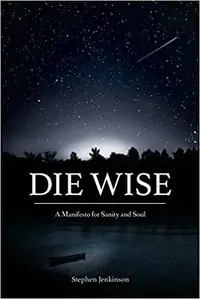
Die Wise: A Manifesto for Sanity and Soul


Stock reported in the catalog; fulfillment is confirmed with your request.
Unlearn comfort; embrace death as life's profoundest, most responsible act.
Stephen Jenkinson's powerful work dismantles our modern avoidance of mortality, refusing to offer easy answers or sentimental solace. Instead, he presents dying as an essential skill, cultivated through conscious living and deep engagement with life's painful beauty. Drawing on two decades of experience, this manifesto challenges readers to view a "good death" not as an escape from suffering, but as a moral, spiritual, and communal obligation. It's a call to reclaim death's central place in human experience, transforming how we live, love, and care for one another.
This work sits firmly within the contemporary esoteric and philosophical tradition that reclaims mortality as a spiritual discipline rather than a medical failure. It aligns with modern occult-philosophy movements that seek to integrate shadow work and existential awareness into daily living.


📝 Description: Die Wise: A Manifesto for Sanity and Soul
💎 Expert review
📖 Why choose it
Why this book is worth reading
You will gain from this manifesto if you are weary of shallow positivity and seek a deeper, more responsible engagement with life’s inevitable end. Jenkinson and Shaw offer a profound alternative to cultural avoidance, inviting you to view dying not as a defeat but as an essential skill for living fully. This book is for those ready to unlearn the comfort of denial and embrace the painful beauty of existence. It transforms your perspective on care, love, and community by placing death at the center of human experience. If you desire a moral and spiritual obligation to confront mortality consciously, this text provides the rigorous framework needed to reclaim sanity and soul in an age of distraction.
⭐ Reader reviews
Reader rating
This is a demanding text that refuses easy solace or sentimental answers, making it unsuitable for readers seeking light self-help or quick fixes. It appeals to those willing to sit with discomfort and dismantle modern avoidance of mortality. The authors challenge the reader to treat dying as a communal obligation rather than an escape from suffering. While powerful for those engaged in deep spiritual inquiry, it may alienate casual readers preferring uplifting narratives. Its strength lies in its uncompromising call to reclaim death’s central place in our lives, offering a rigorous path for those ready to cultivate the skill of conscious living through the lens of mortality.
❓ Frequently asked questions
📖 Who should read this
If you seek more than platitudes about grief, or feel a deeper calling to understand life's final act, this book challenges and transforms your perspective. It offers profound wisdom for those ready to confront mortality head-on, not as a problem to be solved, but as a sacred human journey.
🎯 Key themes and symbolism
Dying as a Skill
Jenkinson argues that the ability to die well is not innate but a learned proficiency, much like any other profound human endeavor. This book reframes dying from a passive, medicalized event into an active, conscious engagement, urging us to cultivate the wisdom and courage necessary to face our final passage with integrity and purpose, rather than simply succumbing.
The Moral Imperative of Death
Far from a personal preference, dying with wisdom is presented as a fundamental responsibility owed to both our ancestors and future generations. The author contends that how we approach death profoundly impacts the fabric of society, shaping our capacity for collective compassion and communal support. It's a call to ethical engagement with mortality.
Reclaiming Death's Centrality
Our culture often banishes death to the periphery, sanitizing and minimizing its impact. This book champions bringing death back to the heart of human experience, seeing it not as an unfortunate end but as an integral, potent force that defines our understanding of life, love, and community. It's an uprising against the "managed death" industry.
💬 Quotes from the book
“To die well is not a gentle fading, but a fierce, conscious engagement with life's ultimate frontier.”
“Our duty to the dead and the unborn demands we learn the forgotten craft of departure, a profound obligation of soul.”
📜 Historical context
📚 Glossary
- Die Wise
- Managed Death
- Village-mindedness
📔 Questions to reflect on
- How has modern society influenced your personal understanding and fear of death, and what aspects of this book challenge those perceptions?
- What practices might you cultivate in your life to approach dying not as an end, but as an act of profound responsibility and skill?
- Consider how your community currently supports the dying and honors the dead. What does 'village-mindedness' mean in this context, and how might it be fostered?
🏛 Books from this publisher North Atlantic Books
All books from this publisher →



You might also like
See more →