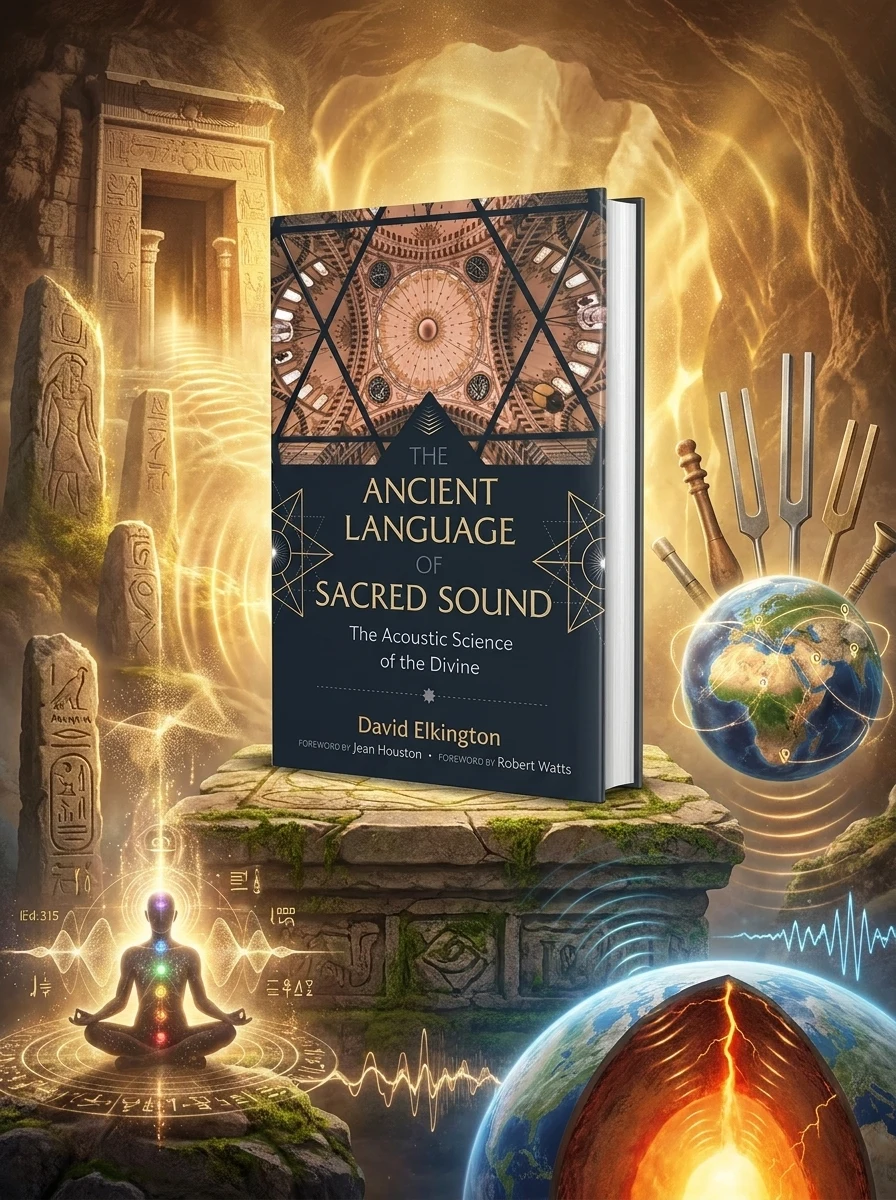
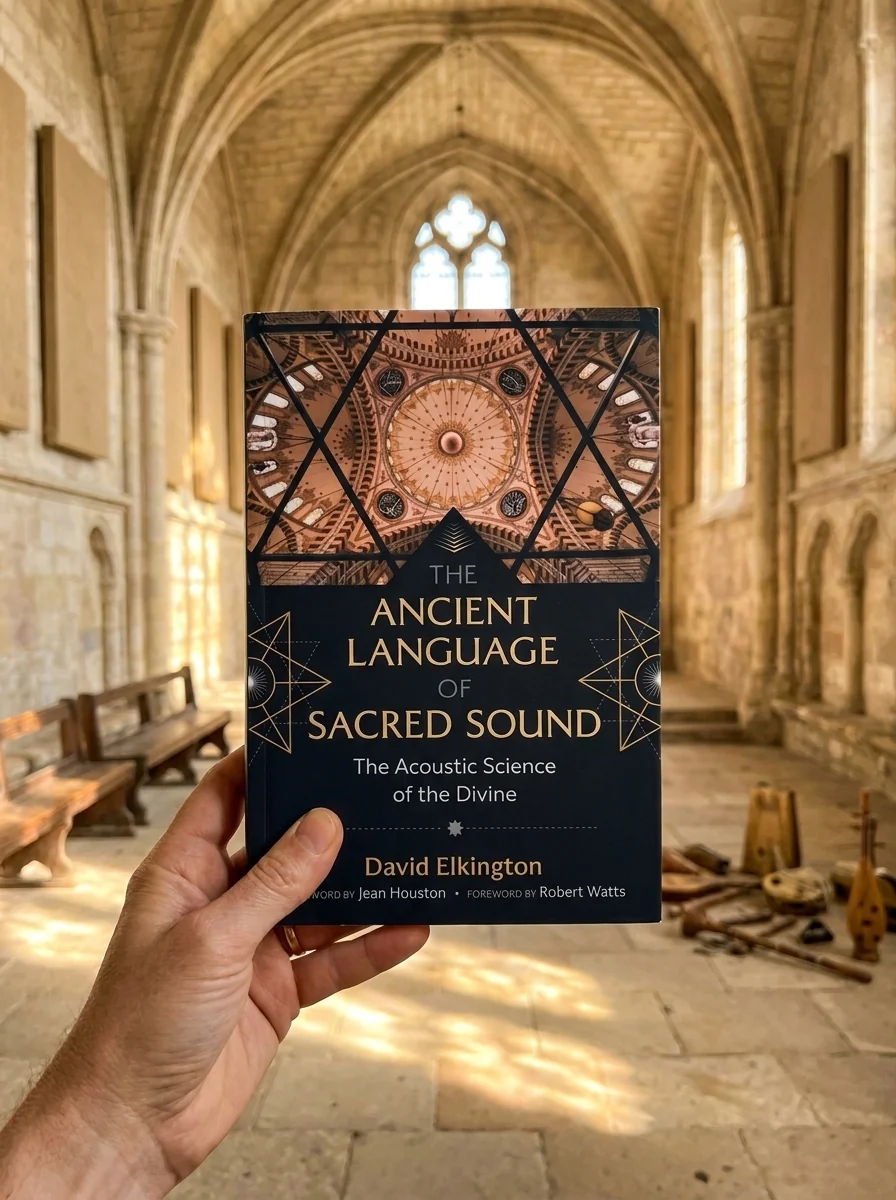

The Ancient Language of Sacred Sound: The Acoustic Science of the Divine (Edition, Revised and Expanded of in the Name of the Gods)
A study linking Earth's natural resonant frequencies, ancient architecture, human consciousness, and early religion.
This work explores how ancestral builders designed sacred sites according to the low-frequency rhythms of the Earth. By matching human alpha brain waves with the acoustic properties of stone monuments, early cultures established communication with divine forces. The author uses acoustic experiments to show how vocalization in pyramids and cathedrals produced sound patterns that shaped early hieroglyphs, myths, and religious traditions.
The book examines historical structures across global traditions, including European monuments like Stonehenge, South American sites like Machu Picchu, and Egyptian and Mexican pyramids, focusing on their shared acoustic phenomena.


📝 Description: The Ancient Language of Sacred Sound: The Acoustic Science of the Divine (Edition, Revised and Expanded of in the Name of the Gods)
💎 Expert review
📖 Why choose it
Why this book is worth reading
Readers fascinated by the intersection of physics, spirituality, and ancient history will find this revised edition deeply rewarding. David Elkington offers a compelling narrative that challenges conventional views on the origins of religion, proposing that sacred spaces were engineered to manipulate human consciousness through sound. If you have ever wondered why cathedrals, temples, or pyramids evoke such profound emotional responses, this book provides a sonic explanation rooted in the Schumann Resonance. It is ideal for those seeking to understand how ancient cultures harnessed acoustic science to align with planetary rhythms and access altered states of awareness. This text serves as a guide for anyone wishing to reconnect with the Earth's divine heartbeat through the lens of sacred architecture and linguistic heritage.
⭐ Reader reviews
Reader rating
Arrived faster than expected and well packaged. It connects ideas I'd only seen treated separately elsewhere. I found myself reading passages aloud just to sit with them. Deserves a place on any esoteric bookshelf.
Elkington presents a bold thesis linking terrestrial resonance to spiritual awakening, arguing that hieroglyphs and myths are essentially acoustic records of consciousness manipulation. While the concept of aligning human alpha waves with planetary rhythms is intriguing, the book requires an open mind regarding its speculative nature. It does not suit readers who demand strict empirical scientific validation or those skeptical of metaphysical interpretations of archaeological data. However, for those interested in the esoteric history of sound and sacred geometry, it offers a unique perspective on how ancient builders engineered divine experiences. The expanded edition enriches this exploration, making it a valuable addition to discussions on the acoustic origins of religious practice.
❓ Frequently asked questions
📖 Who should read this
Readers fascinated by the intersection of physics, anthropology, and mysticism will find this compelling. It suits those questioning the origins of ritual and seeking a scientific framework for understanding why sacred spaces feel spiritually potent.
🎯 Key themes and symbolism
Earth's Invisible Pulse
The book details the Schumann Resonance as the planetary baseline frequency. It explains how this specific electromagnetic rhythm synchronizes with the human brain's alpha state, creating a physiological bridge between the earth and human consciousness during meditation and deep rest.
Architecture of Resonance
Elkington analyzes stupas, pyramids, and cathedrals not merely as visual monuments but as acoustic instruments. He demonstrates how their geometric proportions amplify specific sound frequencies when activated by chanting, effectively turning these sites into tuning forks for the collective unconscious.
Myth as Sonic Code
The author posits that ancient hero narratives are encoded records of acoustic phenomena. He interprets hieroglyphs as phonetic representations of divine sound patterns, suggesting that early religious rituals were designed to replicate the harmonic frequencies found in these natural and built environments.
📜 Historical context
📚 Glossary
- Schumann Resonance
- Alpha Waves
- Acoustic Archaeology
📔 Questions to reflect on
- When you stand in a quiet, ancient space, do you feel a physical vibration or a sense of expansion? Describe that sensation.
- How might your perception of a sacred ritual change if you viewed the chanting not as prayer, but as a tool for altering brainwave states?
- Consider a modern structure you find calming. Does its architecture or ambient sound contribute to its peace, similar to the acoustic principles described?
📖 Read on the blog
🏛 Books from this publisher Inner Traditions International
All books from this publisher →







You might also like
See more →



Have a question about this item?
Ask about the edition, condition, delivery or anything else — we reply by email or phone, usually within a day.
