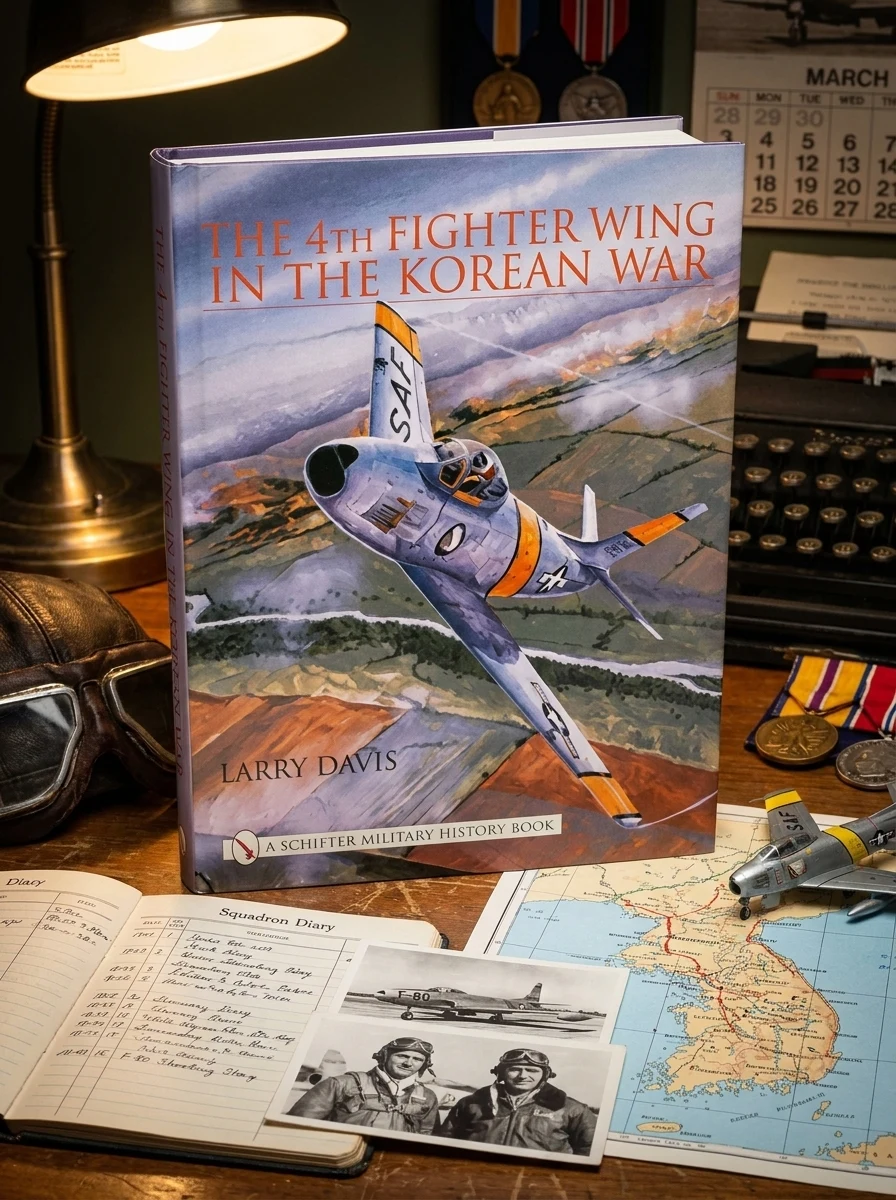
The 4th Fighter Wing in the Korean War
This edition can be ordered. No arrival date is confirmed.
Uncover the jet-age legend of the 4th Wing’s deadly aerial mastery in Korea.
This volume chronicles the evolution of the 4th Fighter Wing, from its 1946 reactivation through the Korean conflict. It details the transition from F-80 jets to the iconic F-86 Sabre, capturing the dawn of jet combat. Drawing on squadron diaries and pilot interviews, it highlights key moments like LtCol Bruce Hinton’s first MiG kill and Capt Jim Jabara becoming history’s first jet ace. With over 500 verified victories and twenty-five aces, the book offers a comprehensive look at the unit’s dominance, supported by rare photographs and complete loss lists.
This volume belongs to the genre of specialized military history, focusing on tactical evolution and unit-specific narratives within the broader context of post-war aviation development. It serves as a detailed record of the transition from propeller-driven aircraft to jet-powered combat systems during the Korean conflict.


📝 Description: The 4th Fighter Wing in the Korean War
💎 Expert review
📖 Why choose it
Why this book is worth reading
Avid aviation enthusiasts and military historians will find this text indispensable for its granular focus on the 4th Fighter Wing’s pivotal role in the Korean War. Readers interested in the dawn of jet combat will appreciate the detailed account of the transition from F-80s to the iconic F-86 Sabre, grounded in primary sources like squadron diaries and pilot interviews. It is particularly valuable for those seeking verified statistics on aerial victories and loss lists, offering a comprehensive view of the unit's dominance through rare photographs and specific accounts of key figures like LtCol Bruce Hinton and Capt Jim Jabara.
⭐ Reader reviews
Reader rating
This edition finally does the material justice. I appreciated how the argument builds steadily from first principles. Highly recommend to serious students.
This edition finally does the material justice. Some sections stopped me cold in the best way. There's real depth here that reveals itself on a second reading. Delivery took a bit longer than quoted. Still worth having on the shelf.
My third book from this store and this one might be the best. It connects ideas I'd only seen treated separately elsewhere. Happy enough with the purchase.
Honestly wasn't sure what to expect, but I'm impressed. It's become a regular reference in my practice.
First purchase from this shop. The typesetting is comfortable for study, with good margins for notes. It reads better in small doses — a chapter at a time with notes. My only regret is not ordering it sooner.
This book provides a thorough, data-rich chronicle of the 4th Fighter Wing’s operational history, appealing strongly to specialists in Korean War aviation. The reliance on verified victories and primary interviews lends it significant authority for academic or serious hobbyist research. However, it is not suited for casual readers seeking narrative-driven war stories or broad strategic overviews. Those expecting dramatic, novelistic prose may find the focus on technical transitions and statistical loss lists dry. It is best appreciated by those who value precise historical documentation and tactical analysis over emotional engagement or general accessibility.
❓ Frequently asked questions
📖 Who should read this
Aviation historians and military enthusiasts seeking granular details on jet combat tactics. Ideal for those interested in primary source accounts from pilots and mechanics who shaped air superiority doctrine during the Korean conflict.
🎯 Key themes and symbolism
Jet Age Combat Tactics
The narrative explores the rapid adaptation to supersonic warfare, contrasting early jet limitations with the tactical superiority of the F-86. It examines how pilot training and aircraft performance evolved during the conflict, shaping modern air combat doctrine and the psychological burden of high-speed engagement.
Ace Culture and Identity
This section delves into the social dynamics of the 4th Wing, focusing on the rise of twenty-five aces. It analyzes how personal accounts and peer recognition fostered a unique unit ethos, balancing individual glory with collective duty amidst the intense pressure of sustained aerial warfare.
Logistics and Maintenance
Beyond dogfights, the book highlights the critical role of ground crews and technical representatives. It details the challenges of maintaining jet engines in harsh environments, emphasizing how mechanical reliability and rapid repair capabilities directly influenced mission success rates and pilot survival.
💬 Quotes from the book
“The transition from the F-80 to the F-86 marked not just a change in machinery, but a revolution in how we perceived the sky.”
“Every victory was a testament to the crew chiefs who kept the jets flying under the harshest conditions imaginable.”
📜 Historical context
📚 Glossary
- MiG Kill
- Jet Ace
- TDY
📔 Questions to reflect on
- How did the shift from propeller to jet engines alter the psychological experience of aerial combat?
- What role does personal testimony play in preserving the truth of historical military events?
- How might the legacy of the 4th Wing influence modern air force training and doctrine?
🏛 Books from this publisher Schiffer Publishing
All books from this publisher →
 89
89



You might also like
See more → 91
91


 91
91
 91
91
 91
91

 91
91