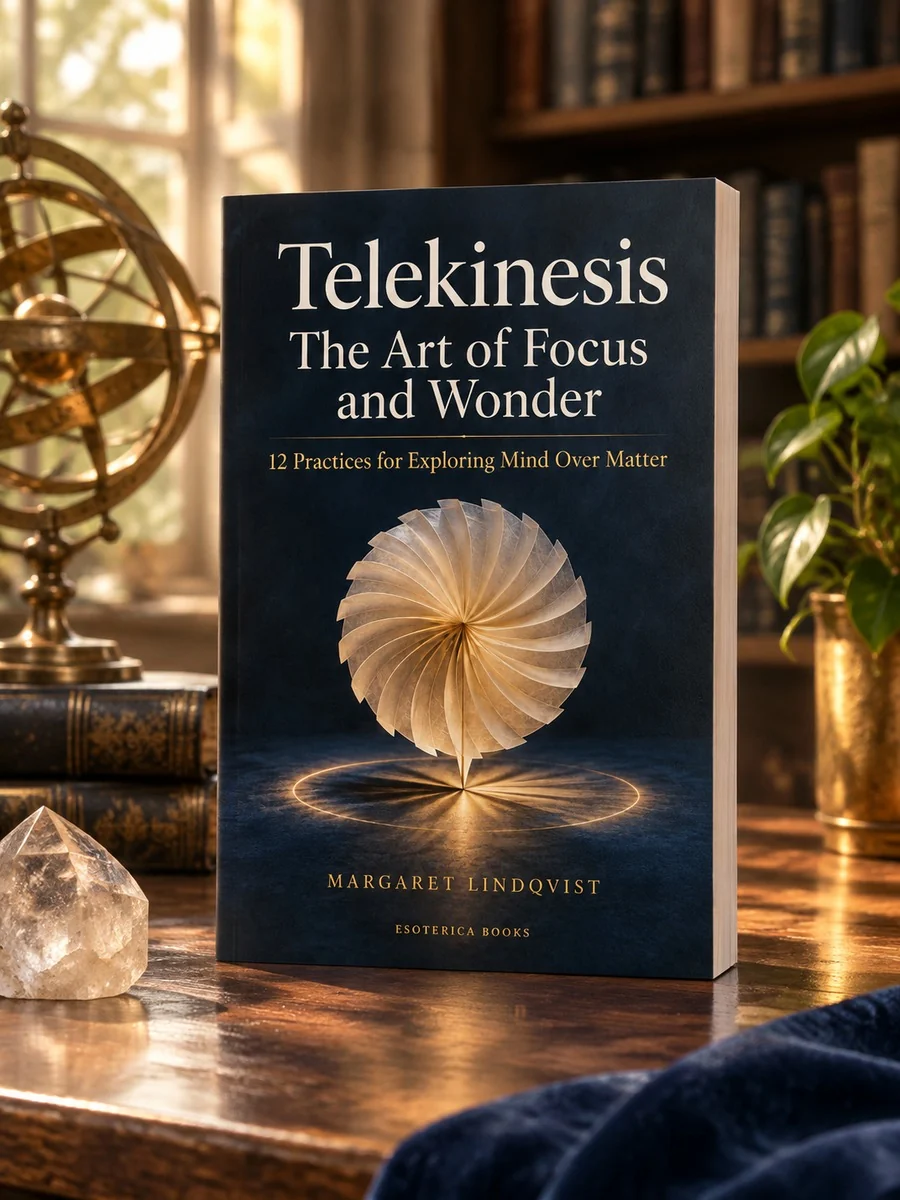

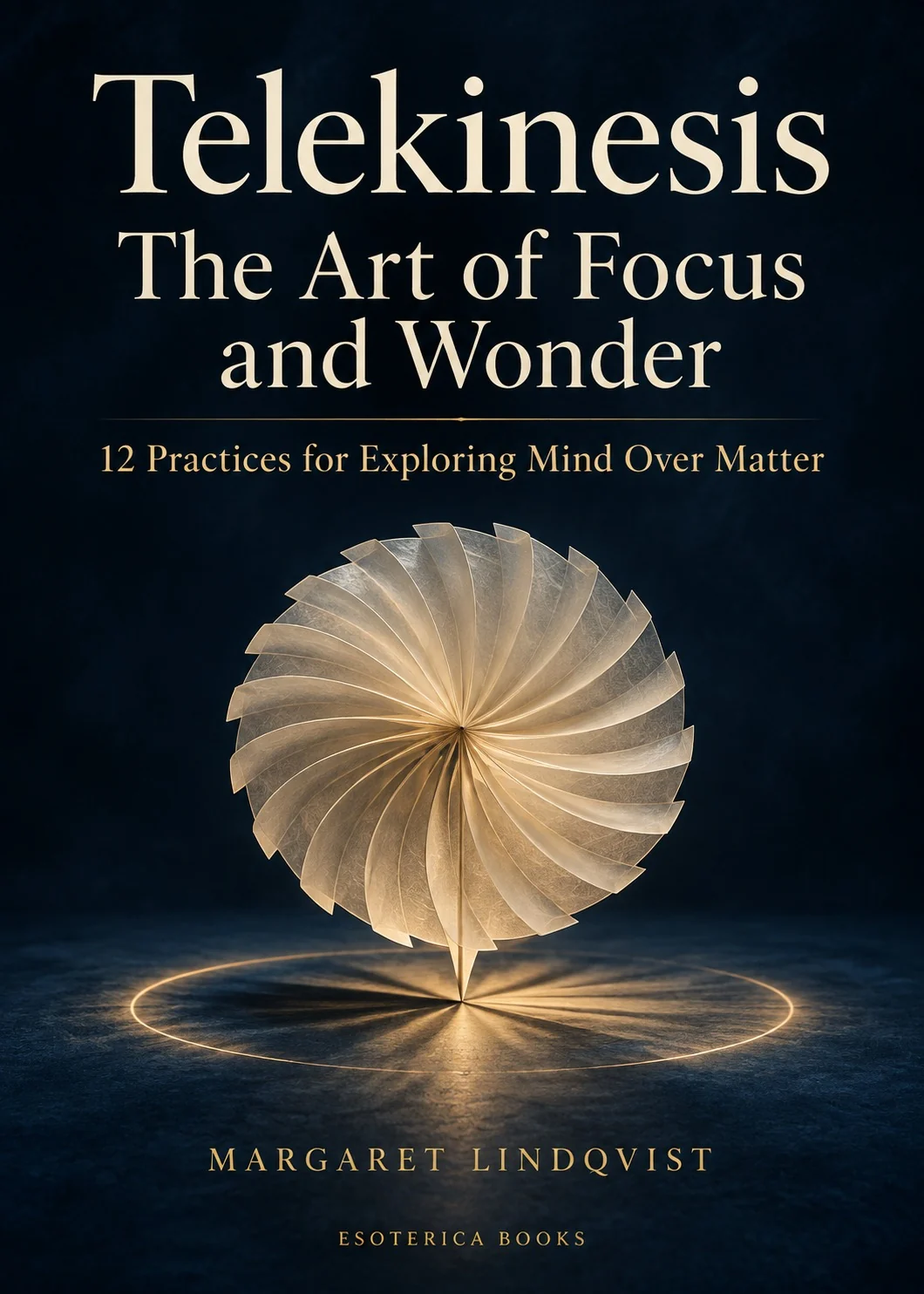
Telekinesis: The Art of Focus and Wonder
Explore telekinesis through 12 hands-on practices in concentration, visualization, and careful observation.
What is telekinesis, and how can you explore its intriguing idea of mind over matter? This beginner-friendly guide introduces 12 structured practices built around concentration, visualization, object observation, and personal experimentation. Using the five-step Quiet Orbit method, you'll learn to prepare a consistent practice space, select simple objects, establish clear intentions, distinguish imagined movement from observable movement, and document each session. From lightweight paper spinners and pendulums to independent experiments and reflective journaling, this book offers a thoughtful introduction to the telekinetic tradition.
Telekinesis belongs to a broader tradition of esoteric and popular fascination with the possibility of mental influence over physical objects. The book approaches this tradition through its terminology, imaginative appeal, and practical exercises while distinguishing it from telepathy, which concerns the purported communication of thoughts between minds.


📝 Description: Telekinesis: The Art of Focus and Wonder
📖 Why choose it
Why this book is worth reading
The appeal of this guide is its practical structure. Instead of leaving telekinesis as an intriguing but vague concept, it gives readers specific objects, exercises, observation steps, and journal formats to work with. The Quiet Orbit method makes it easy to organize individual sessions, while the chapters on psychokinesis, telepathy, and environmental influences provide useful distinctions. It's an inviting way to explore an unusual subject with both imagination and attention to detail.
⭐ Reader reviews
Reader rating
This preview makes a sensible choice: it begins with a small paper object rather than grand claims about extraordinary abilities. The Quiet Orbit method gives the material a recognizable structure, and its five stages translate into practical actions readers can follow. The sample 12-minute exercise is particularly useful, with precise timings, an intention statement, environmental considerations, and a suggested observation record. The distinction between visualization and observable movement is handled clearly, as is the need to consider airflow, temperature, static electricity, and vibration. The main limitation is its introductory level: readers seeking extensive philosophical analysis or advanced experimental design may find the approach too basic. As a practical beginner's introduction, however, it is coherent and refreshingly measured.
❓ Frequently asked questions
📖 Who should read this
Ideal for beginners curious about telekinesis, psychokinesis, concentration exercises, and esoteric approaches to mind over matter. Particularly suitable for readers who enjoy practical activities, personal experimentation, and reflective journaling rather than elaborate theoretical discussions.
🎯 Key themes and symbolism
Focused Concentration
Mind Over Matter
Visualization Practices
Observation Journaling
📜 Historical context
📚 Glossary
- Telekinesis
- Psychokinesis
- Telepathy
- Visualization
- The Quiet Orbit
- Observation Journal
📔 Questions to reflect on
- When I imagine an object moving, what details appear in my mental picture, and how do I distinguish those impressions from what I actually observe?
- Which environmental conditions, such as airflow, temperature, static electricity, or vibration, might influence the movement of an object during my practice sessions?
- How might the five stages of The Quiet Orbit help me develop a more consistent and thoughtful approach to exploring mind-over-matter traditions?
📖 Read on the blog
✍️ More books by this author Margaret Lindqvist






🏛 Books from this publisher Esoterica Books
All books from this publisher →







You might also like
See more →

Have a question about this item?
Ask about the edition, condition, delivery or anything else — we reply by email or phone, usually within a day.
