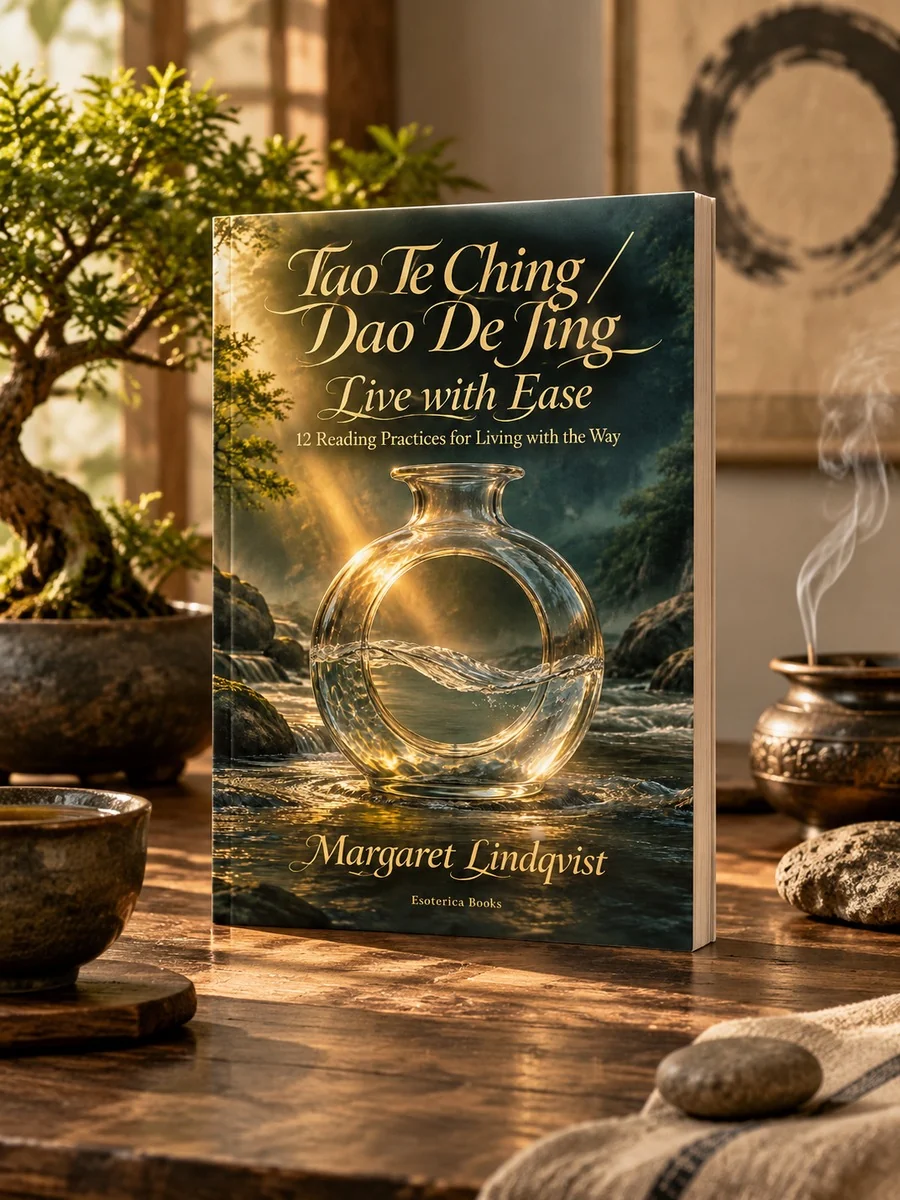
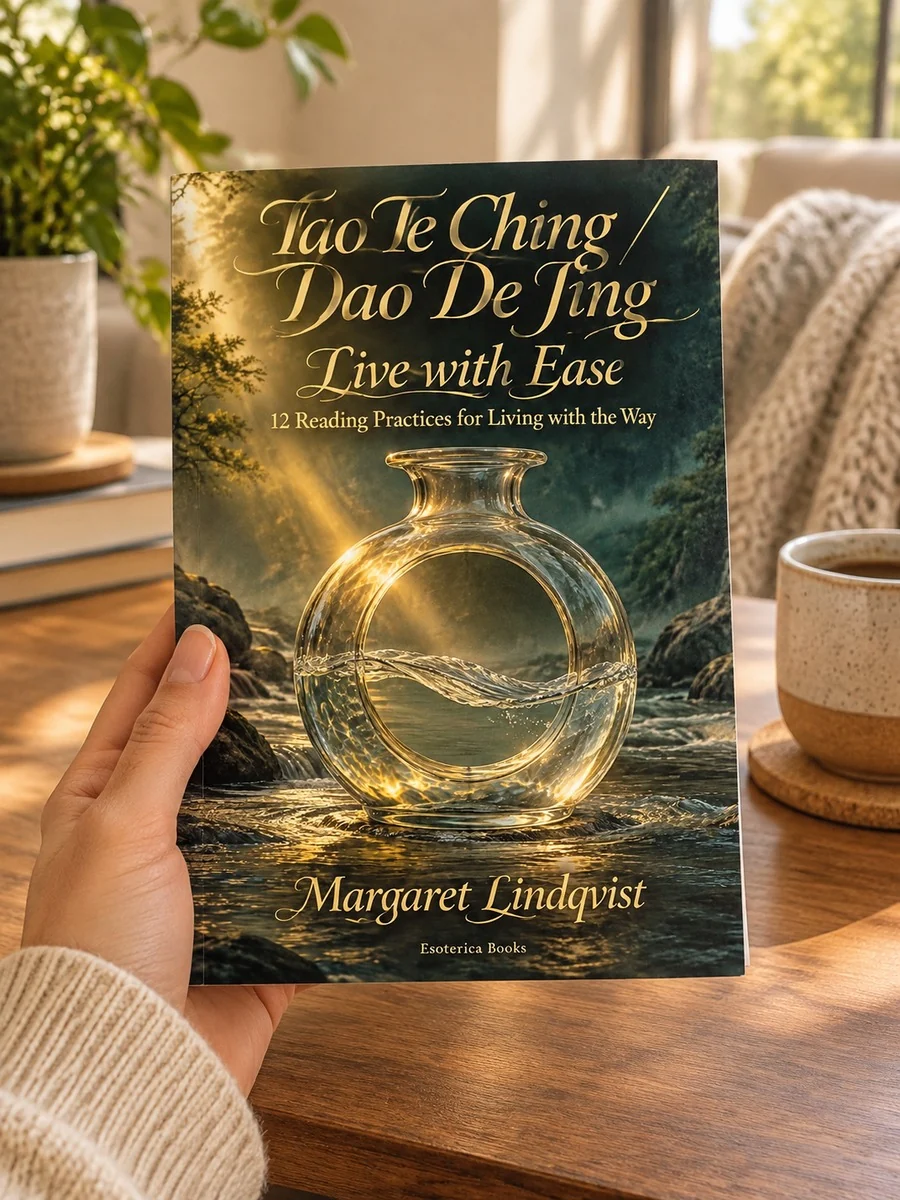
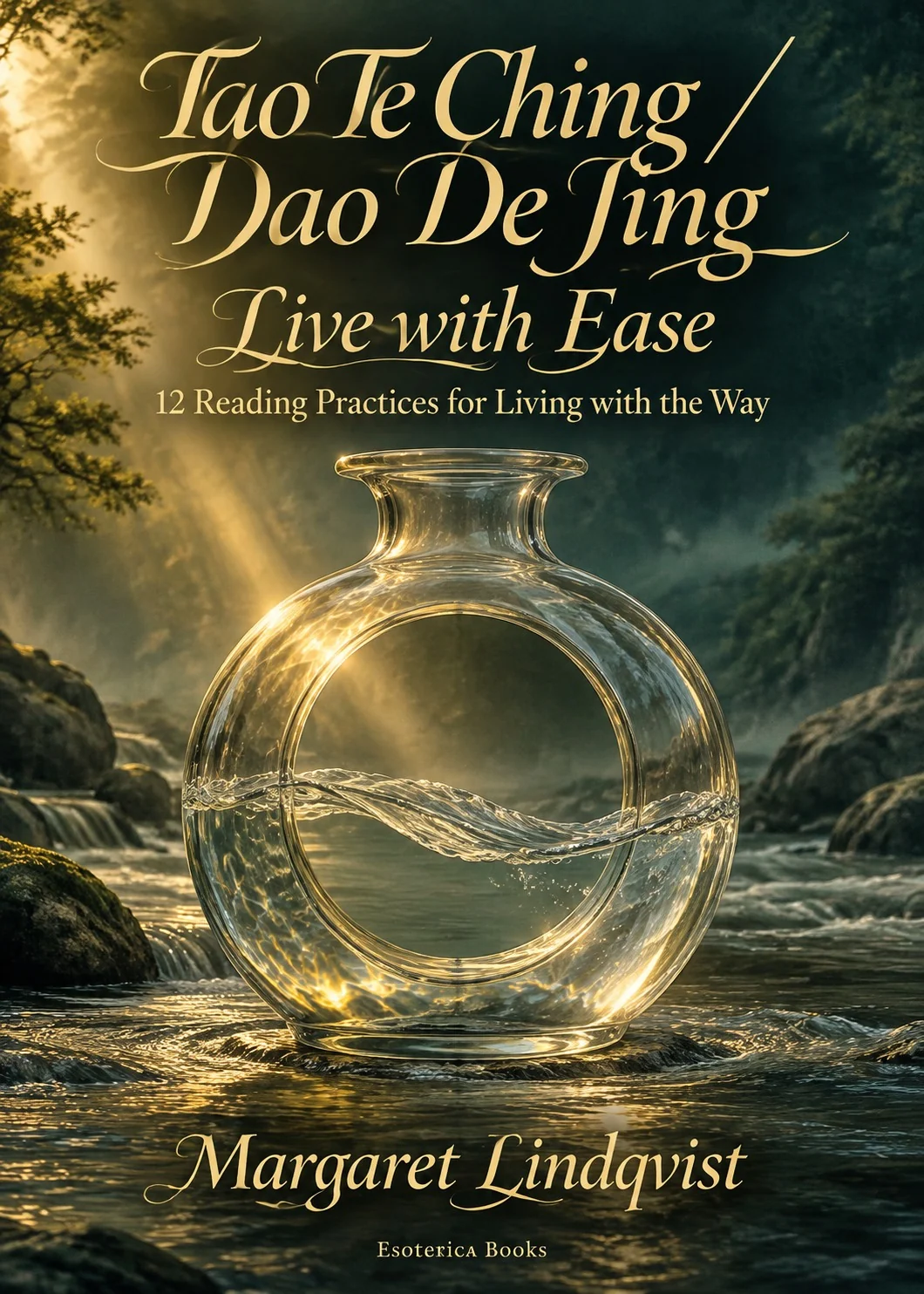
Tao Te Ching / Dao De Jing: Live with Ease
Discover the Tao Te Ching through five simple reading steps that bring the wisdom of the Way into everyday life.
The Tao Te Ching, also known as the Dao De Jing, explores simplicity, humility, naturalness, and the art of acting without unnecessary force. But its compact language and apparent paradoxes can challenge first-time readers. Margaret Lindqvist introduces The Wayfinding Practice, a five-step method for understanding short passages and connecting their teachings with ordinary experience. Through accessible explanations, practical exercises, and journal prompts, readers explore wu wei, water imagery, contentment, relationships, and leadership, building a personal reading routine that makes this classic easier to approach and revisit.
The Tao Te Ching is a classical Chinese text associated with the philosophical tradition of Daoism. Its reflections on the Way, naturalness, humility, and non-forcing invite readers to consider how human conduct might move more harmoniously with the unfolding of life.


📝 Description: Tao Te Ching / Dao De Jing: Live with Ease
📖 Why choose it
Why this book is worth reading
The Tao Te Ching is short, but reading it thoughtfully can take considerably longer than turning its pages. This guide gives beginners a practical way to approach its paradoxes without becoming trapped in the search for one definitive explanation. The five-stage Wayfinding Practice turns abstract ideas into concrete activities: examining unnecessary effort, observing natural rhythms, listening carefully, and reconsidering how to approach a decision. It is particularly useful for readers who want to engage with the classic rather than simply collect explanations of it.
⭐ Reader reviews
Reader rating
Margaret Lindqvist takes a practical approach to a text that can easily intimidate first-time readers. The strongest feature is The Wayfinding Practice, which provides five clearly defined stages for moving from a short passage to personal reflection and a concrete everyday response. The preview makes the method particularly accessible through its thirteen-minute wu wei exercise, complete with notebook instructions, timed stages, and specific questions. The contents also offer a sensible progression from foundational ideas to relationships, leadership, and independent reading. One limitation: readers seeking an in-depth historical, philological, or comparative study of the Tao Te Ching will need a more scholarly companion. This book is an introductory practice guide, not an academic commentary. Editorial assessment: a clear and approachable starting point.
❓ Frequently asked questions
📖 Who should read this
Ideal for beginners curious about the Tao Te Ching who want clear explanations, practical reading exercises, and ways to explore its teachings in everyday life. Also suitable for returning readers who appreciate a structured approach to reflection, relationships, and personal conduct.
🎯 Key themes and symbolism
Wu Wei
Water and Flexibility
Simplicity and Contentment
Everyday Wisdom
📜 Historical context
📚 Glossary
- Dao (Tao)
- De (Te)
- Wu Wei
- Ziran
- Yin and Yang
- Jing (Ching)
📔 Questions to reflect on
- Where in my everyday life am I adding effort, urgency, or control to something that might be approached more naturally?
- What can the image of water teach me about remaining flexible while still maintaining my values and boundaries?
- Which teaching from the Tao Te Ching would I most like to carry into my relationships, responsibilities, or decisions, and what small action could express it?
📖 Read on the blog
✍️ More books by this author Margaret Lindqvist


🏛 Books from this publisher Esoterica Books
All books from this publisher →
You might also like
See more →
Have a question about this item?
Ask about the edition, condition, delivery or anything else — we reply by email or phone, usually within a day.
