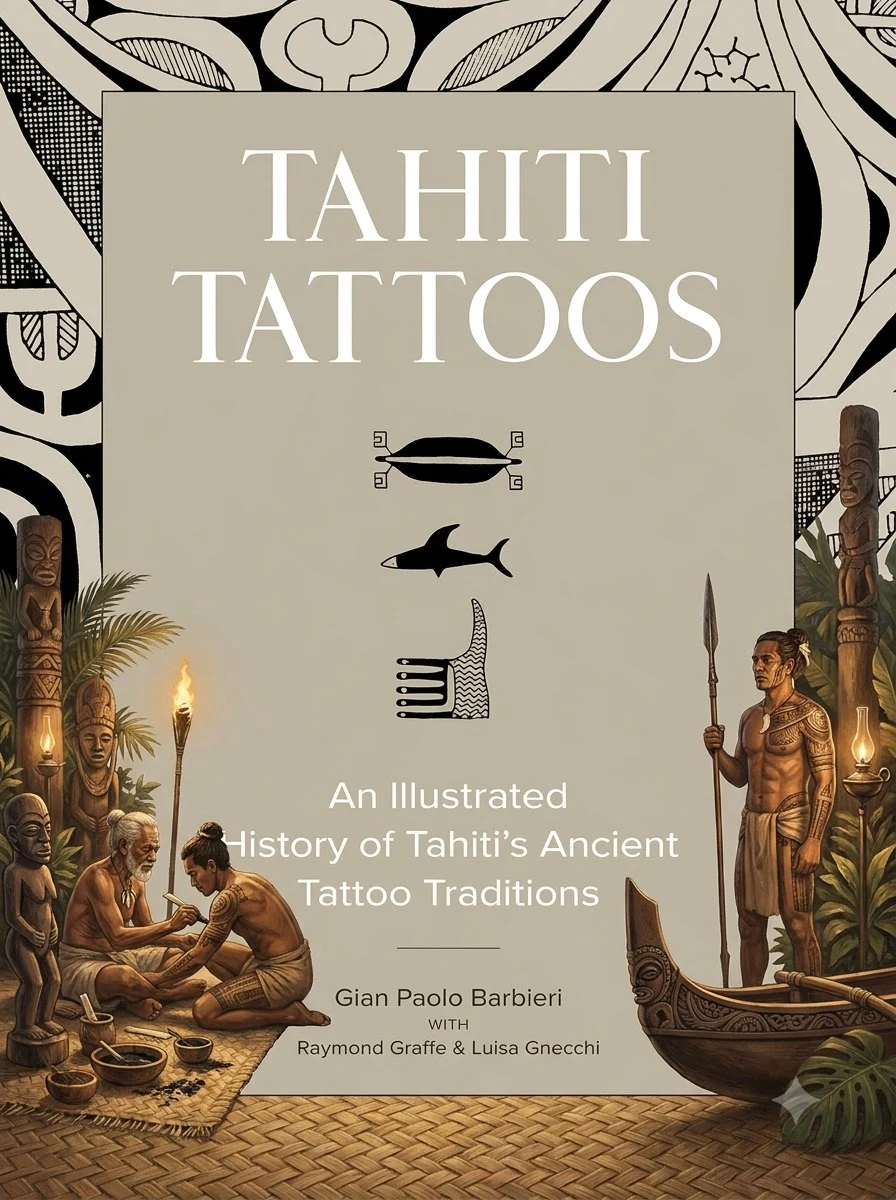
Tahiti Tattoos: An Illustrated History of Tahiti's Ancient Tattoo Traditions
This edition can be ordered. No arrival date is confirmed.
Uncover the sacred legacy of Tahitian tatau, etched in skin and spirit.
Embark on a visually stunning exploration of Tahiti's ancient tattooing traditions. This volume meticulously chronicles the origins, profound meanings, and enduring cultural impact of *tatau*, a practice that served as a living language inscribed upon the skin. Discover how these intricate designs communicated genealogy, social status, and personal identity. The book traces the artistry from ancestral tools and ceremonial rituals to its near-extinction under colonial suppression, culminating in its powerful modern resurgence as a symbol of heritage and resilience. A true testament to the indelible mark of culture.
This volume situates itself within the rich tapestry of Polynesian ethnography and indigenous art history, specifically focusing on the sacred practice of tatau in Tahiti. It bridges the gap between anthropological documentation and cultural preservation, highlighting a tradition that served as a living language inscribed upon the skin.


📝 Description: Tahiti Tattoos: An Illustrated History of Tahiti's Ancient Tattoo Traditions
💎 Expert review
📖 Why choose it
Why this book is worth reading
This book is an essential read for those deeply fascinated by the intersection of art, identity, and cultural resilience. Readers who appreciate visually stunning explorations of ancient traditions will find immense value in this meticulous chronicle of Tahiti’s tatau. It offers a profound look at how intricate designs communicated genealogy, social status, and personal identity, transforming skin into a canvas of heritage. Those interested in the enduring impact of colonial suppression and the subsequent resurgence of indigenous practices will gain a powerful understanding of cultural survival. This volume serves as a true testament to the indelible mark of culture, providing both visual inspiration and historical depth for anyone seeking to understand the sacred legacy etched in skin and spirit.
⭐ Reader reviews
Reader rating
While this visually stunning exploration offers a meticulous chronicle of Tahiti's ancient tattooing traditions, it may not suit readers seeking dense academic theory or dry statistical analysis. Those looking for a quick, superficial overview might find the detailed tracing of artistic tools and ceremonial rituals too slow-paced. However, for enthusiasts of esoteric history and indigenous art, it provides a compelling narrative of resilience against colonial suppression. The book excels in highlighting how tatau served as a living language of identity. It is best appreciated by those who value visual storytelling alongside historical context. Readers uninterested in the spiritual or cultural significance of body modification may find the focus on sacred legacy less engaging than the aesthetic details alone.
❓ Frequently asked questions
📖 Who should read this
If you're captivated by the profound intersection of art, history, and cultural identity, or seek to understand the powerful narratives etched onto human skin, this meticulously crafted volume awaits. Ideal for enthusiasts of body art, cultural studies, and indigenous traditions.
🎯 Key themes and symbolism
Tatau as Living Language
This book illuminates how Tahitian tattoos were far more than mere decoration; they functioned as a complex, visual language. Each line, curve, and motif conveyed intricate stories of ancestry, social standing, spiritual protection, and personal identity, effectively writing an individual's life and lineage directly onto their skin for all to see and understand within the community.
Symbolism and Craft
Delve into the profound symbolism embedded within iconic Tahitian patterns, revealing narratives of gods, warriors, and the natural world. The text meticulously details the ancestral tools, natural pigments, and sacred ceremonial rituals involved in creating these indelible marks, emphasizing how the act of tattooing bound individuals intrinsically to their community and its rich cultural tapestry.
Resilience and Revival
Witness the dramatic arc of Tahitian *tatau*, from its ancient prominence to its near eradication following the arrival of European missionaries. The book powerfully documents this period of suppression and subsequent reclamation, celebrating the dedication of modern Tahitian artists and cultural guardians who have bravely revived *tatau* as a vibrant expression of pride, heritage, and cultural resistance.
💬 Quotes from the book
“Each carefully placed line, each intricate curve, spoke volumes about one's lineage, spiritual connection, and journey through the world, a living biography etched upon the body's canvas.”
“Against the tide of colonial suppression, the spirit of *tatau* persisted, a quiet defiance that blossomed into a vibrant modern reclamation, proving that true heritage can never be fully erased.”
📜 Historical context
📚 Glossary
- Tatau
- Motif
- Rites of Passage
📔 Questions to reflect on
- How might the experience of a 'living language' inscribed on the body differ from written or oral traditions in terms of personal and communal identity?
- Consider the impact of cultural suppression on an indigenous art form. What lessons can be drawn from the Tahitian *tatau* revival for other threatened cultural practices?
- Reflect on how personal identity is expressed or marked in your own culture. What parallels or contrasts do you find with Tahitian *tatau* and its role in society?
🏛 Books from this publisher Schiffer Publishing
All books from this publisher →
 89
89







You might also like
See more → 91
91


 91
91
 91
91
 91
91
 91
91