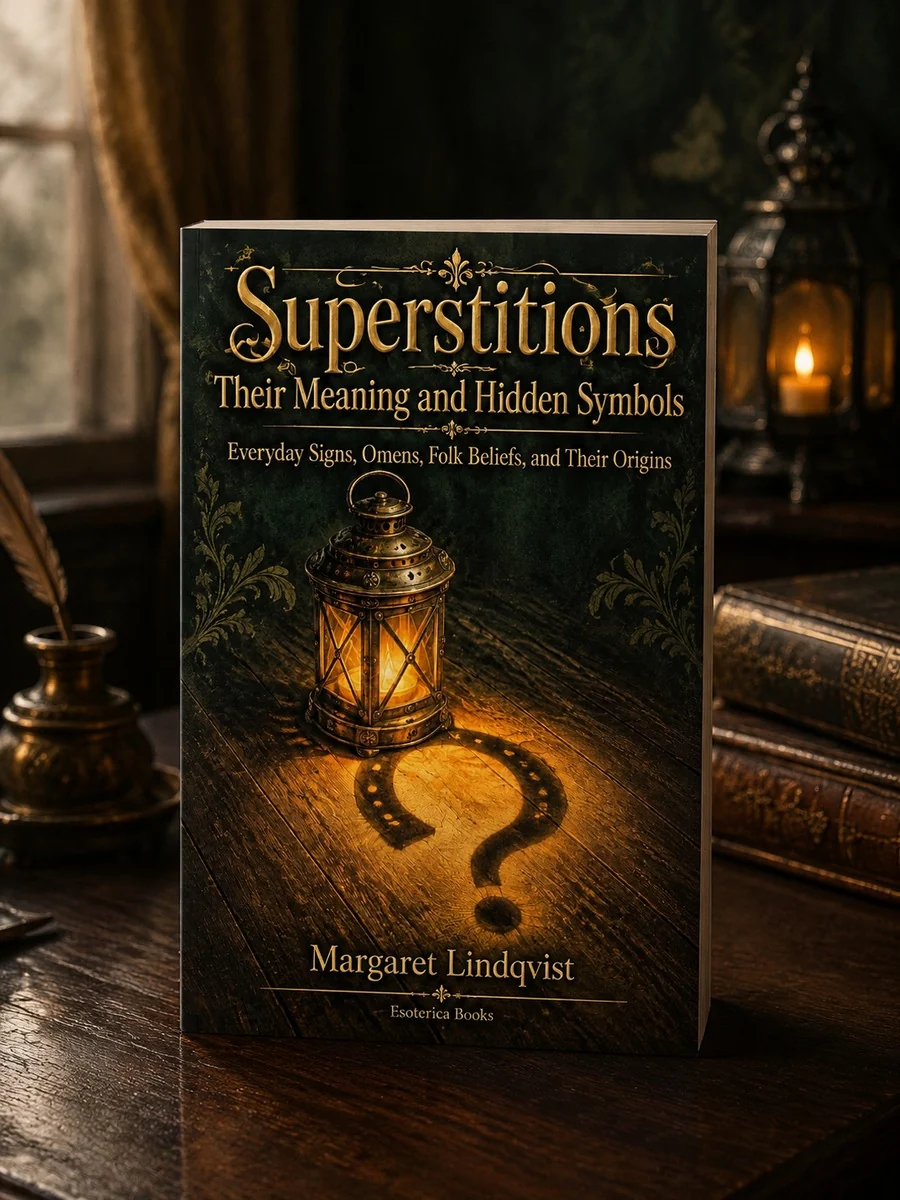
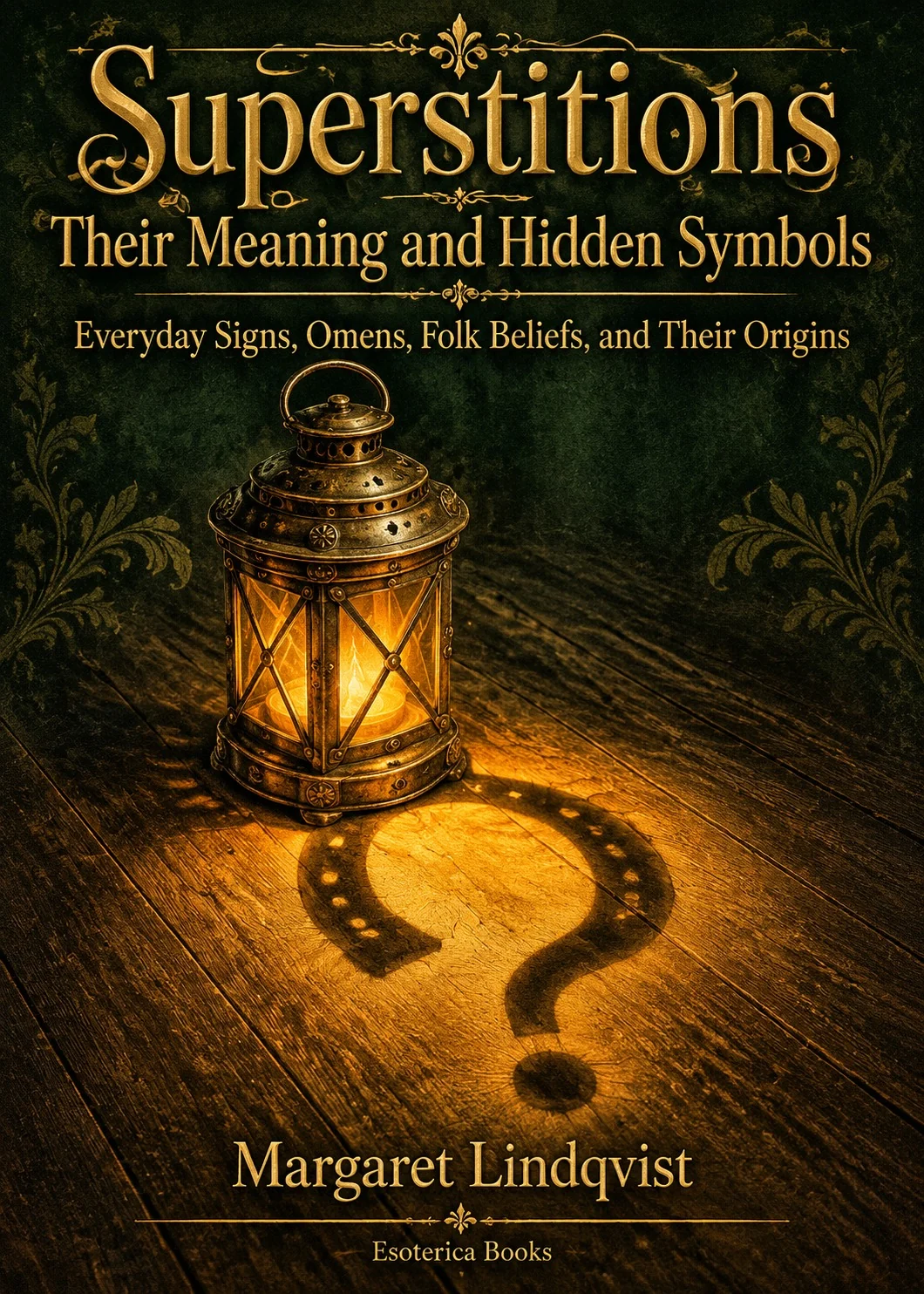
Superstitions: Their Meaning and Hidden Symbols
Discover what everyday superstitions mean, where their symbols come from, and how folklore gives them meaning.
Why do people knock on wood, cross their fingers, avoid ladders, or associate thirteen with bad luck? This beginner-friendly guide explores the meaning and cultural background of familiar superstitions, revealing the traditional associations behind everyday objects, animals, numbers, gestures, and household customs. Through Margaret Lindqvist's original Folklore Lantern method—Notice, Trace, Interpret, and Reflect—you will learn to recognize folk beliefs, investigate their possible origins, compare cultural interpretations, and develop your own thoughtful understanding of the signs and symbols woven into everyday life.
Superstitions belong to the wider world of folklore: beliefs, customs, stories, and symbolic associations transmitted through families and communities. Their meanings can differ considerably across cultures, making comparison and cultural context essential to understanding them.


📝 Description: Superstitions: Their Meaning and Hidden Symbols
📖 Why choose it
Why this book is worth reading
A familiar superstition can open a surprisingly interesting window into cultural memory. This book gives you a practical way to explore that window without getting lost in unsupported explanations. The Folklore Lantern provides four clear steps for examining a belief, comparing its traditional associations, and recording your own interpretation. From horseshoes and four-leaf clovers to black cats, thirteen, mirrors, and doorways, the examples make abstract ideas about folklore approachable and memorable.
⭐ Reader reviews
Reader rating
Margaret Lindqvist offers an approachable introduction to the meaning of everyday superstitions, organized around a clearly explained four-step method. The preview is particularly effective when discussing familiar examples: horseshoes, four-leaf clovers, black cats, crossed fingers, spilled salt, and unlucky numbers. Its strongest editorial choice is the distinction between traditional associations and personal interpretation, especially when symbols carry contrasting meanings across cultures. The practical Folklore Lantern exercise gives readers something concrete to try, rather than leaving them with definitions alone. One limitation: experienced folklore researchers may find the introductory treatment too basic, as the preview emphasizes accessible exploration rather than detailed historical documentation.
❓ Frequently asked questions
📖 Who should read this
Ideal for beginners curious about the meaning of superstitions, lucky and unlucky symbols, folk beliefs, and the stories behind familiar customs. Also suitable for folklore enthusiasts who enjoy comparing cultural traditions and keeping a personal journal of symbolic observations.
🎯 Key themes and symbolism
Everyday Superstitions
Folklore and Origins
Traditional Symbolism
Cultural Interpretations
📜 Historical context
📚 Glossary
- Superstition
- Omen
- Symbol
- Folk Belief
- Folklore
- Traditional Association
📔 Questions to reflect on
- Which everyday superstition catches your attention most often, and what traditional associations have you encountered surrounding it?
- Choose an animal, number, or household object that carries symbolic meaning in different traditions. How do those interpretations compare, and what cultural context might explain their differences?
- Think of a superstition passed along by someone in your family or community. What does it mean within that tradition, and how does your personal interpretation relate to it?
📖 Read on the blog
✍️ More books by this author Margaret Lindqvist




🏛 Books from this publisher Esoterica Books
All books from this publisher →




You might also like
See more →

Have a question about this item?
Ask about the edition, condition, delivery or anything else — we reply by email or phone, usually within a day.
