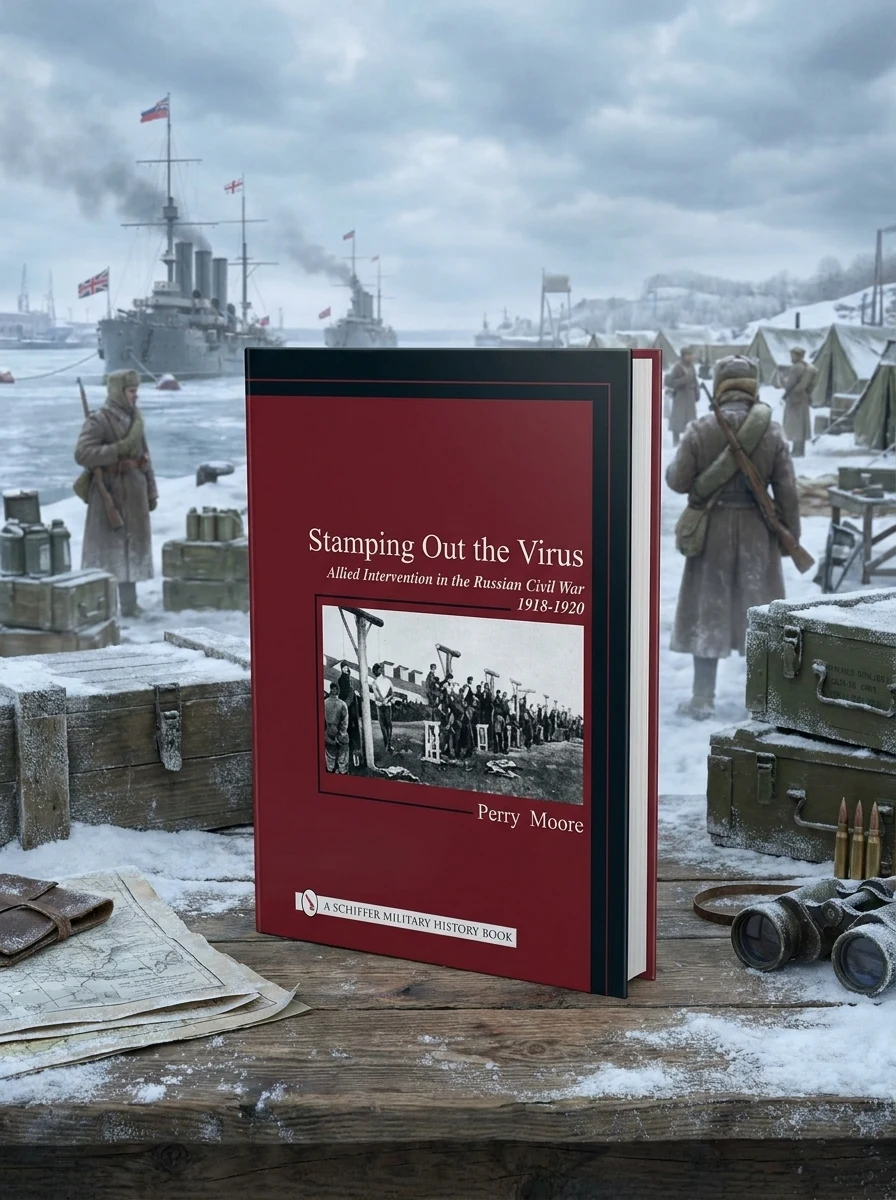
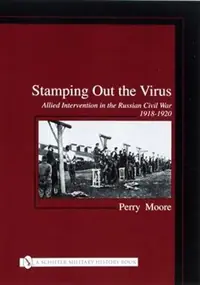
Stamping Out the Virus: Allied Intervention in the Russian Civil War 1918-1920 Moore, Perry
This edition can be ordered. No arrival date is confirmed.
Allied troops invaded Russia to crush Bolshevism, a failed crusade captured in Perry Moore's meticulous account.
Perry Moore meticulously chronicles the Allied intervention in the Russian Civil War, framing it through the lens of the era's political panic. The work details how British, French, and American forces viewed communism as a contagious threat requiring eradication. From the White Sea ports to the broader theater of conflict, this volume offers an exhaustive examination of military campaigns. Readers will find detailed battle maps, orders of battle, and rare photographs that illuminate the chaotic reality of these two years of foreign occupation and combat.
This volume sits at the intersection of military history and political ideology, examining how early 20th-century Western powers perceived Bolshevism as an existential, contagious threat requiring immediate eradication. It reflects a period of intense geopolitical anxiety where foreign intervention was framed as a crusade against a new form of societal contagion.


📝 Description: Stamping Out the Virus: Allied Intervention in the Russian Civil War 1918-1920 Moore, Perry
💎 Expert review
📖 Why choose it
Why this book is worth reading
This book is essential for readers fascinated by the complex interplay between military strategy and ideological panic during the Russian Civil War. Perry Moore provides a meticulous account that goes beyond simple battle narratives, exploring how British, French, and American forces viewed communism as a dangerous contagion. If you appreciate exhaustive examinations of foreign occupation, detailed battle maps, and rare photographs that illuminate the chaotic reality of these two years, this volume offers a rich, visual, and textual resource. It is particularly valuable for those seeking to understand the historical roots of anti-communist sentiment and the specific military campaigns from the White Sea ports to the broader theater of conflict.
⭐ Reader reviews
Reader rating
Moore’s work is a dense, scholarly reference rather than a narrative thriller. While the inclusion of orders of battle and rare photographs adds significant value for serious historians and military enthusiasts, casual readers may find the meticulous detail overwhelming. It does not suit those seeking a quick, accessible overview or a sympathetic portrayal of Bolshevik ideals. This title demands patience and an interest in primary source-style documentation. However, for scholars and dedicated history buffs who crave exhaustive detail regarding Allied intervention and the political panic of the era, it serves as an indispensable and well-researched record of this chaotic period.
❓ Frequently asked questions
📖 Who should read this
Readers interested in the geopolitical roots of the Cold War, military historians focusing on the Russian Civil War, and those examining how fear shapes foreign policy and military intervention in the early twentieth century.
🎯 Key themes and symbolism
Ideological Contagion
The book explores how Western powers perceived Bolshevism not just as a political rival, but as a metaphysical virus. It analyzes the rhetoric of 'stamping out' the threat, revealing how fear of ideological spread drove military strategy and public justification for foreign intervention in Russia's internal affairs.
Arctic Campaigns
Moore provides a deep dive into the specific operations at Archangel and Murmansk. The text dissects the logistical nightmares and tactical failures of fighting in the harsh Russian north, offering a granular look at how Allied units engaged with both Red Army forces and the unforgiving winter environment.
Military Documentation
Beyond narrative, the book serves as a reference tool. It utilizes rare photographs and precise orders of battle to reconstruct the chain of command and troop movements. This scholarly approach allows historians to verify claims and understand the scale and scope of the multinational force deployed during this period.
💬 Quotes from the book
“The phrase 'Stamping Out the Virus' encapsulates the terrifying clarity of Allied intent.”
“Rare photos provide a full picture of military operations.”
📜 Historical context
📚 Glossary
- Stamping Out the Virus
- Orders of Battle
- Archangel Intervention
📔 Questions to reflect on
- How does the language of disease influence our understanding of political conflicts today?
- What role did geography play in the failure of the Allied intervention in Northern Russia?
- In what ways do historical narratives shape our perception of 'enemy' ideologies?
🏛 Books from this publisher Schiffer Publishing
All books from this publisher →
 89
89




You might also like
See more → 91
91
 91
91

 91
91
 91
91
 91
91