
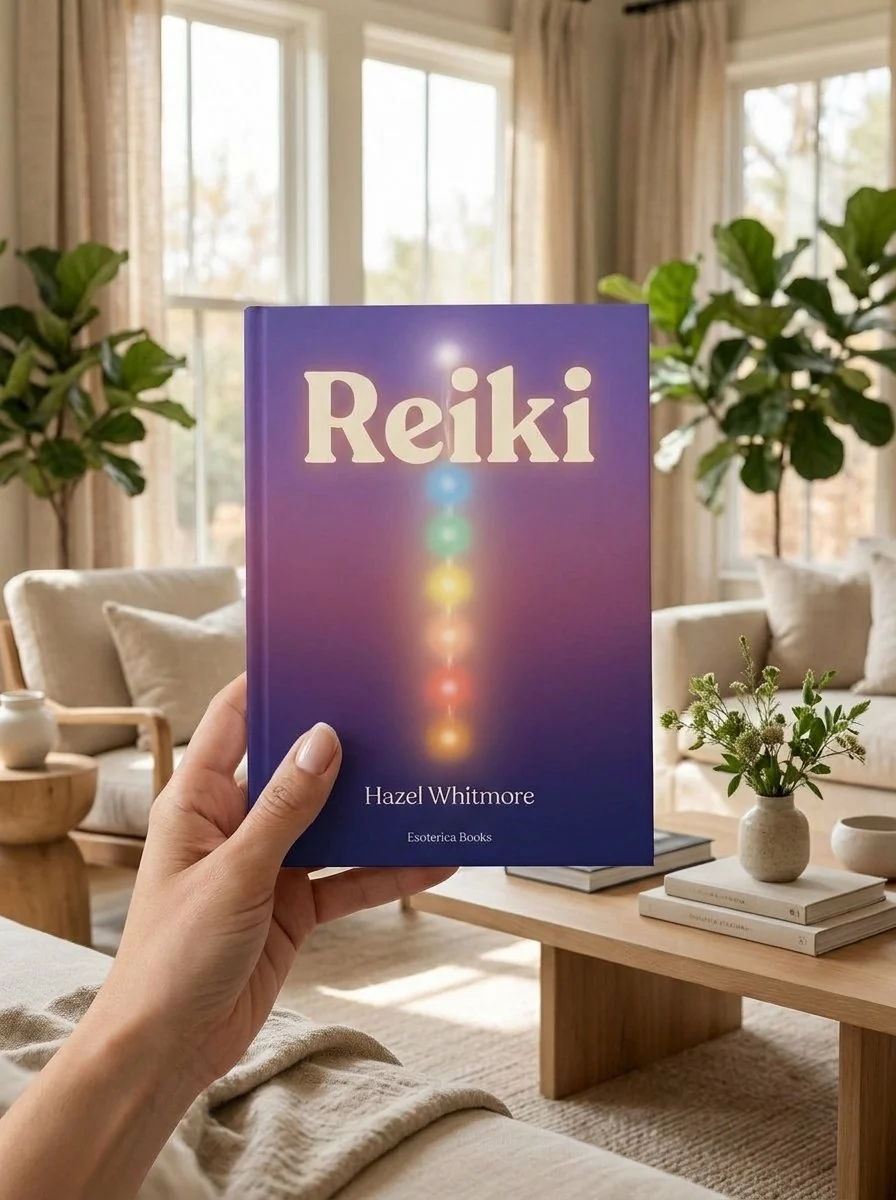
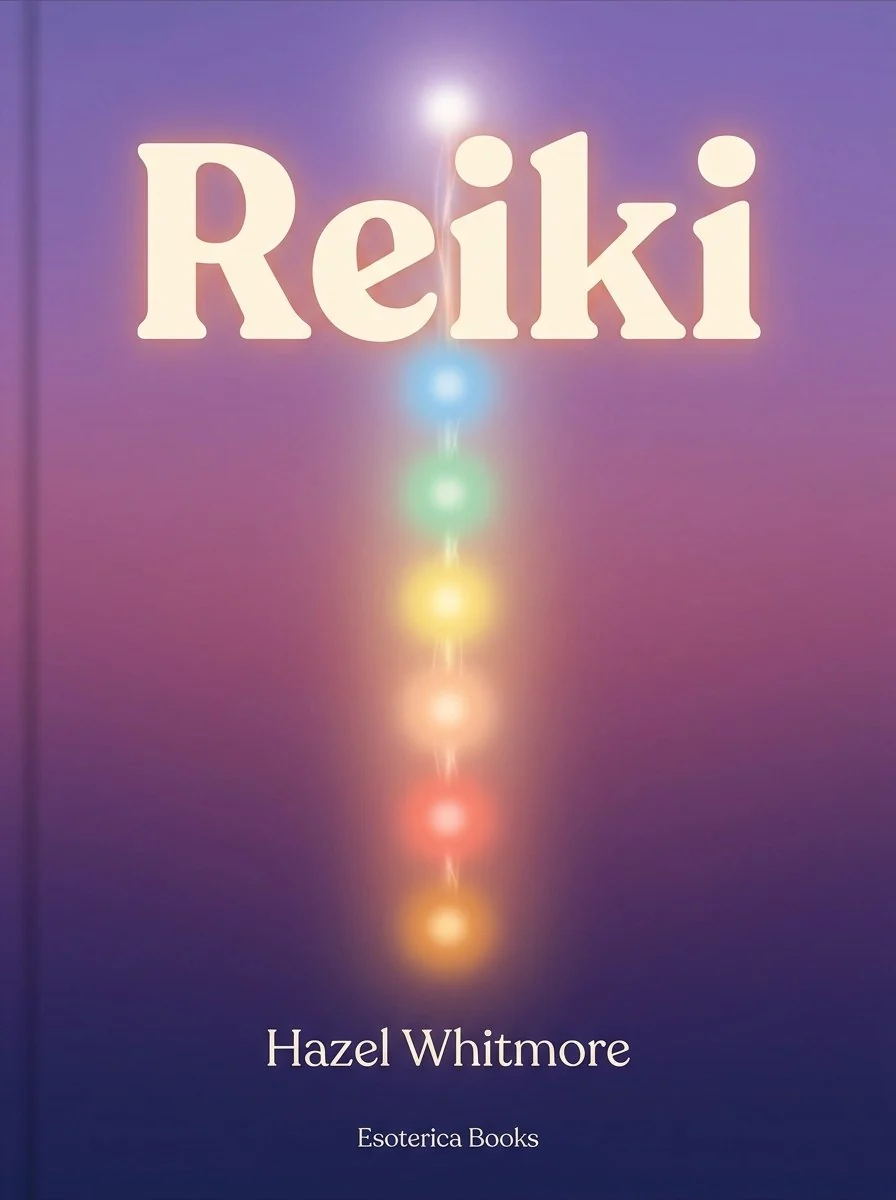
Reiki: A Daily Self-Care Practice Guide
Build a personal Reiki practice with traditional hand positions, meaningful rituals, and the simple four-step P.A.L.M. Method.
Curious about Reiki but unsure how to begin? Hazel Whitmore introduces the Japanese spiritual tradition of Usui Reiki through practical exercises designed for independent self-practice. Discover the P.A.L.M. Method—Pause, Align, Lay, and Make Meaning—and learn how to structure a complete self-Reiki session, prepare a welcoming practice space, explore traditional symbols, and incorporate meditation and crystals into personal rituals. With beginner-friendly instructions, reflection prompts, and guidance on teachers and attunements, this book offers a clear foundation for developing a daily Reiki practice at your own pace.
Reiki is a Japanese spiritual practice associated with Mikao Usui, with Usui Reiki forming the foundation of many contemporary lineages. Its teachings encompass mindful attention, the concept of universal life energy, traditional hand placements, and principles commonly known as the Five Reiki Precepts.


📝 Description: Reiki: A Daily Self-Care Practice Guide
📖 Why choose it
Why this book is worth reading
The appeal of this guide is its emphasis on actually practicing rather than getting lost in unfamiliar terminology. The five-minute opening exercise gives beginners an immediate introduction, while the P.A.L.M. Method provides a memorable structure for developing a more complete routine. Specific hand placements, suggested intentions, room-preparation ideas, and reflection exercises make the material approachable. Just as importantly, the chapters on practitioners, teachers, and attunements help readers understand where independent self-practice fits within the wider Reiki tradition.
⭐ Reader reviews
Reader rating
Hazel Whitmore's guide succeeds in making Reiki approachable through a clear, memorable structure. The P.A.L.M. Method gives beginners four practical steps, while the opening five-minute exercise provides an immediate introduction to self-Reiki. Particularly useful are the concrete hand-placement sequence, suggested intentions, and thoughtful progression from independent practice to practitioner-led sessions and formal training. The chapters on crystals, symbols, and distance Reiki also introduce subjects that frequently interest newcomers. The book is careful to acknowledge differences between teaching lineages, especially around symbols and attunements. Its main limitation is its introductory scope: readers seeking detailed historical scholarship, advanced symbol instruction, or comprehensive professional training will need more specialized resources. A welcoming practical foundation.
❓ Frequently asked questions
📖 Who should read this
Ideal for complete beginners curious about Reiki, readers interested in Japanese spiritual traditions, and anyone who wants a structured approach to self-Reiki at home. It will also suit existing practitioners looking for fresh ideas for personal rituals and reflective journaling.
🎯 Key themes and symbolism
Self-Reiki Practice
Traditional Hand Positions
Daily Spiritual Rituals
Usui Reiki Tradition
📜 Historical context
📚 Glossary
- Usui Reiki
- P.A.L.M. Method
- Self-Reiki
- Five Reiki Precepts
- Distance Reiki
- Attunement (Reiju)
📔 Questions to reflect on
- What intention would you like to bring to your self-Reiki practice, and what words best express that intention?
- Which hand placements, breathing exercises, and daily rituals feel most comfortable and meaningful to you?
- How might the four P.A.L.M. steps help you create a personal practice that reflects your values and everyday routine?
📖 Read on the blog
✍️ More books by this author Hazel Whitmore




🏛 Books from this publisher Esoterica Books
All books from this publisher →


You might also like
See more →




Have a question about this item?
Ask about the edition, condition, delivery or anything else — we reply by email or phone, usually within a day.
