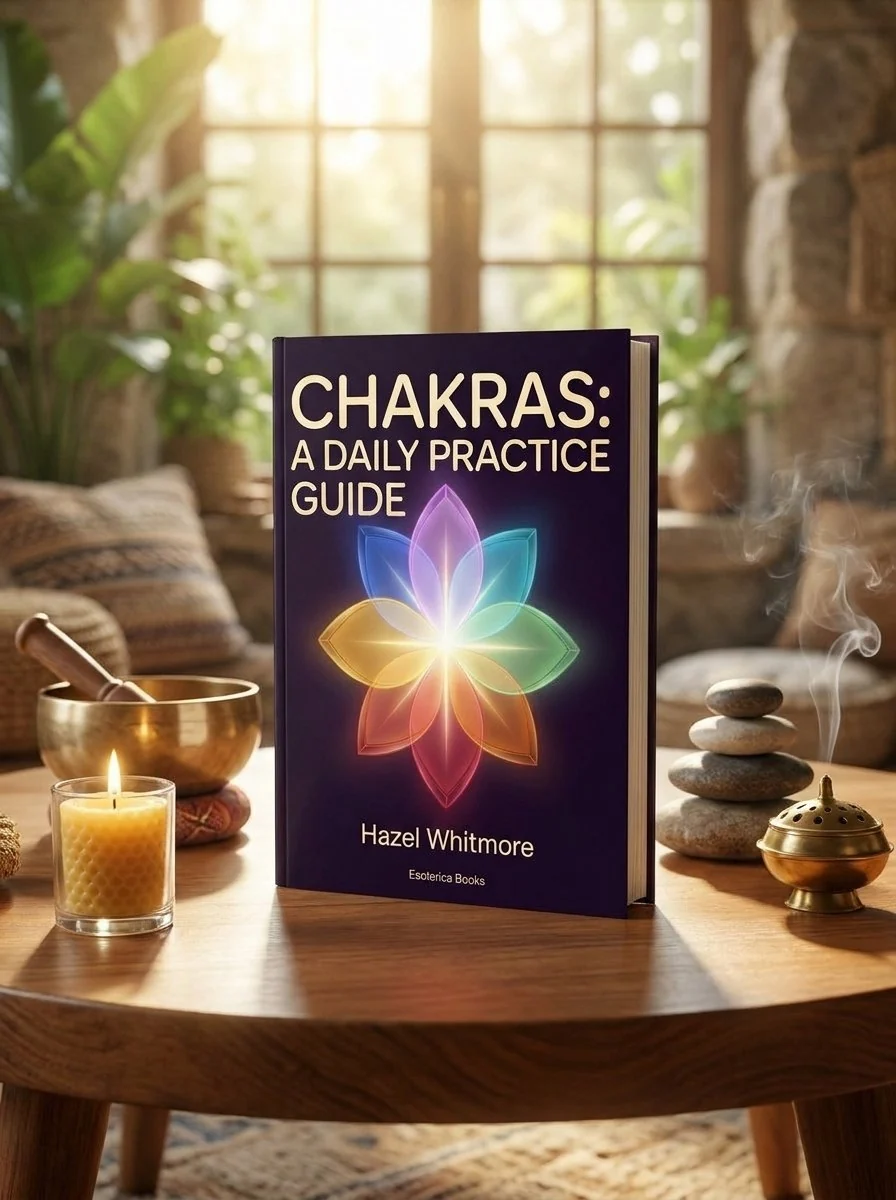
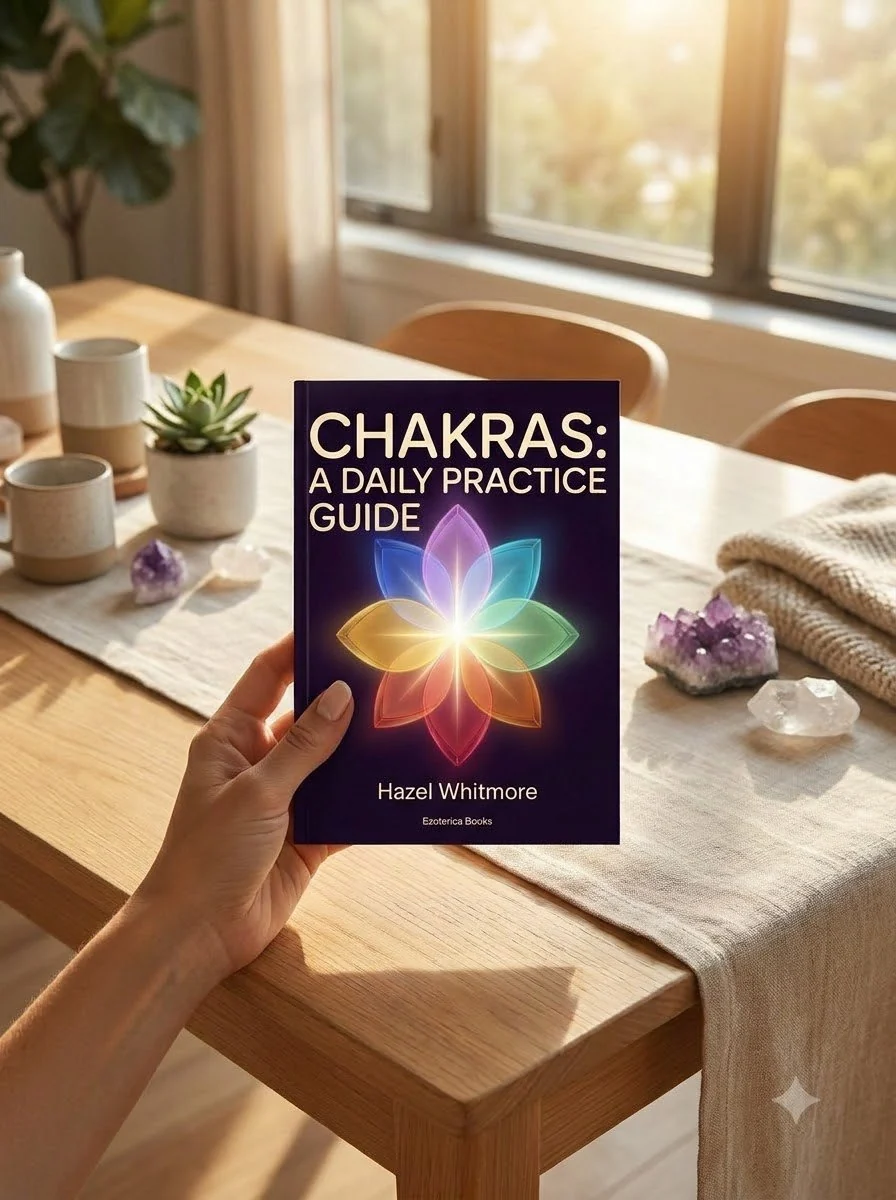
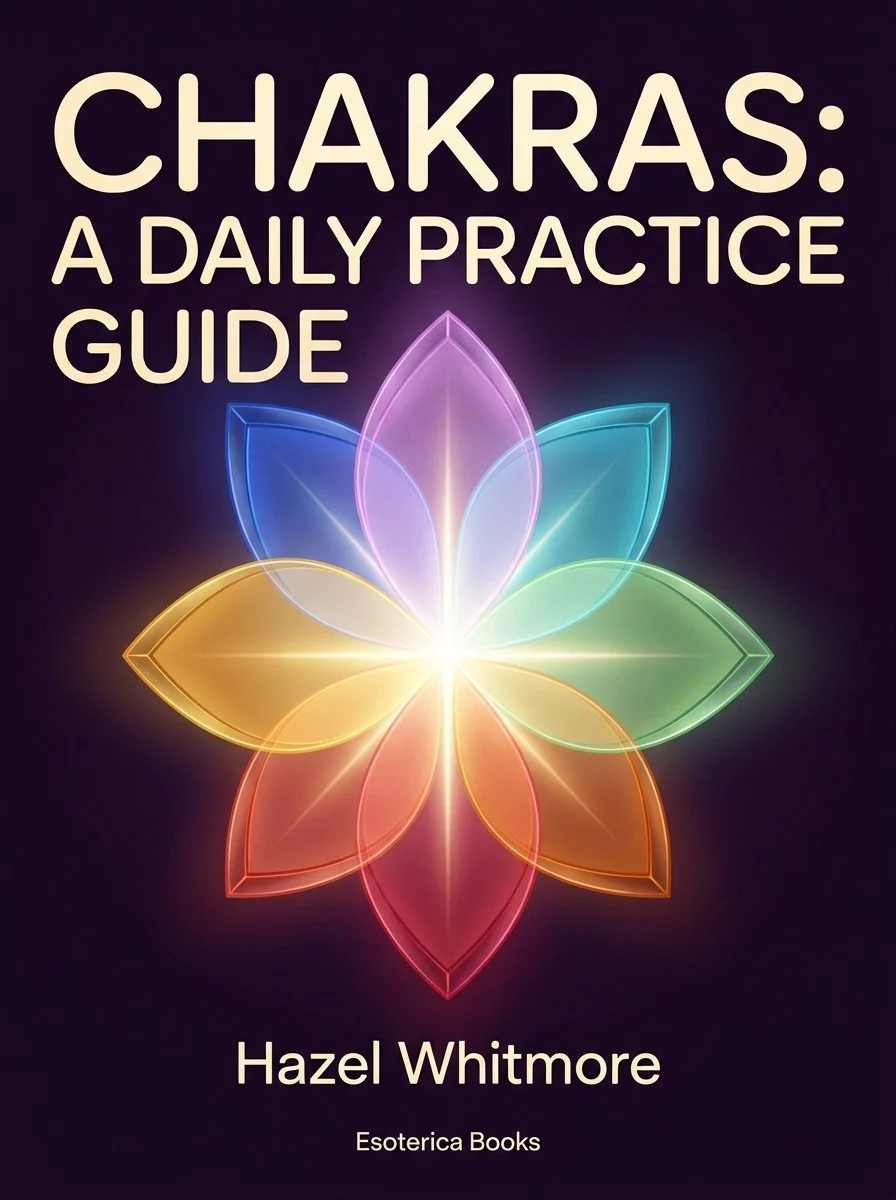
Chakras: A Daily Practice Guide
Meet the seven chakras through their traditional meanings, colors, and simple daily rituals for self-discovery.
Chakras: A Daily Practice Guide introduces the seven-chakra system through traditional body locations, Sanskrit names, common color associations, and practical exercises. Hazel Whitmore's C.H.A.K.R.A. Method offers six memorable steps: Check In, Honor, Attend, Kindle, Reflect, and Anchor. Readers learn to explore individual chakras with breathing, visualization, stones, affirmations, journaling, and gentle movement, then combine these activities into a personal daily routine. An illustrated chakra chart, guided reflections, moon-inspired rituals, and a complete seven-center sequence make the tradition approachable and easy to explore at an individual pace.
The book explores one influential seven-chakra system within Indian spiritual traditions. Its familiar rainbow color associations reflect modern presentations of the system, while chakra interpretations and arrangements vary across traditions.


📝 Description: Chakras: A Daily Practice Guide
📖 Why choose it
Why this book is worth reading
Understanding chakras becomes easier when traditional concepts have something concrete to accompany them. This guide connects each center with a Sanskrit name, symbolic location, familiar color, and recognizable theme, then turns that information into exercises you can actually try. The C.H.A.K.R.A. Method gives beginners a repeatable structure, while individual rituals allow room for personal choices. From red jasper grounding reflections to indigo visualization and a complete root-to-crown sequence, the book makes chakra exploration an approachable part of everyday spiritual life.
⭐ Reader reviews
Reader rating
Hazel Whitmore's guide succeeds at making the seven-chakra system approachable without burying beginners in unfamiliar terminology. Its strongest feature is the C.H.A.K.R.A. Method, a clearly organized six-step framework that connects traditional symbolism with practical exercises. The chapter sequence is sensible: readers begin with a short check-in, meet each center individually, and eventually combine their discoveries into a complete personal routine. Specific examples, including red jasper, carnelian, rose quartz, humming, and color visualization, give the exercises a tangible quality. The main limitation is its introductory scope: readers seeking detailed Sanskrit scholarship, historical comparisons, or advanced traditional chakra teachings will need a more specialized book.
❓ Frequently asked questions
📖 Who should read this
Ideal for beginners curious about chakras, readers seeking a practical chakra chart, and anyone interested in incorporating traditional symbolism, meditation, and journaling into a personal spiritual routine. Experienced practitioners looking for advanced chakra philosophy or detailed historical scholarship may find the approach introductory.
🎯 Key themes and symbolism
Seven Chakra Traditions
Color Visualization
Daily Spiritual Practice
Reflective Journaling
📜 Historical context
📚 Glossary
- Chakra
- Muladhara
- Svadhisthana
- Anahata
- Ajna
- Sahasrara
📔 Questions to reflect on
- Which of the seven chakra colors draws my attention today, and what personal memories, thoughts, or associations does it bring to mind?
- What do the traditional themes of the chakra I have chosen reveal about the qualities I want to explore in my everyday life?
- What small, meaningful intention can I carry from today's chakra practice into one ordinary moment?
📖 Read on the blog
✍️ More books by this author Hazel Whitmore






🏛 Books from this publisher Esoterica Books



You might also like
See more →





Have a question about this item?
Ask about the edition, condition, delivery or anything else — we reply by email or phone, usually within a day.
