Peep-Machine Pin-Ups: 1940s-1950s Mutoscope Art Preziosi, Don
This edition can be ordered. No arrival date is confirmed.
A risqué journey through the flickering peep-shows of mid-century America.
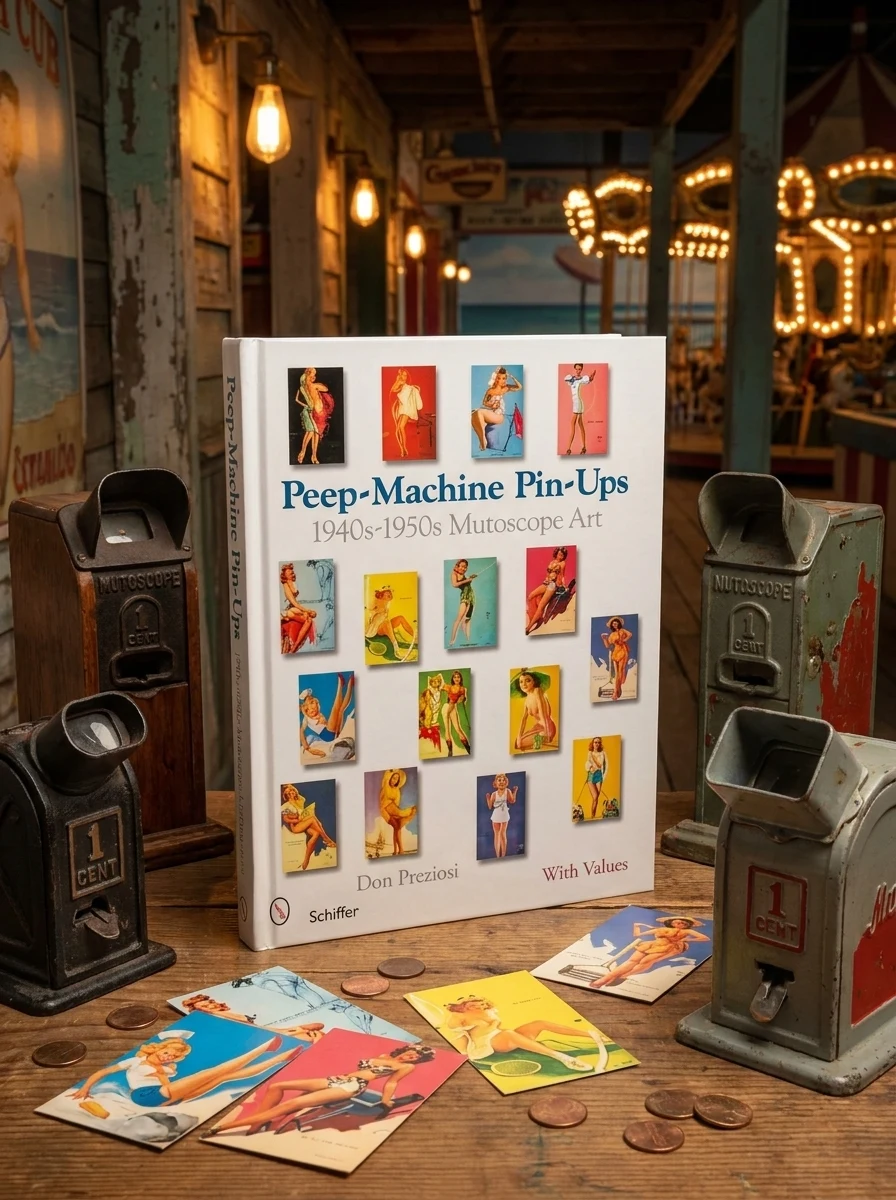
This volume excavates the clandestine world of the Mutoscope, those coin-operated kinetoscopes that whispered secrets in dime parlors and men's rooms from the late nineteenth century through the 1970s. Preziosi focuses specifically on the 1940s and 50s, when the International Mutoscope Reel Company pivoted to collectible cards. These 5-by-3-inch slivers of celluloid featured pin-up art that bypassed mainstream censorship, offering a raw, unfiltered gaze at the female form. With over 250 reproductions, the book serves as both an art history text and a collector's bible, guiding enthusiasts through a vibrant, often overlooked corner of popular culture.
This work sits at the intersection of mid-century American popular culture and underground erotic art history, documenting the clandestine world of coin-operated kinetoscopes that operated in dime parlors and men's rooms from the late nineteenth century through the 1970s. It specifically examines the pivot to collectible cards by the International Mutoscope Reel Company during the 1940s and 50s, a period when such imagery bypassed mainstream censorship to offer an unfiltered gaze at the female form.


📝 Description: Peep-Machine Pin-Ups: 1940s-1950s Mutoscope Art Preziosi, Don
💎 Expert review
📖 Why choose it
Why this book is worth reading
This volume is a treasure trove for collectors, art historians, and enthusiasts of mid-century Americana who crave a deeper understanding of the clandestine visual landscapes that shaped popular culture. Preziosi provides not just over 250 reproductions, but also acts as a collector's bible, guiding readers through a vibrant corner of history often overlooked by mainstream narratives. It offers a risqué yet scholarly journey into the flickering peep-shows of America, revealing how these coin-operated devices whispered secrets and defied censorship. For those fascinated by the raw, unfiltered gaze at the female form that defined this era, this book serves as both an essential art history text and a nostalgic exploration of a forgotten industry.
⭐ Reader reviews
Reader rating
Grabbed this during a weekend order. Plenty of passages worth underlining; my copy is already full of margin notes. The text itself is dense but rewarding — you get out what you put in. Would buy from this store again.
Arrived faster than expected and well packaged. The print is clean and easy on the eyes for long sessions. The text itself is dense but rewarding — you get out what you put in. Delivery took a bit longer than quoted. Recommended with reservations.
A friend in my study group recommended this one. The ideas are old but land with surprising force today. Glad I finally picked this up.
Preziosi delivers a fascinating excavation of the Mutoscope’s golden age, blending historical context with visual abundance. The inclusion of over 250 reproductions makes it a vital resource for identifying and appreciating these rare 5-by-3-inch slivers of celluloid. However, readers expecting dense theoretical analysis or academic rigor may find the tone more accessible than profound. It is primarily a visual compendium rather than a critical sociological study. Furthermore, those uncomfortable with risqué content or the objectification inherent in vintage pin-up art will likely find little appeal here. It is best suited for those who appreciate the aesthetic and historical significance of underground media artifacts from the mid-twentieth century.
❓ Frequently asked questions
📖 Who should read this
Seekers of vintage erotica, art historians studying commercial illustration, and collectors of obscure Americana who appreciate the gritty charm of pre-digital visual culture.
🎯 Key themes and symbolism
Clandestine Visual Culture
The book explores how these machines operated in the shadows of society, providing illicit entertainment in amusement parks and restrooms. It examines the social dynamics of the peep-show, where curiosity and taboo coalesced, creating a unique underground aesthetic that challenged public morality while thriving on it.
The Pin-Up Artistic Legacy
Preziosi highlights the artistic merit of creators like Gil Elvgren and Zoe Mozert. It positions these card illustrations not merely as pornography, but as significant examples of mid-century commercial art, showcasing technical skill and composition that influenced later generations of illustrators and pop culture aesthetics.
Collector's Value and History
Beyond imagery, the text functions as a practical guide for enthusiasts. It details the physical characteristics of the cards, distinguishes between signed and unsigned works, and provides a valuation framework. This transforms the book from a mere picture album into an essential reference for those seeking to acquire and preserve this niche history.
💬 Quotes from the book
“The Mutoscope flipped cards to create the impression of a 'moving picture' in the dim light of men's rooms.”
“A wonderful source of inspiring low-brow artwork from the 1940s and 50s.”
📜 Historical context
📚 Glossary
- Mutoscope
- Pin-Up
- Low-brow Art
📔 Questions to reflect on
- How does the private act of viewing influence your perception of art compared to public gallery displays?
- In what ways did censorship laws shape the aesthetic of mid-century commercial illustration?
- Reflect on the relationship between taboo and artistic freedom in your own creative interests.
🏛 Books from this publisher Schiffer Publishing
All books from this publisher →
 89
89







You might also like
See more → 91
91
 91
91
 91
91
 91
91