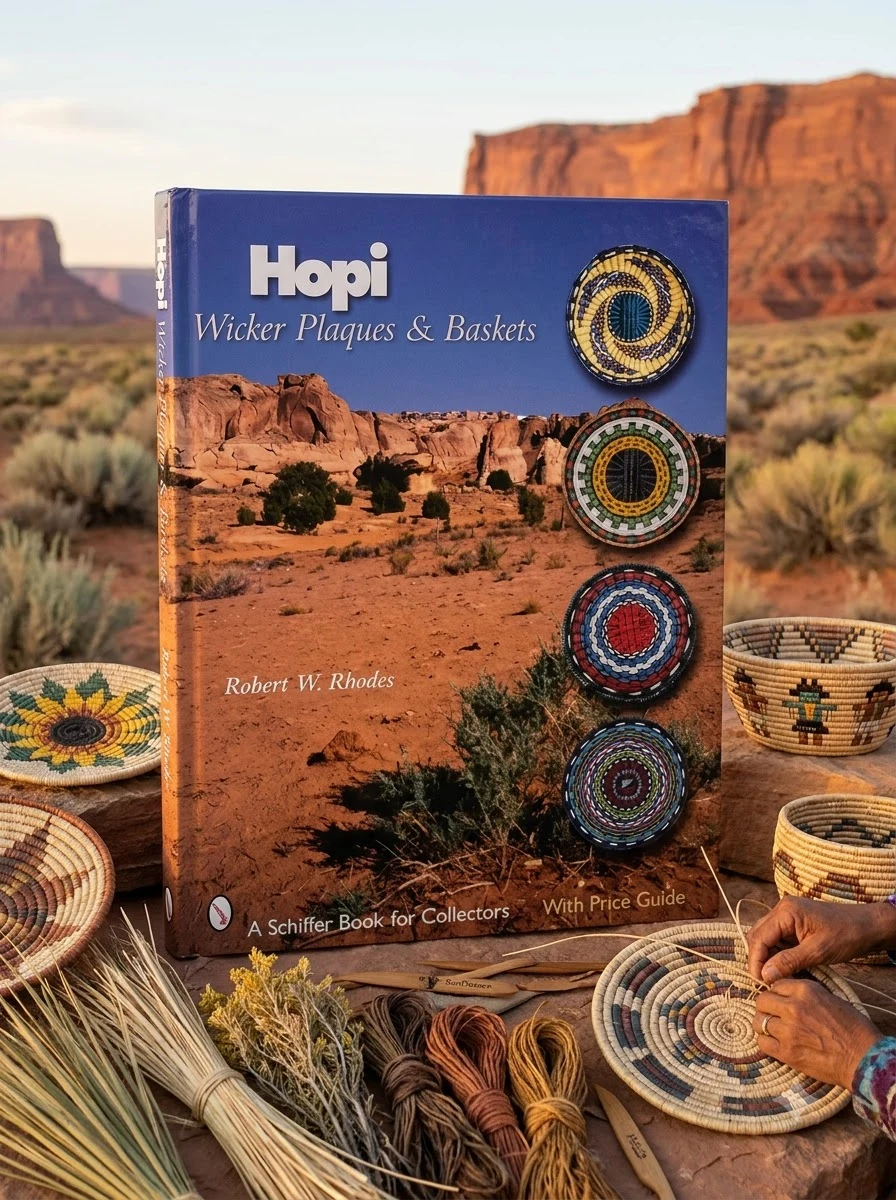

Hopi Wicker Plaques & Baskets Rhodes, Robert W
This edition can be ordered. No arrival date is confirmed.
A vivid survey of Hopi women's woven artistry, blending history with visual cataloging.
Rhodes offers a meticulous exploration of the intricate wicker plaques and baskets crafted by Hopi women on Third Mesa. Through more than 475 color photographs, the text dissects 67 distinct design categories, moving beyond mere aesthetics to explore the cultural significance of each piece. It details the materials, techniques, and spiritual purposes behind these objects, from the coveted Katsina plaques to ceremonial wedding baskets. This volume serves as an essential guide for distinguishing between historic artifacts and contemporary works, providing deep insights into the evolving artistic traditions of the Hopi people.
This volume sits at the intersection of ethnographic documentation and art history, focusing on the specific material culture of the Hopi people of Third Mesa. It serves as a specialized resource within the broader tradition of Native American arts scholarship.


📝 Description: Hopi Wicker Plaques & Baskets Rhodes, Robert W
💎 Expert review
📖 Why choose it
Why this book is worth reading
This book is an essential resource for collectors, curators, and serious students of Hopi culture who seek to understand the profound spiritual and historical layers behind woven artistry. Rhodes provides a meticulous exploration that moves beyond simple aesthetics, offering deep insights into the materials, techniques, and ceremonial purposes of objects like Katsina plaques and wedding baskets. The inclusion of over 475 color photographs allows readers to visually distinguish between historic artifacts and contemporary works, making it invaluable for authentication and appreciation. It bridges the gap between academic rigor and visual beauty, ensuring that the evolving artistic traditions of Hopi women are preserved and understood with the respect they deserve.
⭐ Reader reviews
Reader rating
Rhodes delivers a comprehensive survey that will deeply satisfy those interested in the technical and spiritual nuances of Hopi weaving. The detailed categorization of designs offers clarity for researchers and collectors alike. However, readers seeking a narrative-driven history or personal anecdotes from the weavers may find the approach too analytical and catalog-focused. It is not suitable for casual browsers looking for light reading or general fiction. This work demands attention to detail and an appreciation for visual taxonomy over storytelling. While it excels as a reference tool, those expecting a broad cultural critique or biographical depth might feel disconnected from the text's primary focus on object classification and photographic documentation.
❓ Frequently asked questions
📖 Who should read this
Collectors seeking to authenticate Hopi pieces, anthropologists studying Indigenous material culture, and art historians interested in the intersection of spiritual ritual and commercial craft in the American Southwest.
🎯 Key themes and symbolism
Symbolic Pattern Decoding
The book deciphers the visual language of Hopi weaving, explaining named motifs like Sunflower and Dragonfly alongside abstract designs. It clarifies how these patterns function as cultural narratives, preserving ancestral knowledge through specific geometric arrangements and color choices that signify spiritual concepts and clan identities within the community.
Material Technique Analysis
Rhodes examines the physical construction of these works, detailing the sourcing of yucca fibers and dyes. The text explains the labor-intensive coiling and twining methods unique to Third Mesa artisans, highlighting how technical precision contributes to the durability and aesthetic value of the baskets, ensuring their preservation across generations of collectors and museums.
Spiritual Katsina Legacy
A significant portion is dedicated to the sacred Katsina plaques, objects of profound religious importance. The author distinguishes these ritual items from decorative wares, discussing their role in ceremonies and their status as highly sought-after pieces in the art market. This section emphasizes the boundary between sacred tradition and commercial appreciation in Hopi art.
💬 Quotes from the book
“The intricate geometry of the Sunflower pattern is not merely decorative but a prayer for growth.”
“Katsina plaques remain the most coveted items, bridging the sacred and the collector's display.”
📜 Historical context
📚 Glossary
- Katsina Plaque
- Third Mesa
- Design Categories
📔 Questions to reflect on
- How does the distinction between sacred ritual objects and commercial art influence your perception of value?
- Consider the materials used: how does the natural sourcing of fibers connect the artwork to the land?
- Reflect on the role of pattern in preserving cultural history without written language.
🏛 Books from this publisher Schiffer Publishing
All books from this publisher →
 89
89







You might also like
See more → 91
91
 91
91
 91
91
 91
91