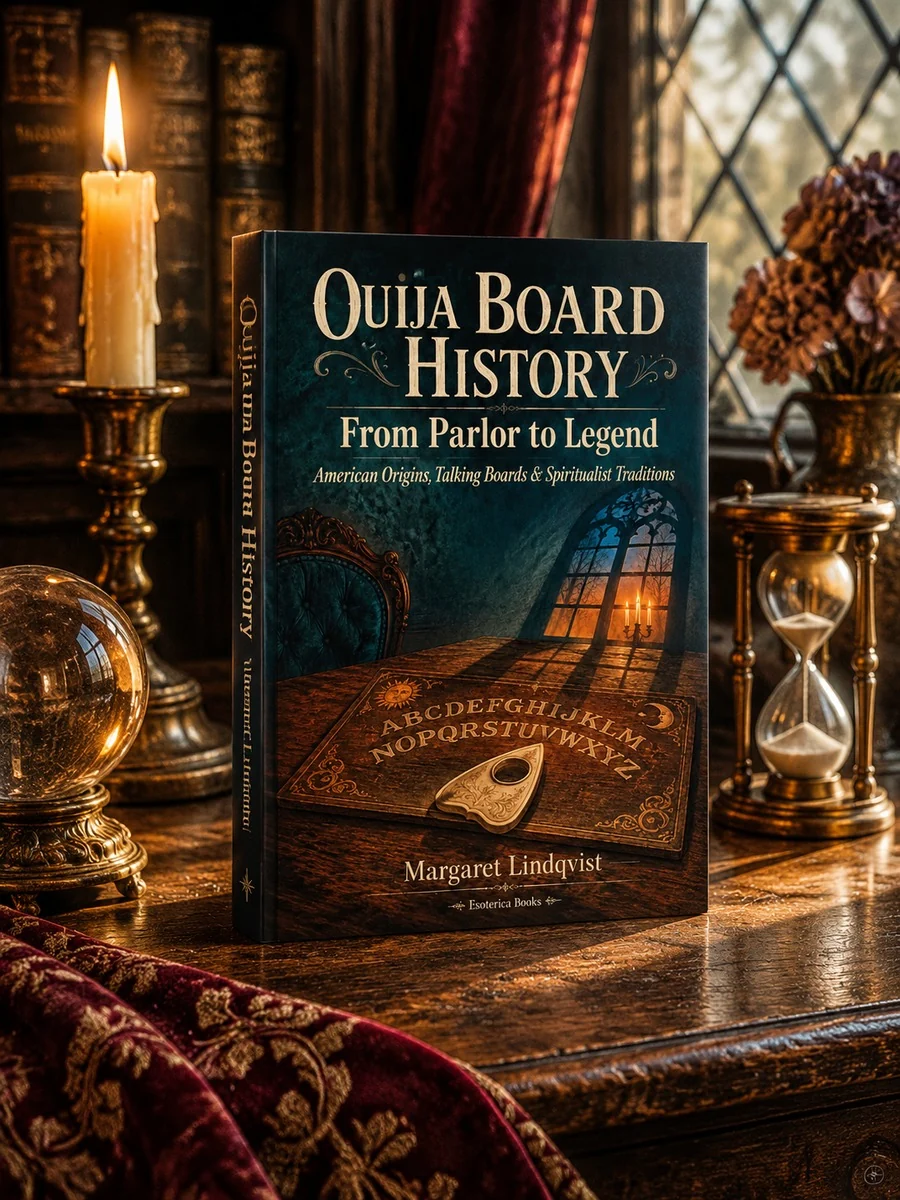
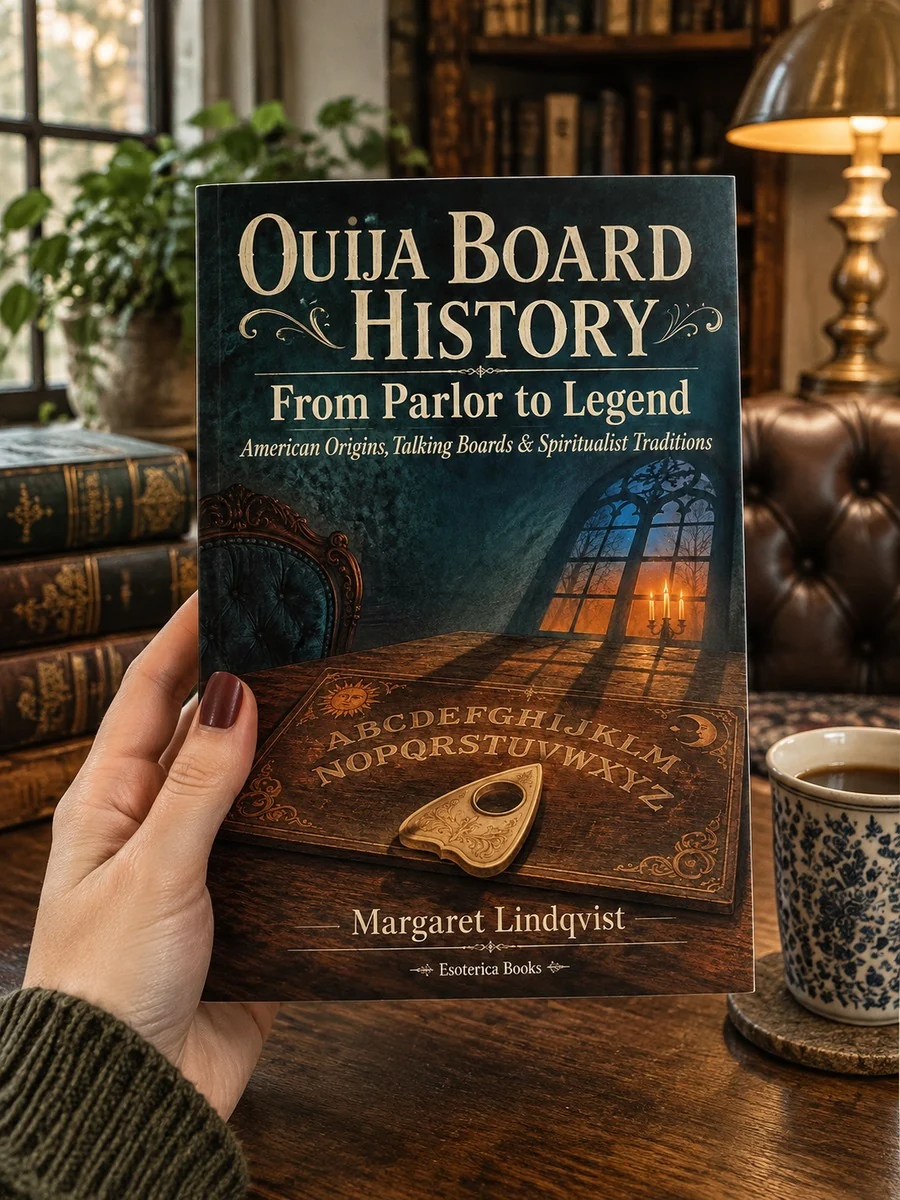
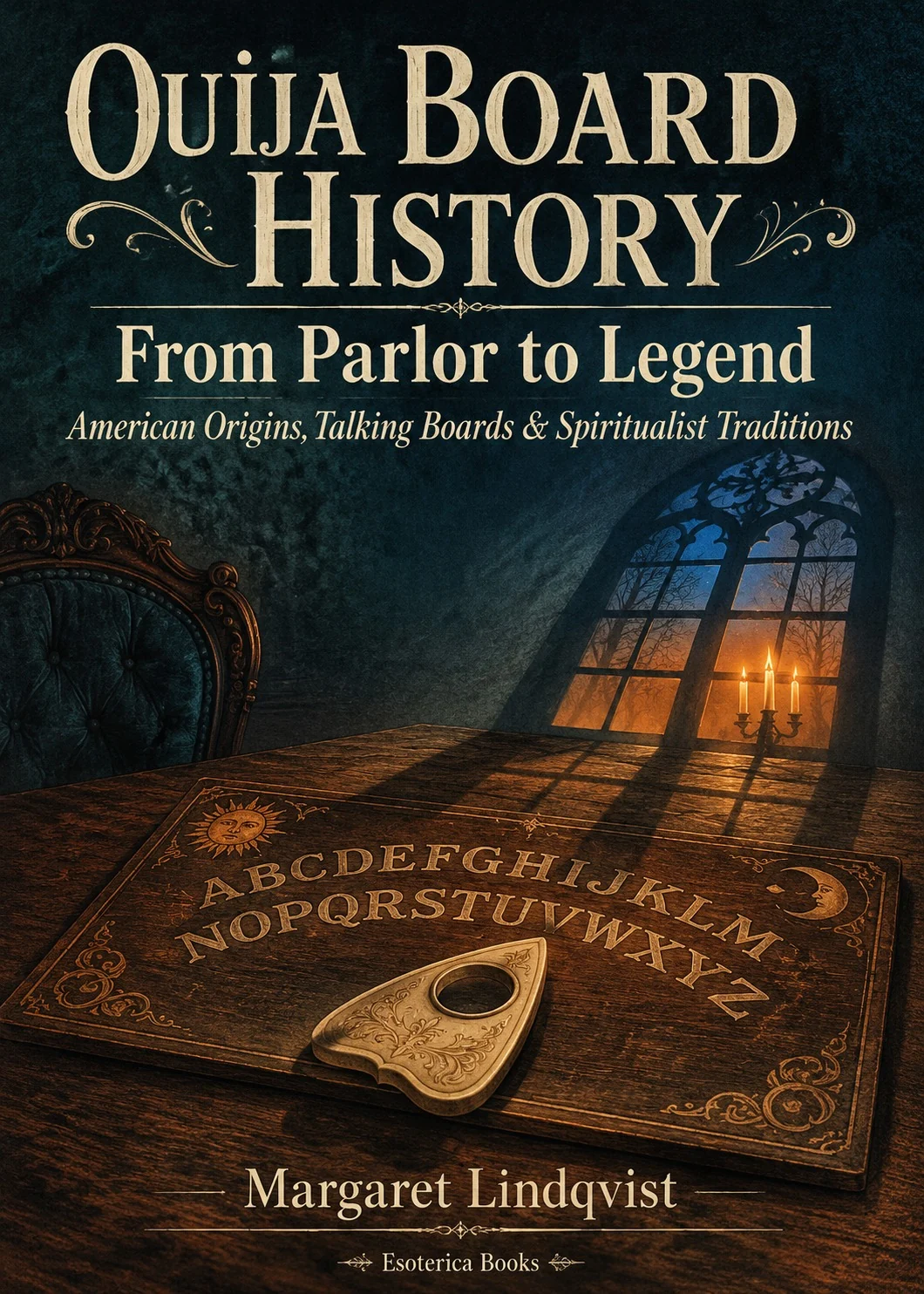
Ouija Board History: From Parlor to Legend
Trace the Ouija board from nineteenth-century American parlors to its enduring place in popular culture.
How did a simple talking board become one of America's most recognizable symbols of the mysterious? Ouija Board History explores the nineteenth-century Spiritualist movement, early talking-board experiments, Victorian parlor gatherings, and the commercial introduction of the familiar board. Using the five-stage Boardwalk Method, readers examine its historical development, identify traditional design features, and distinguish documented events from folklore. From the planchette and alphabet to horror films and popular storytelling, this illustrated historical introduction reveals the cultural story behind the board.
The Ouija board emerged from a broader American interest in Spiritualism, séances, table-turning, and attempts to communicate with the departed. Its subsequent development reflects the meeting of spiritual interests, household entertainment, commercial enterprise, and popular storytelling.


📝 Description: Ouija Board History: From Parlor to Legend
📖 Why choose it
Why this book is worth reading
The Ouija board has a recognizable design, but its history is considerably more interesting than its familiar appearance suggests. This book gives readers a way to understand the object through its predecessors, commercial introduction, distinctive components, and changing cultural reputation. The illustrated field-guide activities make the historical material particularly accessible: instead of simply memorizing names and events, readers draw the board, label its features, compare accounts, and build their own historical timeline.
⭐ Reader reviews
Reader rating
This introduction has a clear subject and a sensible historical structure. Its strongest feature is the Boardwalk Method, which connects the board's physical design with the Spiritualist movement, commercial development, and later cultural representations. The preview offers useful concrete details, including the YES and NO spaces, GOOD BYE inscription, planchette viewing aperture, and the distinction between historical documentation and folklore. The opening field exercise also gives readers a practical way to begin recording observations. Importantly, the book does not treat supernatural explanations as established historical facts. Its limitation is its introductory scope: readers seeking extensive archival documentation, academic debates, or detailed accounts of individual manufacturers will need more specialized historical research.
❓ Frequently asked questions
📖 Who should read this
A good choice for beginners curious about Ouija board history, nineteenth-century American Spiritualism, Victorian parlors, and the cultural development of talking boards. It also suits readers interested in folklore, historical objects, and the relationship between popular entertainment and spiritual traditions.
🎯 Key themes and symbolism
American Spiritualism
Talking Board History
Planchette Design
Folklore and Popular Culture
📜 Historical context
📚 Glossary
- Ouija board
- Talking board
- Planchette
- Spiritualism
- Séance
- Table-turning
📔 Questions to reflect on
- Which features of a traditional Ouija board communicate its purpose most clearly, and what do their arrangement and design suggest about the object's intended use?
- How does your understanding of the Ouija board change when you separate documented historical events from folklore and personal accounts?
- Which aspects of the board's journey—from Spiritualist parlors to commercial entertainment and horror storytelling—reveal the most about changing American cultural attitudes?
📖 Read on the blog
✍️ More books by this author Margaret Lindqvist




🏛 Books from this publisher Esoterica Books
All books from this publisher →


You might also like
See more →
Have a question about this item?
Ask about the edition, condition, delivery or anything else — we reply by email or phone, usually within a day.
