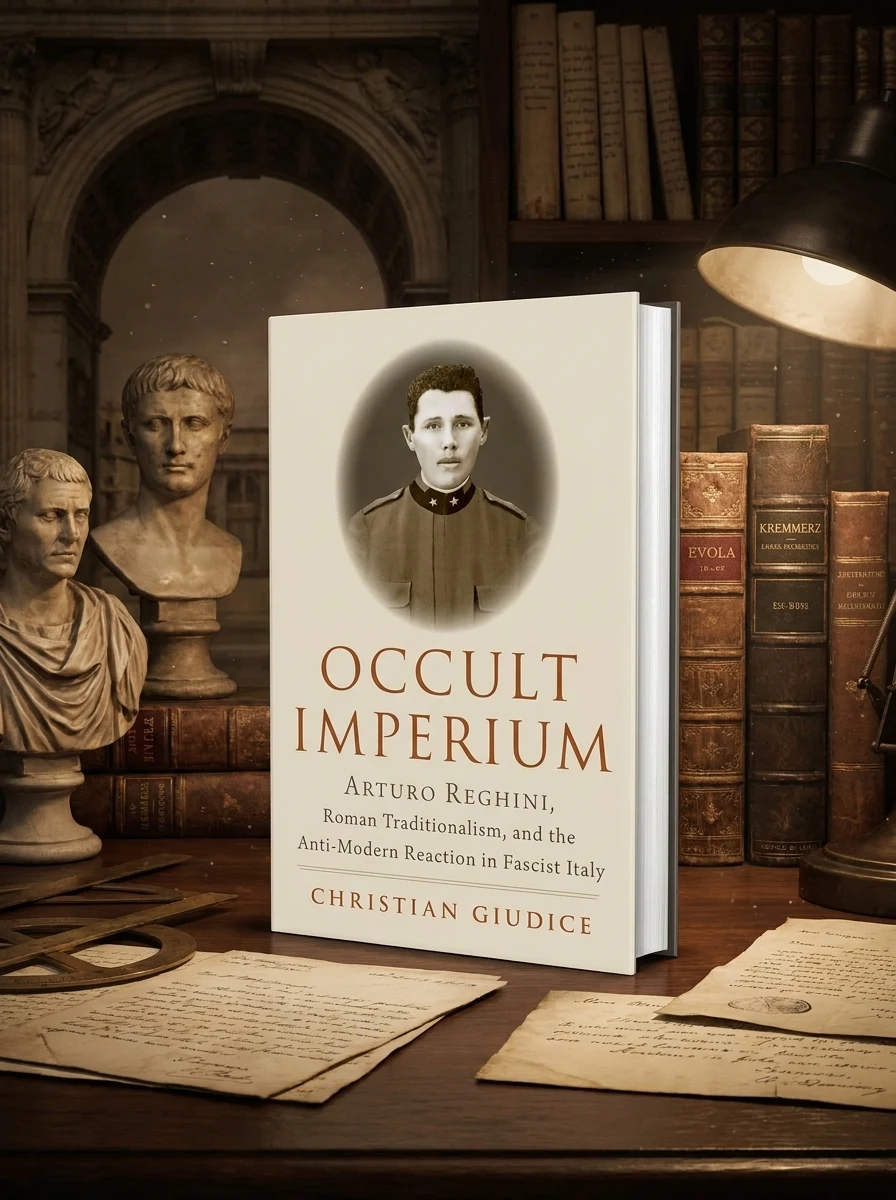
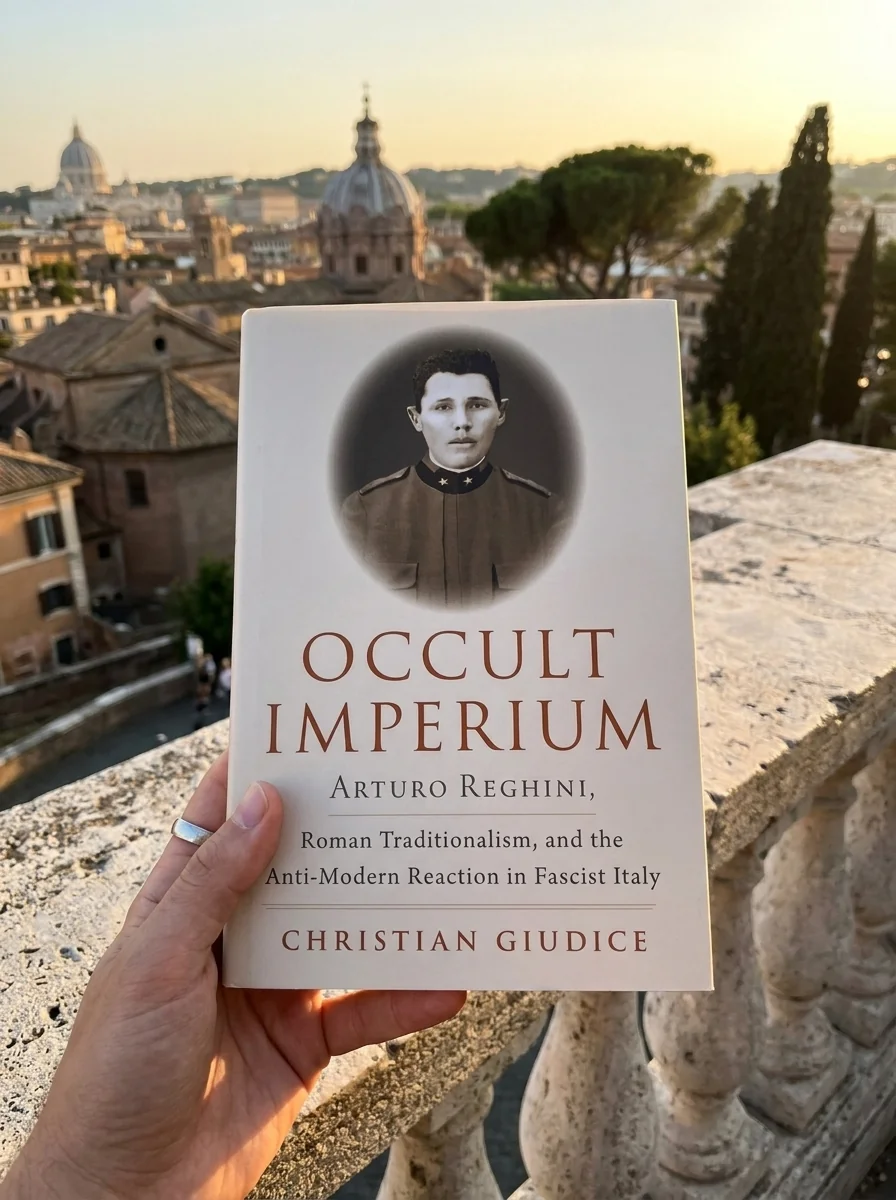
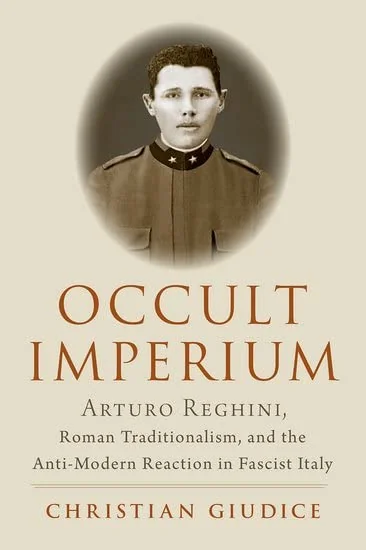
Occult Imperium: Arturo Reghini, Roman Traditionalism, and the Anti-Modern Reaction in Fascist Italy Giudice, Christian
This essential volume unveils the profound influence of Arturo Reghini, a pivotal yet often overlooked figure in early 20th-century Italian esotericism. Delving into his extensive writings and the tenets of Roman Traditionalism, it meticulously charts the complex interplay between occult thought, emergent spiritual movements, and the political landscape of Fascist Italy. Giudice’s work elucidates how figures like Reghini navigated the tumultuous waters of modernity, revealing the unique character of Italian occultism amidst an era of profound societal change and ideological conflict.


Praise for this book
“With this outstanding volume, Christian Giudice is offering us the first academic monograph ever dedicated to Arturo Reghini and his milieu. Erudite, wide-ranging and yet eminently readable, the present study illuminates the cultural and political roots of fin-de-siècle and early twentieth-century Occultism in Italy, up to and including the Fascist era.”
“of 1914, a work that inspired the title, and much of the content, of Julius Evola's Pagan Imperialism of 1928. Occult Imperium is recommended for all who have an interest in the history of Traditionalism, Guénon, and Evola, and also because it introduces us to the little-known Italian esoteric milieu from before the First World War to the Fascist period, a milieu that both echoes and differs from the better-known French esoteric milieu of the same period.”
“Based on a PhD thesis, this book is the first English monograph about the Italian esotericist Arturo Reghini (1878-1946). Through a detailed analysis of the social, cultural, and political context of Italy at the turn of the twentieth century, Giudice demonstrates the specificity of the ideals that informed the Schola Italica (Italic School), the neo-Pythagorean circle led by Reghini and his master Amedeon Armentano (1886-1966).”
📝 Description: Occult Imperium: Arturo Reghini, Roman Traditionalism, and the Anti-Modern Reaction in Fascist Italy Giudice, Christian
📑 What's inside
- Chapter 1: The Anti-Modern Side of Modernity
- Chapter 2: Risorgimento Italy: Occultism, Politics, the Rise of the Nation State, and Roman Traditionalism
- Chapter 3: The Early Years (1898-1910): Avantgarde, Theosophy, and Anti-Modernism
- Chapter 4: The Schola Italica and the Rito Filosofico Italiano (1910-1914): Initiation and Invention of Tradition in Modern Italy
- Chapter 5: The Great War and 'Pagan Imperialism' (1915-1920): A Clash Between the Modern and the Traditional
- Chapter 6: Fascism and Traditionalism: Modernity and Anti-Modernity (1920-1925)
- Chapter 7: The UR Group and the End of a Dream (1923-1929)
- Chapter 8: Silentium Post Clamores (1930-1946)
- Chapter 9: Concluding Remarks
- Appendix: 'Imperialismo Pagano': English Translation Bibliography Index
💎 Expert review
📖 Why choose it
Why this book is worth reading
Readers deeply interested in the obscure intersections of spirituality and state power will find this book indispensable. It offers a rare, meticulous look at Arturo Reghini, a pivotal yet overlooked figure whose Roman Traditionalism shaped early Italian esoteric movements. By charting how occult thought navigated the tumultuous waters of Fascist Italy, Giudice reveals the unique character of Italian occultism during an era of profound societal change. This work is essential for those seeking to understand the hidden currents where ancient wisdom met political ambition, providing clarity on complex ideological conflicts that defined the period.
⭐ Reader reviews
Reader rating
Giudice delivers a scholarly excavation of Reghini’s influence, mapping the intricate ties between esotericism and Fascist ideology with academic precision. While it stands as an essential resource for historians of religion and political occultism, it is not suited for casual readers seeking accessible spiritual guides or those uninterested in dense historical analysis. The text demands patience and a willingness to engage with complex theoretical frameworks regarding traditionalism and modernity. It is a rigorous, necessary contribution to the field, though its academic tone and specific focus may alienate those looking for broader, more general introductions to occult history.
❓ Frequently asked questions
📖 Who should read this
For scholars of esotericism, students of Italian history, and anyone fascinated by the shadowy intersections of spirituality, politics, and culture. If you seek to understand the intellectual underpinnings of Traditionalism beyond its more commonly known figures, this journey into Reghini's world is indispensable.
🎯 Key themes and symbolism
Roman Traditionalism's Roots
This section illuminates the philosophical bedrock of Reghini's esoteric system, tracing its connections to classical Roman thought and its divergence from other Traditionalist streams. It explores how ancient wisdom was reinterpreted to confront modern challenges, forming a distinct spiritual and intellectual pathway.
Esotericism and Italian Politics
Discover the intricate and often fraught relationship between occult societies and the rise of Benito Mussolini's Fascist regime. The book scrutinizes how esoteric ideas were both embraced and suppressed, revealing the subtle ways spiritual currents intertwined with state power and national identity in a turbulent period.
Italy's Occult Ecosystem
Explore the unique factors shaping Italian mysticism, from its avant-garde artistic ties like Futurism to the enduring influence of the Catholic Church. This theme examines how these distinct cultural and religious forces fostered a unique environment for the development and expression of esoteric traditions.
📜 Historical context
📚 Glossary
- Roman Traditionalism
- Scapigliatura
- Anti-Modern Reaction
📔 Questions to reflect on
- How might a spiritual or esoteric movement gain traction or influence within a rapidly changing political climate, as seen in Reghini's era?
- Consider the concept of an "anti-modern reaction." What aspects of contemporary society might inspire a similar philosophical or spiritual response today?
- If you were to construct a "Traditionalism" based on your own cultural heritage, what ancient principles or symbols would you emphasize, and why?