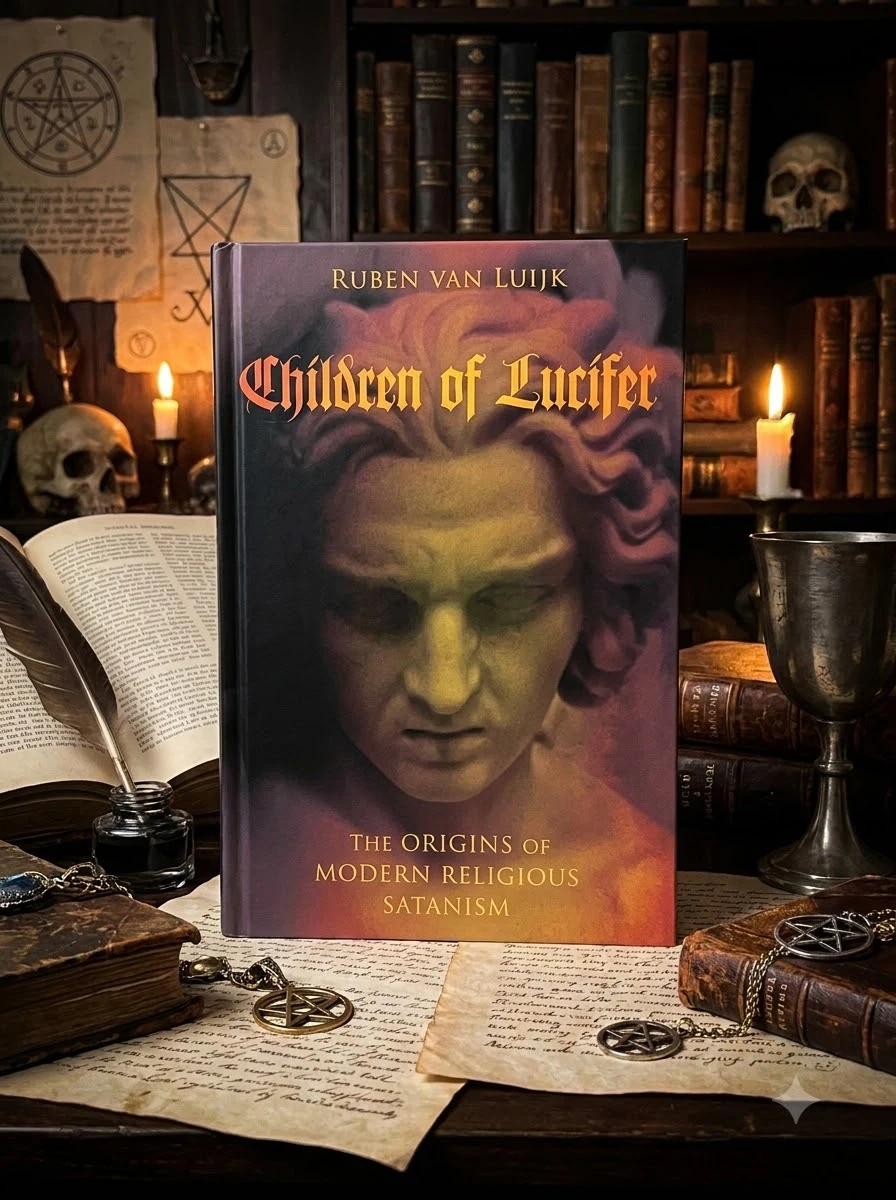
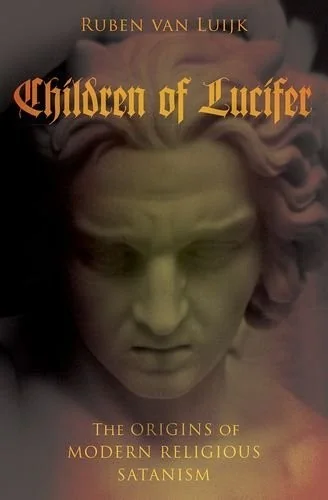
Children of Lucifer: The Origins of Modern Religious Satanism Van Luijk, Ruben
An academic history tracing modern religious Satanism from early Christian polemics to contemporary movements.
This volume examines how Western culture transformed Satan from a Christian tool of demonization into a self-chosen anti-religious identity. Rooted in PhD research from Tilburg University, Ruben van Luijk maps this trajectory alongside major shifts like secularization and the political upheaval of the American and French Revolutions. The text examines key figures across eras, analyzing Romantic poets, radical anarchists, Decadent writers, and carnival entertainer Anton Szandor LaVey. Through ten numbered chapters and four specialized intermezzos, van Luijk outlines how historical fiction, political ideology, and social attribution laid the groundwork for actual Satanic organizations like the Church of Satan.
This historical research situates modern Satanism within Western secularization following the American and French Revolutions. It focuses heavily on nineteenth-century counterculture, Belle Époque France, and the twentieth-century founding of the Church of Satan.


Praise for this book
“Contrary to popular news, Satanism is not just statues and coloring books. Through the dual mechanisms of attribution and identification, Ruben van Luijk's monumental work examines the history of modern Satanism from early modern Christian inventions to the appropriation and reinterpretation of contemporary satanic groups.”
“Van Luijk is an eminent specialist of the Belle Époque, and a master storyteller. All the chapters of his book about late 19th-century France are rich in details nobody else found before him, and the story is told in such a vivid prose that even those who have no special interest in esotericism or Satanism would find the book extremely entertaining Van Luijk's book is indispensable for understanding the Belle Époque and the medieval and early modern precursors of modern Satanism.”
“I recommend Children of Lucifer not only for its engrossing history, but also because Luijk engages critically-problematizing and theorizing through-a vast oeuvre of well-known nineteenth- and twentieth-century authors, poets, philosophers, theologians, and occultists. This scope will surely appeal to graduate students, literary critics, and scholars of Christianity, Western Esotericism, and New Religious Movements.”
📝 Description: Children of Lucifer: The Origins of Modern Religious Satanism Van Luijk, Ruben
📑 What's inside
- Acknowledgments
- Practical Indications for the Reader
- Introduction
- Chapter 1. The Christian Invention of Satanism
- Intermezzo 1. The Eighteenth Century: Death of Satan?
- Chapter 2. The Romantic Rehabilitation of Satan
- Chapter 3. Satan in Nineteenth-Century Counterculture
- Intermezzo 2. Charles Baudelaire: Litanies to Satan
- Chapter 4. Huysmans & Consorts
- Chapter 5. Unmasking the Synagogue of Satan
- Chapter 6. Unmasking the Synagogue of Satan (continued and concluded)
- Intermezzo 3. Nineteenth-Century Religious Satanism: Fact or Fiction?
- Chapter 7. Paths into the Twentieth Century
- Chapter 8. Tribulations of the Early Church
- Intermezzo 4. Adolescent Satanism, Metal Satanism, Cyber-Satanism
- Conclusion
- Notes
- Bibliography
- Index
💎 Expert review
📖 Why choose it
Why this book is worth reading
Scholars, historians of religion, and serious students of esotericism will find immense value in this rigorous intellectual history. It provides a necessary corrective to the sensationalized narratives often found in popular media, offering instead a nuanced understanding of how Satanism emerged not from inherent evil, but from complex theological debates. Readers interested in the unpredictable trajectory of Western thought, particularly those fascinated by the intersections of Romantic poetry, esotericism, and formal religious organization, will appreciate Van Luijk’s masterful dissection of these origins. It is essential for anyone seeking to understand the true genealogy of modern Satanic identity beyond caricature.
⭐ Reader reviews
Reader rating
Van Luijk delivers a compelling, albeit dense, academic account that may alienate casual readers seeking entertainment or simple moralistic judgments. This work does not suit those looking for practical guidance on Satanic practice or those who prefer sensationalist thrillers over historical analysis. It is best appreciated by individuals with a background in theology or history who are willing to engage with complex arguments about the demonization of rivals and the transformation of theological concepts into distinct identities.
❓ Frequently asked questions
📖 Who should read this
If you're seeking a rigorous, academic exploration of Satanism's true history, free from moral panic or sensationalism, this book is for you. It's essential reading for anyone interested in occult studies, religious history, or the sociology of new religious movements.
🎯 Key themes and symbolism
Debunking Misconceptions
The book systematically dismantles common, often sensationalized, portrayals of Satanism. It moves past clichés of dark rituals and evil worship, instead presenting a nuanced, historically grounded perspective that challenges superficial understandings prevalent in media and popular imagination, revealing the deeper cultural currents at play.
Historical Development
Van Luijk meticulously chronicles the long and winding path of Satanism as an idea and identity. It's not a static phenomenon but one that has been continuously reinterpreted and redefined across centuries, influenced by various intellectual and social movements, offering a rich tapestry of its historical emergence and transformation.
Diverse Influences
This work highlights the unexpected and eclectic cast of characters and movements that shaped modern Satanism. From literary figures and philosophical radicals to esoteric practitioners and cultural provocateurs, the book illustrates how a broad spectrum of thought contributed to the multifaceted identity of Satanism today, far beyond simple demon worship.
📜 Historical context
📚 Glossary
- Satanism
- Esotericism
- LaVeyan Satanism
📔 Questions to reflect on
- How has your understanding of 'Satanism' been shaped by media or cultural narratives, and how might this book challenge those preconceived notions?
- Considering the historical use of 'Satanic' labels, what parallels can you draw to contemporary 'othering' or demonization of minority groups or dissenting ideologies?
- Reflect on the power of symbols, like Satan, to be reappropriated and transformed across different historical periods and cultural contexts. What does this tell us about collective meaning-making?