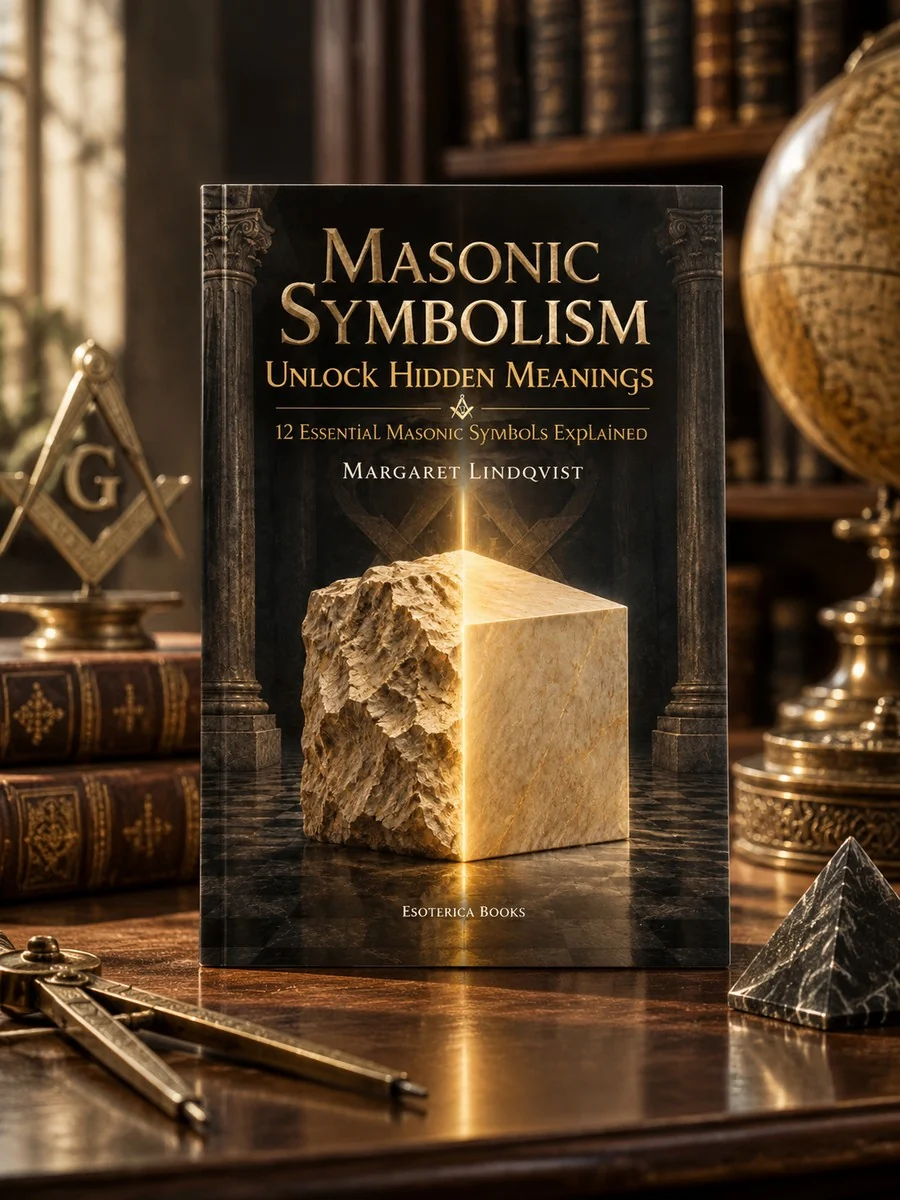
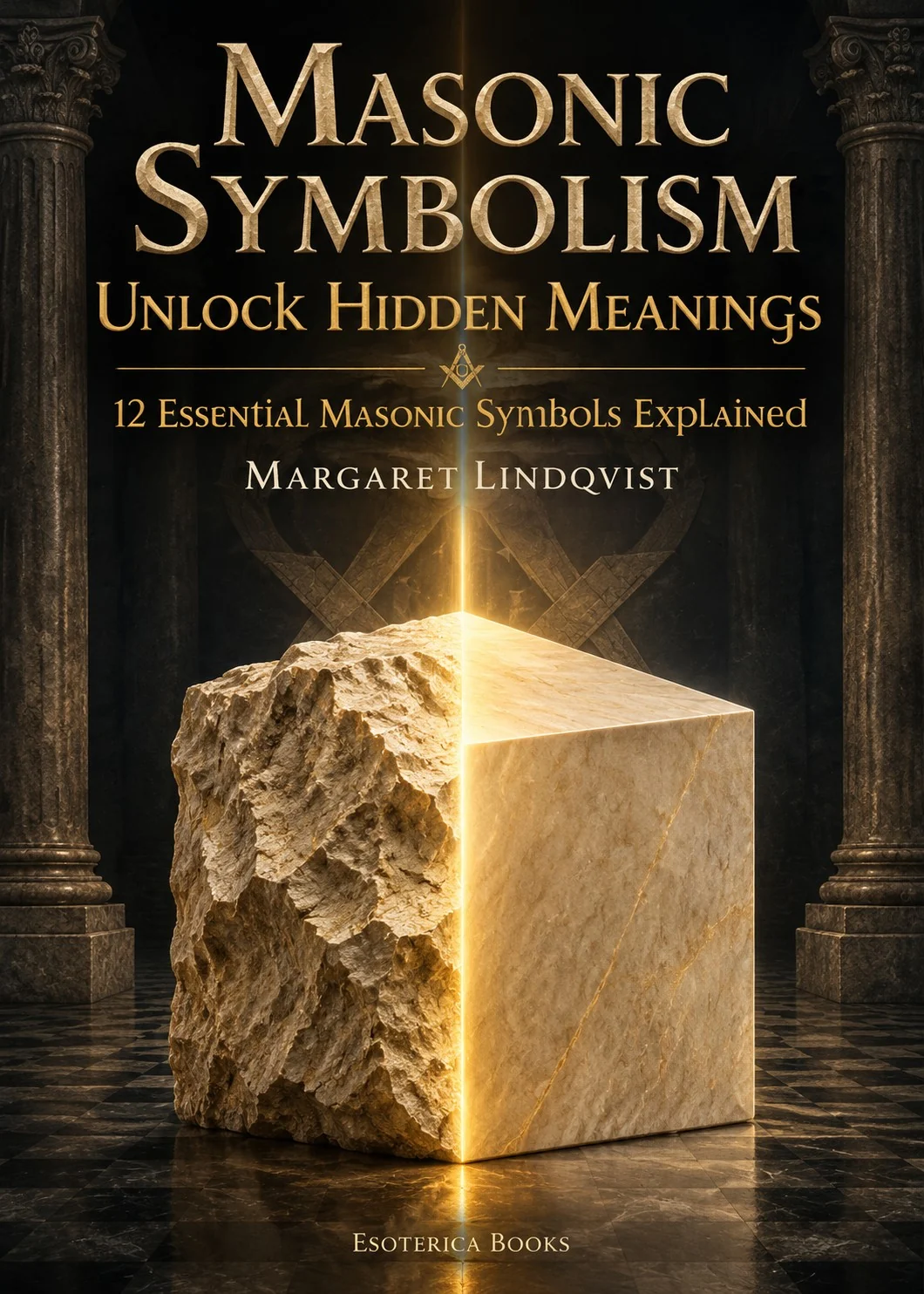
Masonic Symbolism: Unlock Hidden Meanings
Learn to read Freemasonry’s symbols through twelve essential emblems and a practical five-step method.
What do the square and compasses, two pillars, the letter G, and the all-seeing eye mean in Freemasonry? Masonic Symbolism introduces twelve essential symbols and the philosophical ideas behind them, showing how they appear in lodge traditions, architecture, art, literature, and music. Margaret Lindqvist presents the original Lodge-Lamp Method, a five-step framework for observing, locating, comparing, reflecting on, and interpreting symbolic imagery. From Washington, DC, to Mozart’s The Magic Flute, readers develop a clearer understanding of Masonic visual language and its traditional associations.
Freemasonry uses the imagery of craftsmanship, architecture, geometry, and moral instruction to communicate philosophical ideas. Its symbols have traditional associations, although interpretations and practices can differ between Masonic jurisdictions and contexts.


📝 Description: Masonic Symbolism: Unlock Hidden Meanings
📖 Why choose it
Why this book is worth reading
The appeal of Masonic symbolism lies in the relationship between a visible object and the ideas it represents. A square can suggest fairness, a pair of compasses restraint, and a checkered floor the contrasting conditions of human experience. This book gives those associations a practical structure. Its strongest feature is the Lodge-Lamp Method, which encourages careful observation before interpretation. You will also discover how Masonic imagery connects with Washington, DC, Mozart's The Magic Flute, and the broader artistic language of architecture and music.
⭐ Reader reviews
Reader rating
Margaret Lindqvist takes a measured, accessible approach to a subject that often attracts more speculation than careful explanation. The strongest element is the Lodge-Lamp Method, which gives beginners a repeatable process for examining symbols before assigning meaning. The preview demonstrates this particularly well through the square and compasses exercise, including concrete observation prompts and traditional interpretations. The planned progression from working tools and pillars to Washington, DC, and The Magic Flute gives the twelve chapters a coherent direction. Its main limitation is its introductory scope: experienced Masonic researchers looking for detailed jurisdictional comparisons, specialist ritual studies, or extensive architectural documentation may find the treatment too basic. For newcomers, the clarity is a considerable advantage.
❓ Frequently asked questions
📖 Who should read this
A good choice for beginners exploring Freemasonry, readers interested in symbolic architecture and sacred geometry, and students of the connections between philosophy, literature, and music. Readers already familiar with Masonic traditions may find the introductory explanations less challenging.
🎯 Key themes and symbolism
Masonic Symbolism
Working Tools
Architectural Imagery
Symbolic Interpretation
📜 Historical context
📚 Glossary
- Square and compasses
- Working tools
- Boaz and Jachin
- Grand Architect of the Universe
- Rough ashlar
- Perfect ashlar
📔 Questions to reflect on
- When you encounter the square and compasses, which traditional associations of morality, fairness, restraint, and self-discipline invite the most personal reflection?
- What is the difference between what you can directly observe in a symbolic image and what you assume it represents?
- Choose an architectural feature, artwork, or musical composition that interests you. How would you use Observe, Locate, Compare, Reflect, and Apply to develop a thoughtful interpretation?
📖 Read on the blog
✍️ More books by this author Margaret Lindqvist


🏛 Books from this publisher Esoterica Books
All books from this publisher →

You might also like
See more →
Have a question about this item?
Ask about the edition, condition, delivery or anything else — we reply by email or phone, usually within a day.
