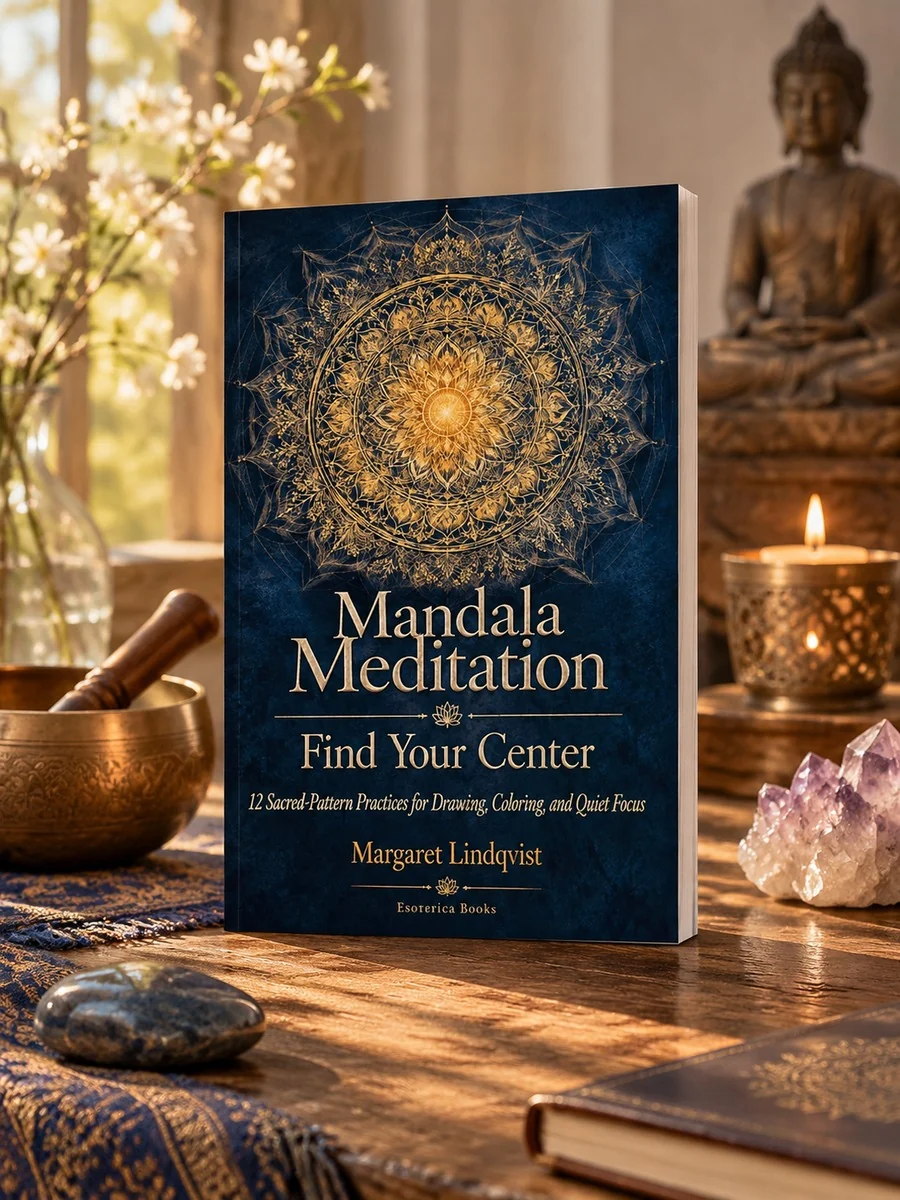
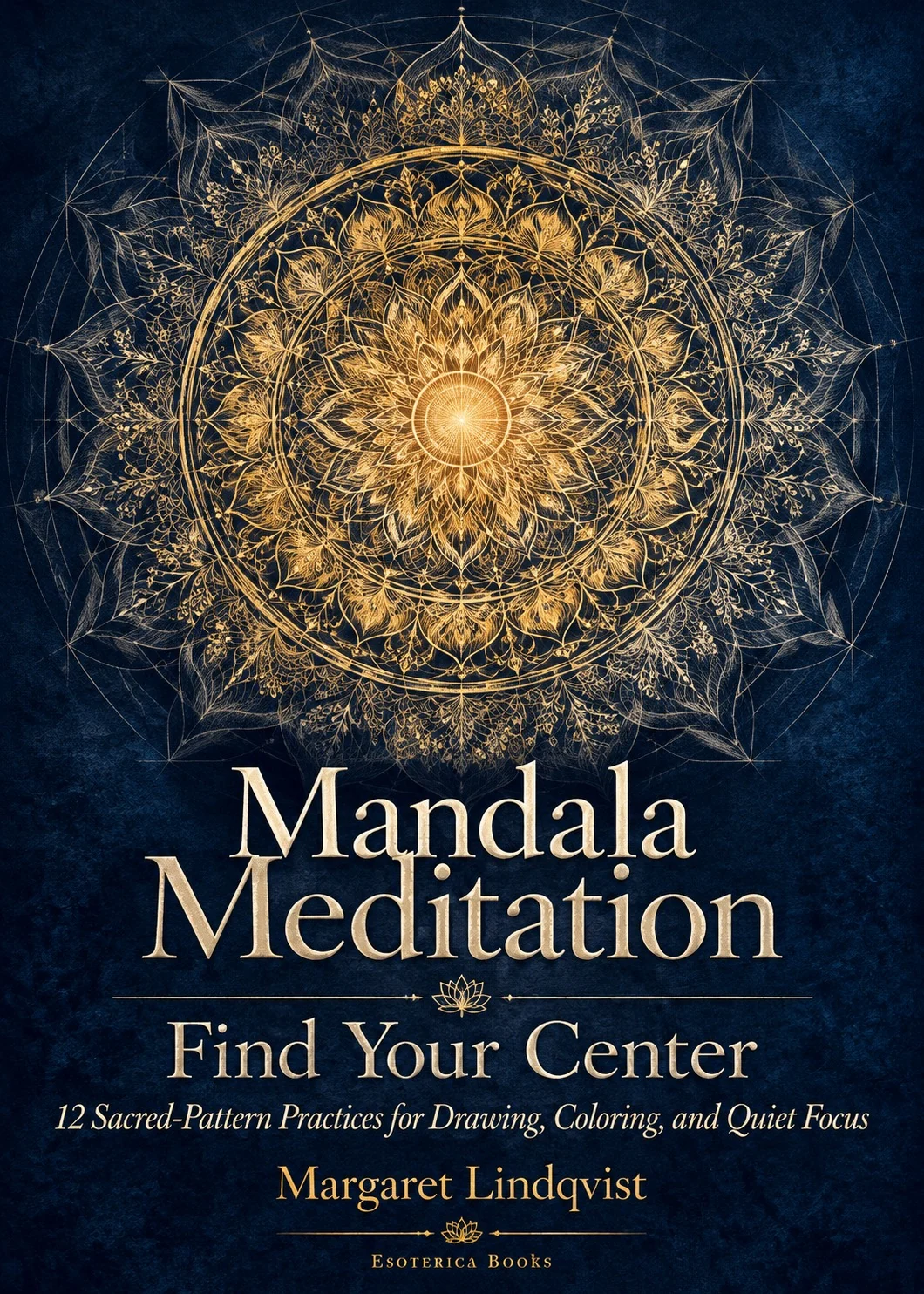
Mandala Meditation: Find Your Center
Turn the simple act of looking at a mandala into a thoughtful practice of observation, coloring, and reflection.
Mandala Meditation: Find Your Center introduces beginners to a practical approach to sacred patterns through observation, drawing, coloring, and guided reflection. Margaret Lindqvist presents The Sacred Pattern Path, a five-step method that takes readers from preparing a quiet space to creating and reflecting on personal mandalas. Twelve practices explore geometric forms, color associations, traditional symbolism, focused observation, and original designs. With accessible exercises, guided meditation scripts, and journaling prompts, the book offers a structured way to bring creativity and contemplative attention into everyday life.
Mandalas have important artistic and contemplative roles in Hindu and Buddhist traditions, where their geometry can carry specific religious and cosmological meanings. This book also explores contemporary personal mandala-making, which should be appreciated as a distinct creative practice rather than treated as interchangeable with traditional religious forms.


📝 Description: Mandala Meditation: Find Your Center
📖 Why choose it
Why this book is worth reading
The appeal of mandala meditation is easy to understand, but knowing what to do with a complex pattern is another matter. Lindqvist bridges that gap with specific instructions: three observation cycles, a central point surrounded by concentric rings, repeating geometric details, and carefully chosen coloring exercises. The five-step method gives the practices a recognizable structure, while drawing and journaling let readers move beyond printed designs. It is an approachable introduction for anyone who wants to combine visual creativity with contemplative attention.
⭐ Reader reviews
Reader rating
This is a well-organized introduction to mandala meditation, with a particularly useful practical framework. The Sacred Pattern Path gives beginners five memorable steps, and the preview demonstrates the approach with concrete timings, breathing guidance, observation cycles, and drawing instructions. The twelve-chapter structure moves logically from simple observation to coloring, geometry, cultural context, original designs, and guided scripts. The distinction between traditional religious mandalas and contemporary personal creations is an important editorial strength. One limitation: readers looking for detailed instruction in traditional Buddhist or Hindu mandala practice will find this book introductory rather than scholarly. Its strongest contribution is the accessible personal method.
❓ Frequently asked questions
📖 Who should read this
For beginners curious about mandala meditation, readers who enjoy coloring and geometric drawing, and anyone looking for a structured creative ritual involving observation and journaling. Experienced practitioners seeking extensive religious instruction or advanced traditional mandala construction may want a more specialized text.
🎯 Key themes and symbolism
Sacred Geometry
Focused Observation
Mindful Coloring
Personal Mandalas
📜 Historical context
📚 Glossary
- Mandala
- Sacred geometry
- Concentric rings
- Radial symmetry
- Center
- Mandala meditation journal
📔 Questions to reflect on
- Which geometric feature of the mandala naturally draws my attention, and what personal associations do I have with it?
- How do my choices of color, shape, and repetition express the intention I brought to this session?
- What did I notice when I followed the mandala from its center to its outer rings, and what would I like to explore in my next design?
📖 Read on the blog
✍️ More books by this author Margaret Lindqvist



🏛 Books from this publisher Esoterica Books
All books from this publisher →



You might also like
See more →
Have a question about this item?
Ask about the edition, condition, delivery or anything else — we reply by email or phone, usually within a day.
