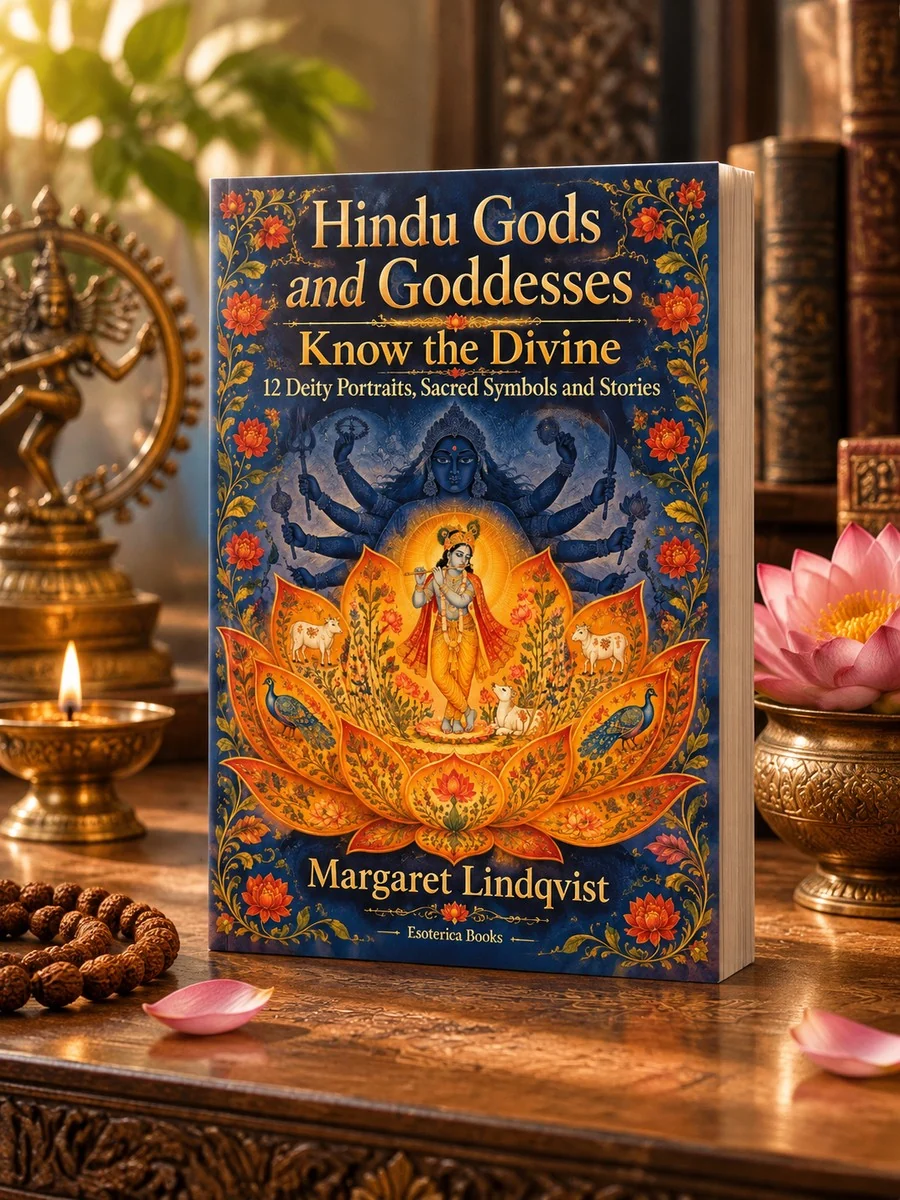
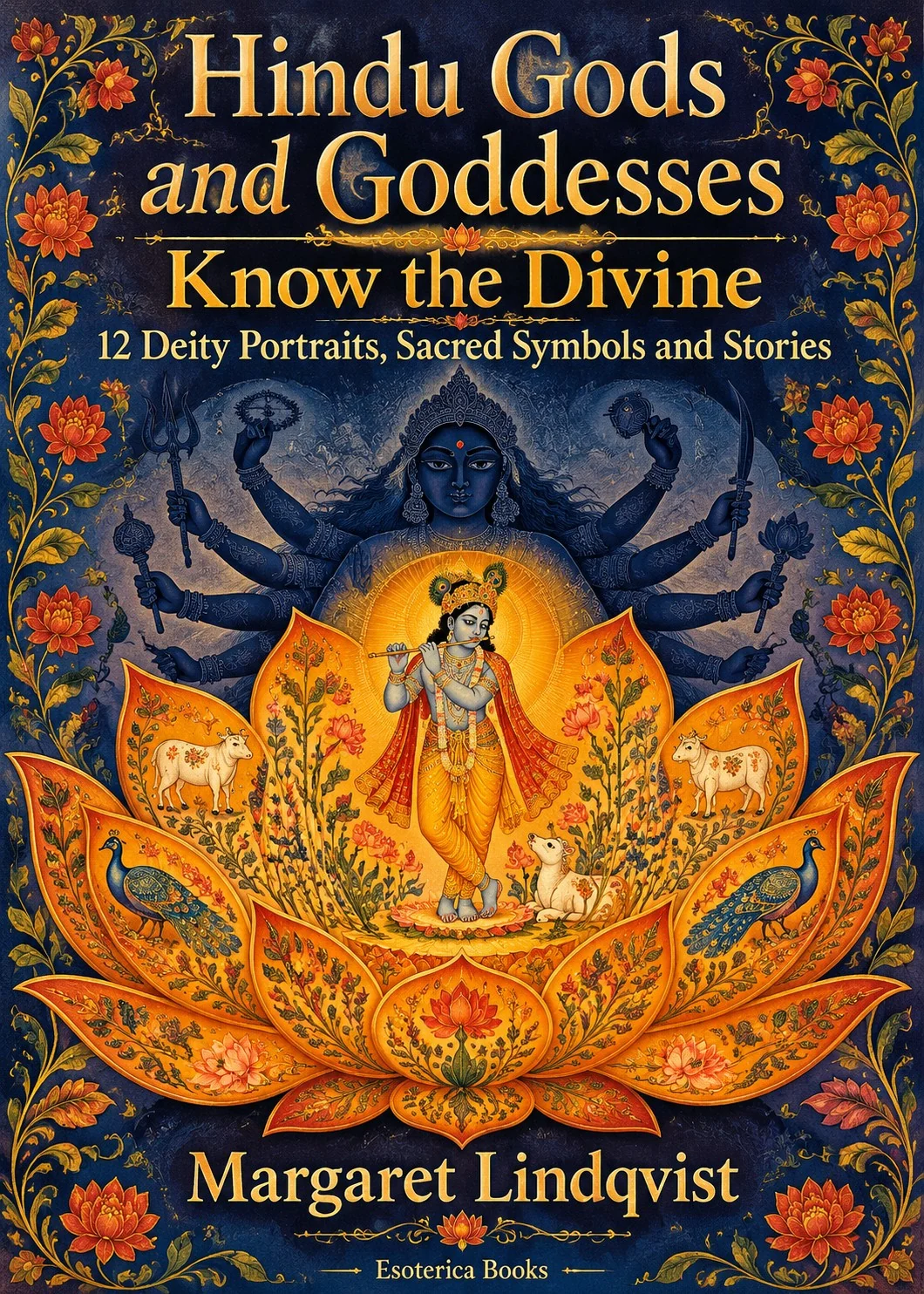
Hindu Gods and Goddesses: Know the Divine
Meet 12 Hindu deities and learn to recognize their sacred symbols, stories, and traditional roles.
Who are the major Hindu gods and goddesses, and how can you tell them apart? Margaret Lindqvist introduces twelve important divine figures through their names, relationships, stories, sacred animals, colors, and symbolic objects. Discover the Trimurti of Brahma, Vishnu, and Shiva, explore the question of the four principal Hindu gods, and meet beloved figures including Ganesha, Krishna, Lakshmi, Saraswati, Durga, and Hanuman. The Sacred Portrait Path turns learning into a practical journey of recognition, understanding, reflection, and respectful personal devotion.
Hinduism encompasses diverse devotional, philosophical, and cultural traditions, each with its own understandings of the divine. The book introduces widely recognized deities while acknowledging that their roles, relationships, and forms of worship can differ between communities.


📝 Description: Hindu Gods and Goddesses: Know the Divine
📖 Why choose it
Why this book is worth reading
Recognizing a deity is more rewarding when you understand the meaning behind the image. This book gives you practical details to look for: Ganesha's elephant head and mouse, Krishna's flute and peacock feather, Shiva's crescent moon and trident, and Saraswati's veena. Its greatest strength is the connection between visual recognition and traditional stories. The Sacred Portrait Path also gives beginners a manageable way to organize what they learn and carry their discoveries into a personal devotional journal.
⭐ Reader reviews
Reader rating
Margaret Lindqvist's introduction takes a sensible route into a subject that can initially feel overwhelming. The strongest feature is the Sacred Portrait Path, which connects names and identities with visual recognition, traditional stories, and personal reflection. The preview handles two common beginner questions particularly well: the distinction between the Trimurti and the idea of four principal gods, and the importance of a deity's vahana. The contents also promise useful exercises, including a recognition chart and a twelve-deity reference journal. One limitation: readers seeking detailed comparisons of Hindu philosophical schools, regional histories, or specialist theological discussions will find this introductory treatment too basic. Its purpose is orientation, not comprehensive scholarship.
❓ Frequently asked questions
📖 Who should read this
Ideal for beginners exploring Hindu gods and deities, readers curious about the meaning of Hindu sacred imagery, and anyone wishing to understand the relationships between familiar divine figures. It also suits readers who want a respectful introduction to Hindu devotional customs and a simple framework for personal reflection.
🎯 Key themes and symbolism
Hindu Divine Figures
Sacred Symbols
Trimurti and Shakti
Devotional Reflection
📜 Historical context
📚 Glossary
- Trimurti
- Shakti
- Vahana
- Mudra
- Avatar
- Puja
📔 Questions to reflect on
- Which Hindu deity's traditional symbols or stories have caught your attention, and what would you like to understand more deeply about this figure?
- How does learning the meaning of a deity's animal mount, sacred objects, colors, or gestures change the way you look at Hindu sacred imagery?
- What would a respectful personal devotional space look like for you, and which elements would help you approach your chosen tradition with attention and sincerity?
📖 Read on the blog
✍️ More books by this author Margaret Lindqvist





🏛 Books from this publisher Esoterica Books
All books from this publisher →




You might also like
See more →

Have a question about this item?
Ask about the edition, condition, delivery or anything else — we reply by email or phone, usually within a day.
