
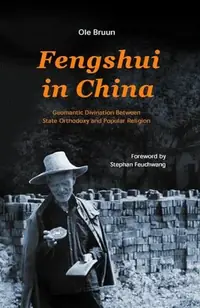
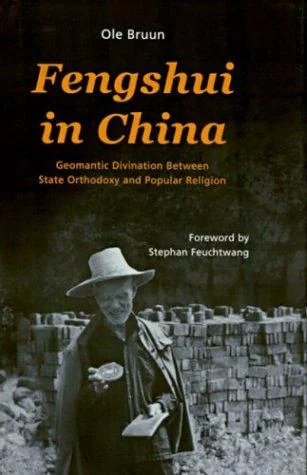
Fengshui in China: Geomantic Divination Between State Orthodoxy and Popular Religion
Bruun, OleThis edition can be ordered. No arrival date is confirmed.
Unearth the profound, often debated, historical and cultural roots of Fengshui in China.
Step beyond superficial guides with this rigorous academic exploration of Fengshui, delving into its complex role within Chinese society. Ole Bruun meticulously examines how this ancient practice navigated the intricate dynamics between official state doctrines and fervent popular religious beliefs. The book provides a comprehensive historical journey of Fengshui's evolution in China, while also thoughtfully tracing the pathways and transformations of its interpretation as it journeyed westward. Essential reading for those seeking depth over dogma.
This work sits at the intersection of academic anthropology and esoteric history, bridging the gap between rigorous scholarly analysis and the practical world of geomantic divination.


📝 Description: Fengshui in China: Geomantic Divination Between State Orthodoxy and Popular Religion
💎 Expert review
📖 Why choose it
Why this book is worth reading
This book is an essential resource for serious scholars, historians, and dedicated practitioners who crave depth over superficial dogma. Readers seeking to understand the profound historical and cultural roots of Fengshui will find immense value in Bruun’s meticulous examination of its complex role within Chinese society. It is perfect for those interested in how ancient practices navigated the intricate dynamics between official state doctrines and fervent popular religious beliefs. If you wish to trace the pathways and transformations of Fengshui as it journeyed westward, this rigorous academic exploration provides the comprehensive historical journey necessary for true understanding.
⭐ Reader reviews
Reader rating
Bruun delivers a rigorous academic exploration that stands in stark contrast to superficial guides often found in mainstream occult bookshops. While it offers a vital, comprehensive historical journey and thoughtfully traces the westward transformation of these geomantic concepts, it demands patience from its audience. This text does NOT suit readers looking for quick tips, practical application instructions, or light spiritual inspiration. It is strictly for those willing to engage with dense scholarly analysis regarding state orthodoxy versus popular religion. If you prefer accessible, user-friendly manuals over heavy anthropological study, this volume will likely feel too dry and academic for your needs.
❓ Frequently asked questions
📖 Who should read this
If you're an academic, cultural historian, or a dedicated student of esoteric traditions yearning for a robust, scholarly investigation into Fengshui's true origins and societal impact, rather than a practical guide, this book is for you.
🎯 Key themes and symbolism
Academic Lens on Fengshui
This work distinguishes itself by offering a scholarly, analytical perspective on Fengshui, moving beyond typical how-to manuals. It investigates the practice not as a set of rules for immediate application, but as a rich cultural phenomenon embedded in history, philosophy, and social structures, inviting a deeper, critical understanding.
State Orthodoxy & Popular Piety
The book masterfully dissects the intricate relationship between Fengshui and both official state-sanctioned beliefs and the diverse expressions of popular religion in China. It explores how this geomantic art has been perceived, utilized, or even suppressed by different authorities and embraced by the populace throughout various historical epochs.
Western Reinterpretation
Beyond its Chinese origins, the text also chronicles the fascinating journey of Fengshui as it was introduced and subsequently reinterpreted in the Western world. It sheds light on how a practice deeply rooted in Chinese cosmology adapted, transformed, and sometimes became simplified or commercialized in a new cultural context.
💬 Quotes from the book
“Understanding Fengshui requires a lens attuned to its socio-political negotiations, not merely its aesthetic outcomes.”
“The popular appeal of geomantic principles often thrived in the very spaces where state control sought to impose a singular worldview.”
📜 Historical context
📚 Glossary
- Fengshui
- Geomancy
- State Orthodoxy
📔 Questions to reflect on
- How does an academic study of a spiritual practice like Fengshui enrich or challenge your personal understanding, compared to a practical or devotional approach?
- Consider how esoteric traditions in your own culture might navigate the tension between official institutions and popular belief. What are the parallels or differences?
- Reflect on the process of cultural reinterpretation: when a practice like Fengshui travels to a new cultural context, what is gained, and what might be lost or transformed?
✍️ More books by this author Bruun, Ole
All books by this author →
You might also like
See more →
 91
91
 91
91