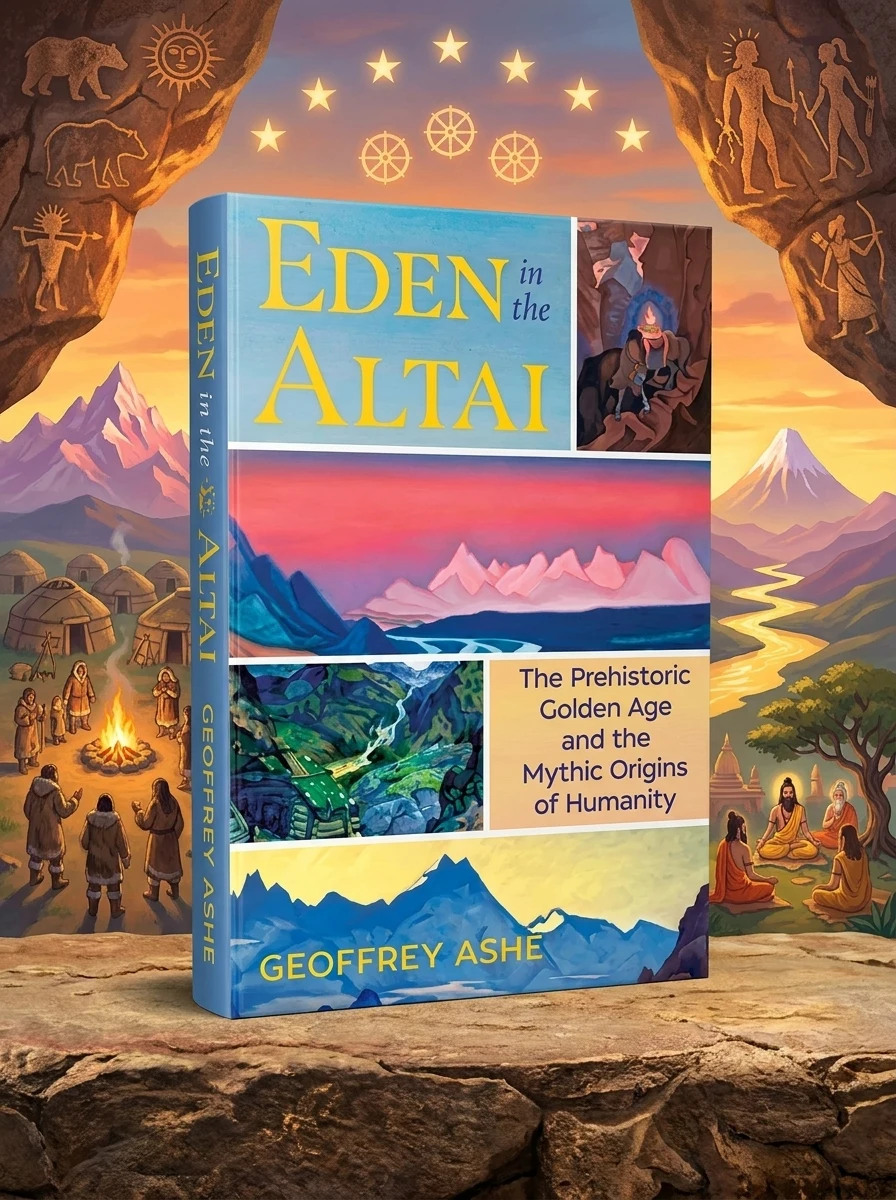
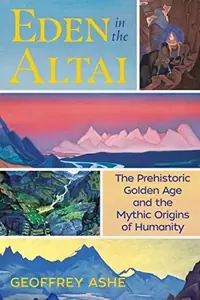
Eden in the Altai: The Prehistoric Golden Age and the Mythic Origins of Humanity (Edition, Revised of Dawn Behind the Dawn)
Ashe, Geoffrey

This edition can be ordered. No arrival date is confirmed.
Geoffrey Ashe locates humanity's mythic home in Siberia, challenging Middle Eastern origins with bold archaeological insight.
This revised edition of Dawn Behind the Dawn presents a provocative thesis: the cradle of human civilization lies not in the Fertile Crescent, but in the Altai-Baikal region of southern Siberia. Ashe argues that this prehistoric, matrifocal society was the wellspring for global mythic structures, including the sacred significance of the number seven. He meticulously traces how Altaic culture influenced the Vedic Rishis, the legend of Mount Meru, and even the Greek worship of Apollo and Artemis. By examining evidence as old as 24,000 BC, the text reimagines the geography of our ancestral memory, suggesting a northern genesis for the world’s oldest spiritual narratives.
This work sits firmly within the esoteric and alternative history traditions, challenging mainstream archaeological narratives with mythic reinterpretations. It appeals to those interested in prehistoric spirituality and the geographical origins of ancient religious symbols.


📝 Description: Eden in the Altai: The Prehistoric Golden Age and the Mythic Origins of Humanity (Edition, Revised of Dawn Behind the Dawn)
💎 Expert review
📖 Why choose it
Why this book is worth reading
Readers fascinated by the deep roots of human spirituality and those weary of standard Near Eastern origin stories will find this book deeply engaging. Geoffrey Ashe offers a bold, alternative perspective that locates humanity's mythic home in Siberia, providing a fresh lens through which to view ancient myths. If you enjoy speculative archaeology that connects disparate cultural traditions like Vedic and Greek mythology to a singular northern source, this revised edition is essential. It invites you to reconsider the geography of ancestral memory and explore how matrifocal societies may have shaped global spiritual frameworks. For anyone seeking to expand their understanding of prehistoric culture beyond conventional boundaries, this text provides a provocative and intellectually stimulating journey into the dawn of human consciousness.
⭐ Reader reviews
Reader rating
Ashe presents a compelling, albeit controversial, thesis that shifts the cradle of civilization to southern Siberia, tracing influences on Vedic and Greek traditions. While the archaeological evidence is presented with confidence, readers expecting rigorous, peer-reviewed academic analysis may find the mythic leaps overly speculative. The book is best suited for those open to alternative historical narratives rather than skeptics demanding strict empirical proof. It succeeds in weaving a rich tapestry of cultural connections but requires an accepting mindset regarding its bold claims about prehistoric matrifocal societies. Not recommended for traditionalists or those adhering strictly to conventional Fertile Crescent origin theories.
❓ Frequently asked questions
📖 Who should read this
Readers fascinated by alternative prehistory, comparative mythology, and the geographic roots of spiritual traditions will find this work essential. It challenges conventional Near Eastern-centric views of civilization’s dawn.
🎯 Key themes and symbolism
Siberian Origins
Matrifocal Mythology
Cross-Cultural Symbolism
💬 Quotes from the book
“Myths of a Golden Age... are nearly universal in all cultures. But where was this 'Eden' located?”
“Refuting the traditional assumption that the cultures of the Middle East... filtered northward... Ashe identifies the northern Altai mountain range... as the true cultural home of humanity.”
📜 Historical context
📚 Glossary
- Matrifocal
- Altai-Baikal
- Diffusionism
📔 Questions to reflect on
- If the 'Garden of Eden' were a physical place you could visit, what climate and landscape would you expect to find there based on your cultural upbringing?
- How does the idea of a 'matrifocal' ancient society change your interpretation of mythic figures like the Great Mother or the Goddess?
- Which modern spiritual or cultural symbol do you use daily that might have originated in a distant, ancient land you never considered?
✍️ More books by this author Ashe, Geoffrey
All books by this author →

🏛 Books from this publisher Bear & Company
All books from this publisher →



You might also like
See more →