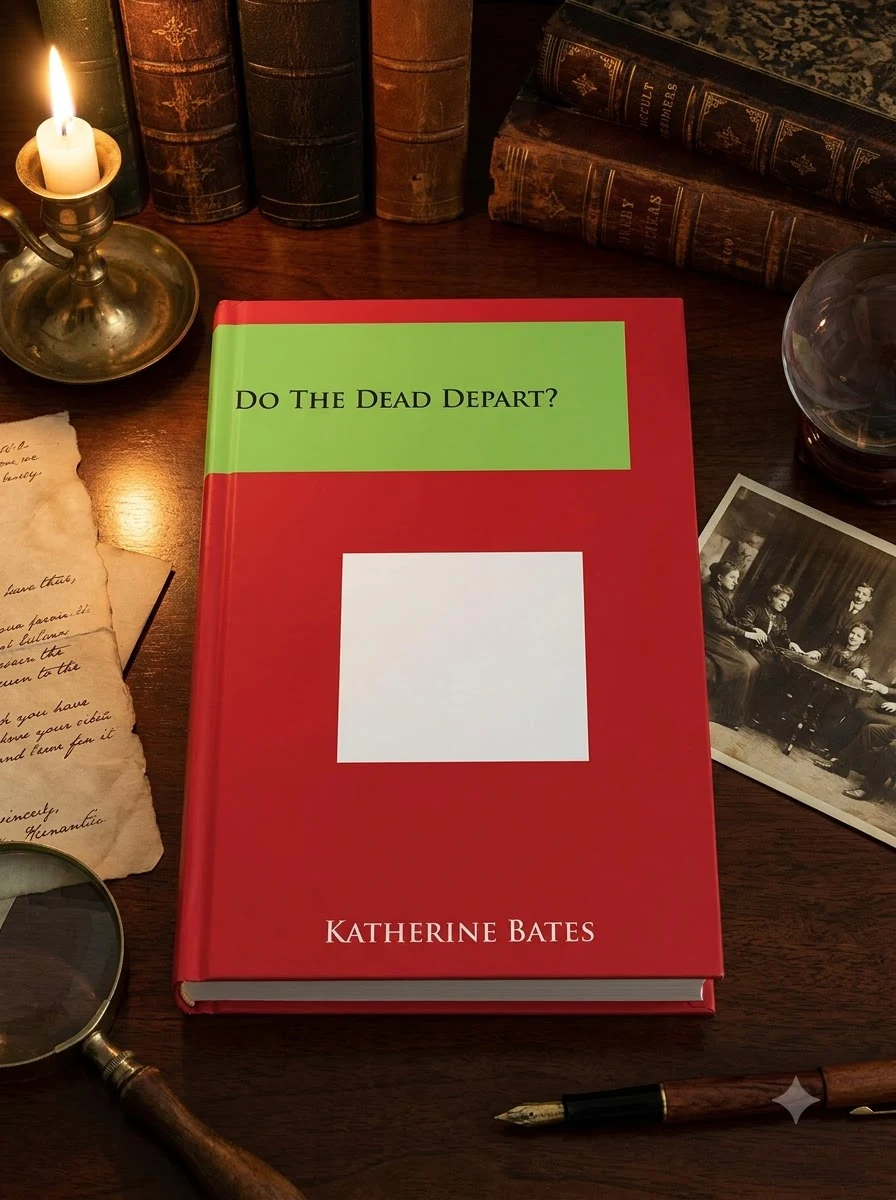
Do The Dead Depart?
Stock reported in the catalog; fulfillment is confirmed with your request.
Does consciousness truly persist beyond the mortal coil? Katherine Bates dares to ask.
Katherine Bates's 1908 inquiry, "Do The Dead Depart?", delves into the enduring mystery of the afterlife. This work is not a mere collection of anecdotes, but a thoughtful philosophical and metaphysical exploration of spiritualist tenets. Bates meticulously examines the prevailing beliefs of her era regarding spirit communication, the nature of consciousness after death, and the potential for interaction between the living and the departed. Her prose invites readers to ponder the boundaries of existence and the ultimate fate of the soul, offering a compelling perspective from the early 20th century.
This work emerges from the early 20th century spiritualist movement, reflecting the era's intense philosophical inquiry into metaphysics and spirit communication. It serves as a historical document of that period's specific approach to understanding consciousness beyond death.


📝 Description: Do The Dead Depart?
💎 Expert review
📖 Why choose it
Why this book is worth reading
Readers deeply interested in the historical evolution of spiritualist thought will find Katherine Bates’s work invaluable for its rigorous philosophical framing rather than mere anecdotal evidence. Those who appreciate early twentieth-century metaphysical debates regarding the nature of the soul and post-mortem consciousness will gain a compelling perspective from that specific historical moment. This book is ideal for scholars or enthusiasts seeking to understand how contemporaries articulated the boundaries between life and death through a serious, contemplative lens rather than sensationalism.
⭐ Reader reviews
Reader rating
Bates offers a thoughtful metaphysical exploration of spiritualist tenets, avoiding simple anecdotes in favor of philosophical inquiry. While her prose invites pondering the ultimate fate of the soul, this book is not for readers seeking modern scientific validation or casual ghost stories. It may disappoint those expecting empirical proof or contemporary occult practices. However, for students of esoteric history and early spiritualism, it provides a significant window into the intellectual landscape of 1908. The work is dense but rewarding for its candid examination of prevailing beliefs regarding spirit communication and consciousness.
❓ Frequently asked questions
📖 Who should read this
For seekers intrigued by historical spiritualism, the enduring questions of life after death, and philosophical inquiries into consciousness, Bates's work offers a valuable perspective. If you appreciate intellectual rigor applied to otherworldly mysteries, this reprint is for you.
🎯 Key themes and symbolism
Afterlife's Veil
Bates thoughtfully dissects the philosophical and experiential aspects of what lies beyond life. She investigates various theories of post-mortem existence, from the persistence of individual consciousness to the possibility of spirit communication, inviting readers to contemplate the thin barrier between our world and the next, and whether it can truly be traversed.
Metaphysical Inquiry
This volume engages with profound questions concerning reality and existence that transcend the physical. Bates positions the spiritualist movement within a broader metaphysical framework, exploring concepts such as the soul's essence, the nature of time and space in relation to the spirit world, and the very fabric of being, challenging conventional scientific materialism.
Early Occult Thought
The book offers a window into the nascent stages of modern occult and spiritualist scholarship. Bates's work reflects the intellectual climate of the early 20th century, where scientific advancement met a growing fascination with unseen forces. She grapples with the scientific and philosophical implications of phenomena attributed to the occult, contributing to the evolving dialogue.
💬 Quotes from the book
“The persistent whisper of memory, the unbidden sense of presence, these are but faint echoes across the great divide, yet they compel us to ponder what truly remains when the body falters.”
“To dismiss the myriad accounts of spectral communication as mere delusion is to ignore a consistent current in human experience, demanding a more profound examination than simple skepticism allows.”
📜 Historical context
📚 Glossary
- Spiritualism
- Metaphysics
- Occultism
📔 Questions to reflect on
- How do your personal beliefs about consciousness and the afterlife align with or diverge from the early 20th-century perspectives presented by Bates?
- Considering Bates's arguments, what evidence, if any, do you find compelling for the persistence of consciousness beyond physical death?
- In what ways has modern science or philosophy addressed the questions Bates raises, and have these answers satisfied your own curiosity?
🏛 Books from this publisher Literary Licensing, LLC
All books from this publisher →
 82
82
 86
86
 82
82
You might also like
See more →
 79
79