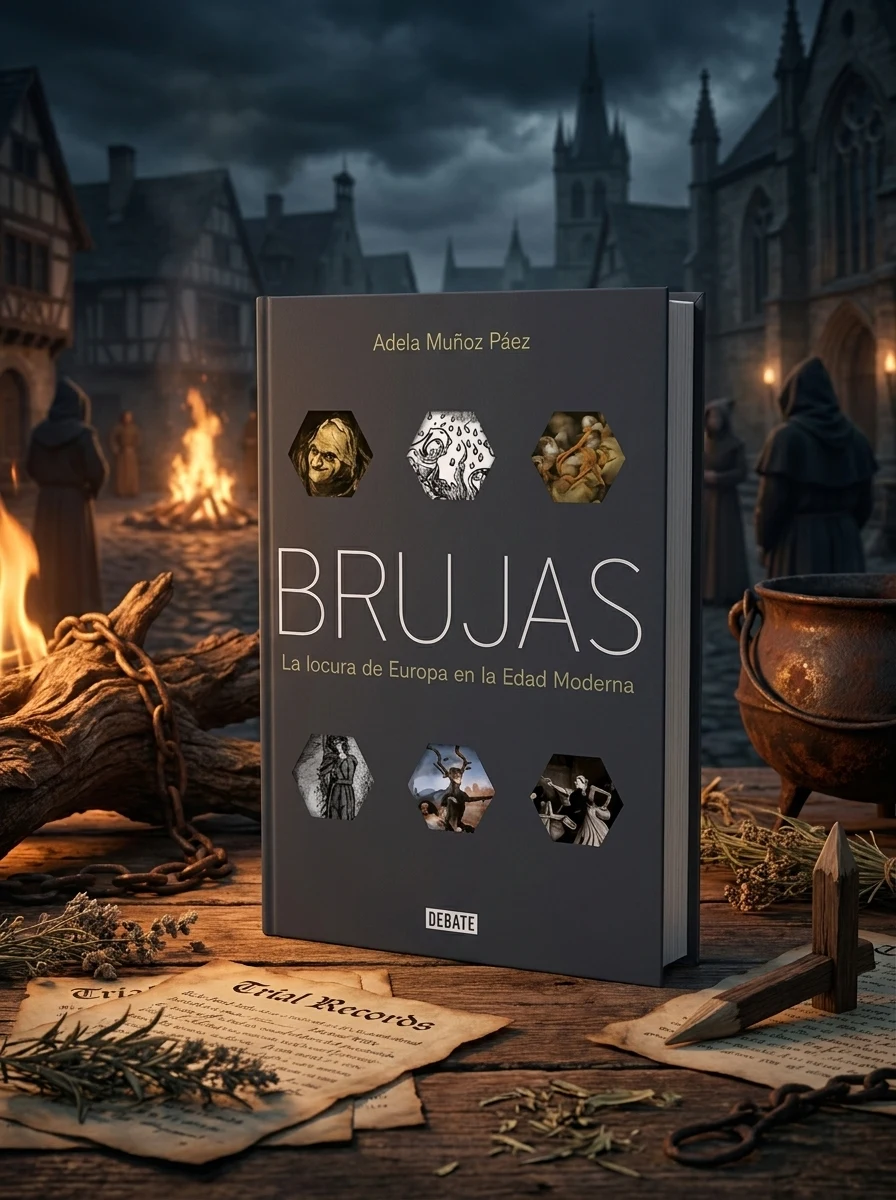

Brujas: La Locura de Europa En La Edad Moderna / Witches: Europes Madness in the Modern Age Muñoz Páez, Adela


This edition can be ordered. No arrival date is confirmed.
Uncover the brutal truth behind Europe's witch hunts: a devastating war waged against women.
Adela Muñoz Páez presents a compelling re-examination of early Modern European witch persecutions, where hundreds of thousands were accused and about sixty thousand, predominantly women, were tragically executed. This insightful work delves into the motivations of both accused and accusers, meticulously exploring the profound misogyny orchestrated by the Church that transformed women into societal scapegoats. Contrary to popular belief, Páez reveals the Spanish Inquisition often opposed these hunts, and the most severe cruelties occurred outside its jurisdiction. The book also touches upon related topics like papal decrees, grimories, and famous trials such as Salem and Zugarramurdi.
This work sits firmly within the historiography of early modern European witch persecutions, challenging traditional narratives by examining the intersection of religion, gender politics, and legal history in Spain and beyond.


📝 Description: Brujas: La Locura de Europa En La Edad Moderna / Witches: Europes Madness in the Modern Age Muñoz Páez, Adela
💎 Expert review
📖 Why choose it
Why this book is worth reading
Readers interested in the socio-political mechanics of historical persecution will find this book essential for understanding how misogyny was institutionalized. It appeals to those seeking to correct popular misconceptions about the Spanish Inquisition's role, offering a nuanced view that contrasts with common myths. By exploring the motivations of accusers and the systemic scapegoating of women, it provides a vital perspective on how religious authority shaped societal fears. If you are fascinated by the brutal reality behind the Salem trials or Zugarramurdi without accepting oversimplified explanations, this text offers a rigorous, compassionate re-examination that illuminates the devastating human cost of these historical events.
⭐ Reader reviews
Reader rating
Adela Muñoz Páez delivers a compelling, well-researched critique of early modern witch hunts, effectively dismantling the myth of universal Inquisitorial support for executions. The book shines in its detailed analysis of ecclesiastical motivations and the specific context of Spanish jurisdiction versus external regions. However, readers seeking a narrative-driven account or extensive focus on Wiccan spiritual practices may find it too academic or historically detached. It is not suitable for those looking for practical occult guidance or romanticized folklore; instead, it demands engagement with serious historical inquiry regarding misogyny and power dynamics in the modern age.
❓ Frequently asked questions
📖 Who should read this
If you're seeking a rigorous, demystifying look at one of history's darkest chapters, this book is for you. Readers passionate about feminist history, critical analysis of societal narratives, or the true origins of occult persecution will find its arguments both enlightening and essential.
🎯 Key themes and symbolism
Misogyny's Historical Roots
This book meticulously uncovers how deeply embedded societal sexism and ecclesiastical institutions fueled the witch hunts, systematically demonizing women and using them as convenient scapegoats for widespread societal anxieties and power struggles across early modern Europe. It's a stark reminder of historical gender-based oppression.
Challenging Witch Hunt Myths
Páez rigorously debunks several enduring misconceptions, particularly regarding the Spanish Inquisition's role. She demonstrates that popular narratives often misrepresent the geographical intensity and the primary enforcers of these brutal persecutions, offering a more nuanced historical truth that reframes common understandings of the era.
Occult Practices & Persecution
Beyond the trials, the text explores the actual presence of magical beliefs and practices during the era, from grimories to exorcisms and spells. It contextualizes these elements not as proof of malevolent witchcraft but as part of the broader cultural tapestry that often became targets of persecution, deepening our understanding of magical folklore.
💬 Quotes from the book
“The systematic persecution of women during this era was not merely a judicial error but a deliberate, centuries-long campaign to assert control and scapegoat a vulnerable population.”
“Popular narratives often misattribute the greatest atrocities and the harshest sentences to institutions that, upon closer inspection, frequently displayed a degree of judicial skepticism.”
📜 Historical context
📚 Glossary
- Grimorio
- Inquisición
- Aquelarre
📔 Questions to reflect on
- How do historical narratives, particularly those ingrained in popular culture, shape our understanding of past injustices, and what is our responsibility in re-evaluating them?
- Considering the systemic misogyny highlighted in the book, what parallels can you draw between historical scapegoating and contemporary social or political targeting of marginalized groups?
- Reflect on the power of institutions, like the Church or legal systems, to define reality and justify extreme actions against individuals or communities.
You might also like
See more →