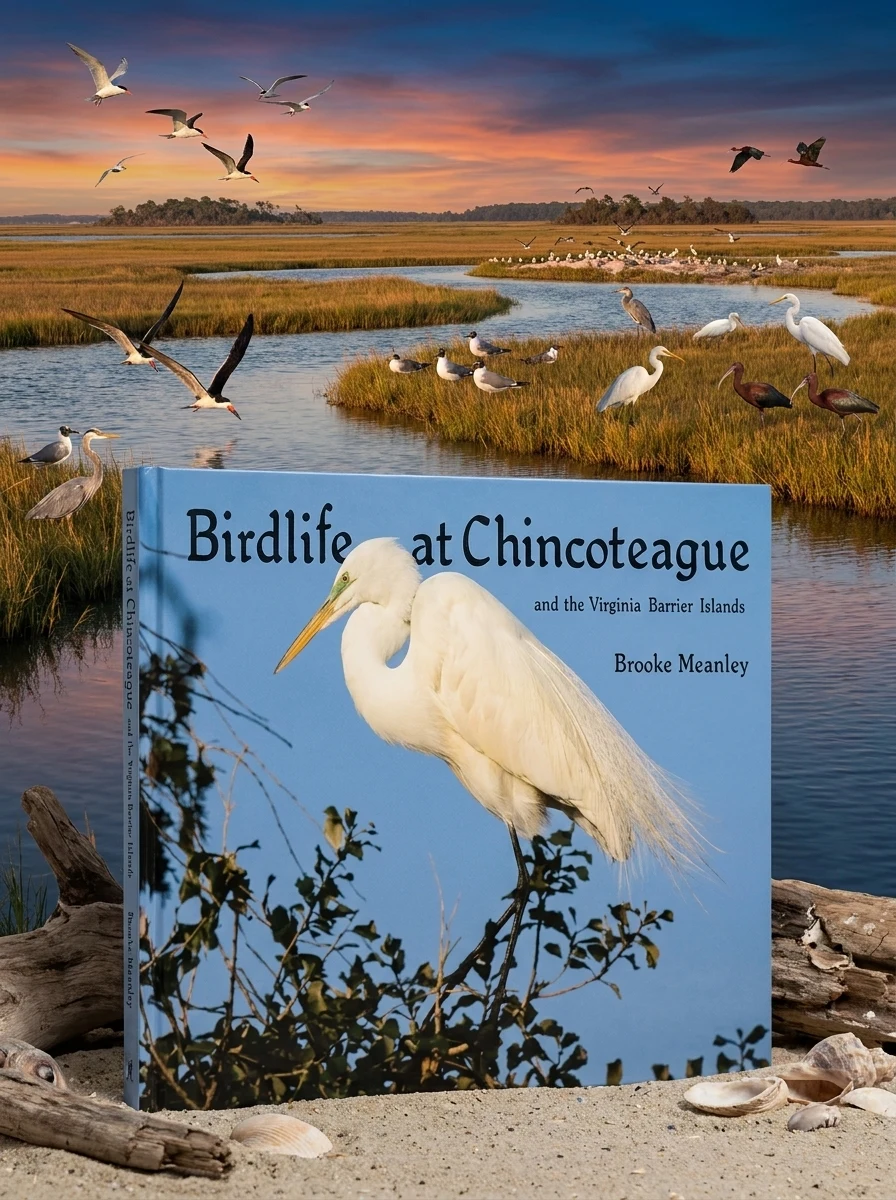
Birdlife at Chincoteague and the Virginia Barrier Islands
This edition can be ordered. No arrival date is confirmed.
Explore the wild avian heart of Virginia's pristine barrier islands.
Brooke Meanley’s essential guide captures the untamed spirit of Virginia’s seventy-mile Eastern Shore chain. These isolated barrier islands and marshlands remain a rare bastion of Atlantic wilderness, hosting the Middle Atlantic’s most diverse birdlife. From tern colonies to wintering snow geese, this volume catalogs nearly 200 species of shorebirds, seabirds, and marsh dwellers. It serves as both a practical field companion and a testament to the region’s enduring ecological significance for observers since the late nineteenth century.
This work sits within the tradition of regional natural history and field ornithology, celebrating the ecological heritage of the American Atlantic coast. It aligns with the long-standing practice of documenting local biodiversity for both scientific observation and public appreciation of wilderness areas.


📝 Description: Birdlife at Chincoteague and the Virginia Barrier Islands
💎 Expert review
📖 Why choose it
Why this book is worth reading
Bird enthusiasts and nature lovers will find immense joy in this essential guide to Virginia’s Eastern Shore. It offers a practical companion for observing nearly 200 species of shorebirds, seabirds, and marsh dwellers across the pristine barrier islands. Readers seeking to understand the region's ecological significance will appreciate its detailed cataloging of avian life, from tern colonies to wintering snow geese. This book serves as a testament to the enduring value of these isolated wilderness areas, inviting observers to connect with the untamed spirit of the Atlantic coast through careful observation and appreciation.
⭐ Reader reviews
Reader rating
My book club chose this last month. The language takes some getting used to, but it becomes part of the charm. Definitely recommend.
Meanley provides a comprehensive overview of the Middle Atlantic’s most diverse birdlife on Virginia’s barrier islands. It is an excellent resource for field identification and understanding regional ecology. However, it does not suit readers seeking deep historical narratives, philosophical musings on nature, or technical taxonomic debates. Those looking for dense academic analysis or travelogues focused on human experience rather than avian observation will find this volume too specialized. It is strictly a natural history guide, best appreciated by those interested in the biological diversity of the specific geographic region rather than broader literary or historical contexts.
❓ Frequently asked questions
📖 Who should read this
Dedicated birders seeking a comprehensive resource for the Middle Atlantic coast, naturalists interested in barrier island ecology, and travelers wishing to witness the region’s unique, undisturbed wildlife in its pristine habitat.
🎯 Key themes and symbolism
Wilderness Preservation
The text emphasizes the islands' status as one of the last pristine Atlantic seashores. It frames the landscape not just as habitat, but as a surviving relic of natural history, untouched by urbanization, making the presence of diverse wildlife possible.
Avian Diversity
Meanley details the specific concentrations of life, including nesting terns, skimmers, and herons. The work highlights the unique ecological niche that supports both resident breeding populations and massive seasonal influxes of migratory species like brant and snow geese.
Historical Observation
The guide connects modern birdwatching to its roots in the late 1800s. It positions the current practice within a long tradition of naturalists who have tracked these birds, validating the area's reputation as a premier destination for ornithological study.
💬 Quotes from the book
“These barrier islands exist today pretty much as they must have in pristine times.”
“The richest assortment of bird life in the Middle Atlantic states.”
📜 Historical context
📚 Glossary
- Barrier Islands
- Clapper Rail
- Atlantic Brant
📔 Questions to reflect on
- How does the isolation of these islands contribute to the survival of the species described?
- What changes might occur if the 'pristine' status of the Eastern Shore were compromised?
- Why do you think this region has attracted observers since the late 1800s specifically?
🏛 Books from this publisher Schiffer Publishing
All books from this publisher →
 89
89







You might also like
See more →




 91
91
 91
91