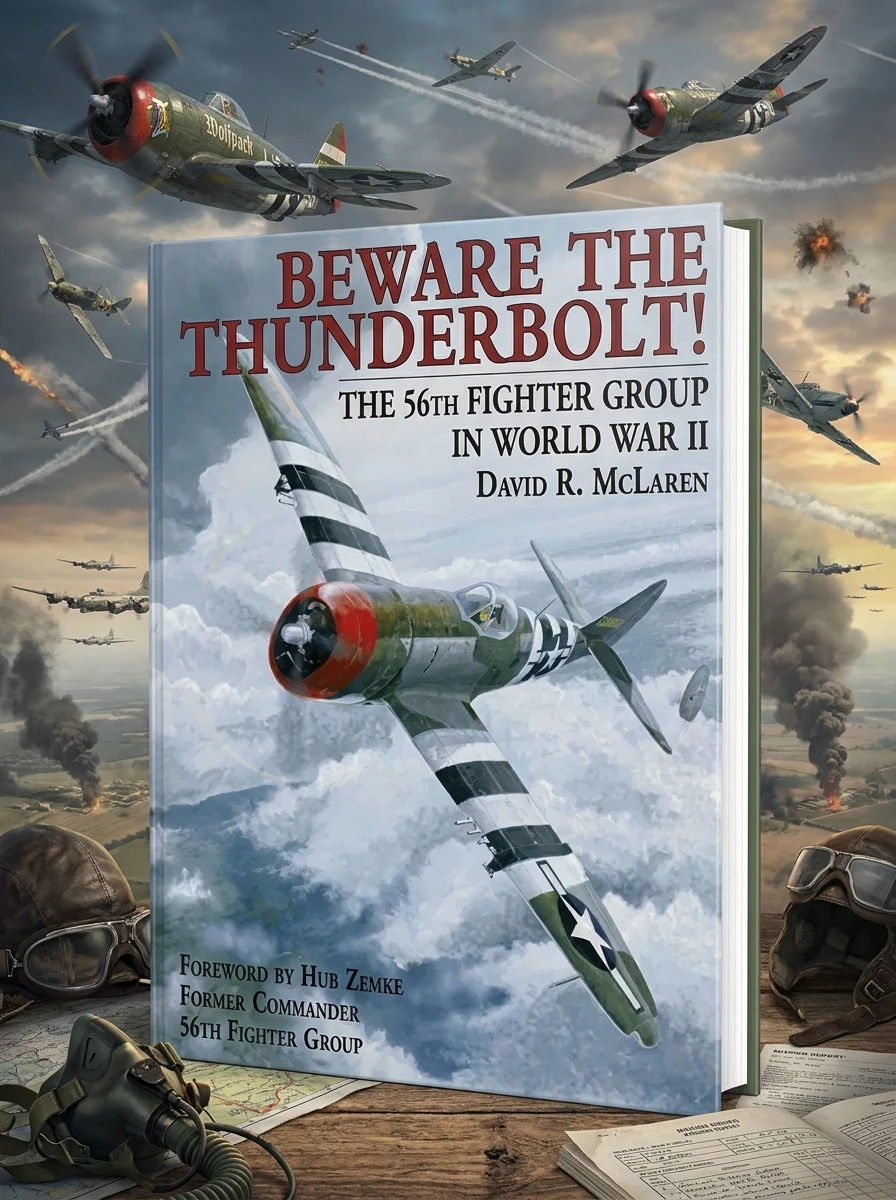
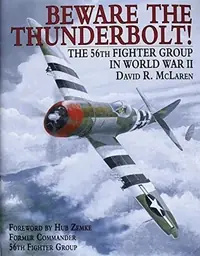
Beware the Thunderbolt!: The 56th Fighter Group in World War II
This edition can be ordered. No arrival date is confirmed.
Ascend the stratosphere with the 56th’s thunderbolts as they dominated the skies of WWII.
This volume chronicles the legendary 56th Fighter Group’s combat missions, from their aggressive 1943 raids in P-47 Thunderbolts to post-war innovations. It details their escort of heavy bombers and the destruction of over a thousand Luftwaffe aircraft. The narrative extends beyond the war, exploring their pioneering Mustang flights in Alaska and historic trans-Atlantic jet missions in P-80s, capturing the evolution of American air power through the eyes of its most iconic pilots.
This work sits within the tradition of military aviation history, specifically focusing on the operational narratives of United States Army Air Forces units during World War II. It contributes to the broader genre of tactical air warfare documentation that examines the evolution of American air power through specific group histories.


📝 Description: Beware the Thunderbolt!: The 56th Fighter Group in World War II
💎 Expert review
📖 Why choose it
Why this book is worth reading
Readers who possess a deep passion for aerial combat history will find immense value in this detailed chronicle of the 56th Fighter Group. It is particularly suited for those interested in the tactical evolution of American air power, from the aggressive P-47 Thunderbolt raids to post-war jet innovations like the P-80 missions. The book offers a unique perspective on the pilots who dominated WWII skies and later pioneered flights in Alaska and across the Atlantic. If you appreciate narratives that blend technical aircraft performance with human stories of iconic pilots, this volume provides a comprehensive look at their legacy. It is an essential read for military historians and aviation enthusiasts seeking to understand the strategic impact of escort missions and the destruction of Luftwaffe forces through firsthand accounts and historical analysis.
⭐ Reader reviews
Reader rating
This has been on my wishlist for months. Solid binding, decent paper — holds up to heavy use. It pairs well with more modern commentaries on the same tradition. Would buy from this store again.
Was skeptical at first. There's real depth here that reveals itself on a second reading. Recommended if you're ready to do the work.
First purchase from this shop. The text itself is dense but rewarding — you get out what you put in. Plenty of passages worth underlining; my copy is already full of margin notes. Shipping was quick too.
McLaren delivers a thorough account of the 56th Fighter Group, appealing strongly to aviation buffs and military history aficionados. However, it does not suit readers seeking literary flair or philosophical depth; this is a functional record of missions and aircraft evolution, not a poetic exploration. Those looking for broad geopolitical analysis or personal memoirs without technical context may find the focus on specific combat raids and post-war innovations dry. The book excels in its factual recounting of escort duties and aerial dominance but lacks narrative dramatization. It is best appreciated by those who view history through the lens of tactical execution and hardware development rather than emotional storytelling or high-level strategic theory.
❓ Frequently asked questions
📖 Who should read this
Readers fascinated by aerial combat history, military aviation enthusiasts, and those interested in the tactical evolution of fighter wings. Ideal for anyone seeking detailed accounts of elite squadrons and the pilots who defined air superiority.
🎯 Key themes and symbolism
Stratospheric Dominance
The book explores how the 56th utilized high-altitude tactics to control the air war. By flying above the clouds in Thunderbolts, they protected bombers and engaged enemy fighters on their own terms, establishing a new paradigm for aerial superiority that defined modern air combat doctrine.
Pilot Legacy
It highlights the individual heroism of aces like Zemke and Schilling. Their aggressive leadership and technical skill created a unit culture of excellence. This focus on personal narrative humanizes the military machine, showing how individual bravery shaped the collective reputation of the Wolfpack.
Technological Evolution
The text traces the shift from propeller-driven fighters to early jets. By including post-war missions in Mustangs and P-80s, it demonstrates the rapid adaptation of military aviation technology. This continuity illustrates how wartime experience directly informed the development of future air power strategies.
💬 Quotes from the book
“The 'Wolfpack's' P-47 Thunderbolt contrails crossed high in the upper stratosphere.”
“They destroyed over 1,000 Luftwaffe aircraft.”
📜 Historical context
📚 Glossary
- Wolfpack
- P-47 Thunderbolt
- Luftwaffe
📔 Questions to reflect on
- How does the concept of 'aggression' in aerial combat differ from traditional defensive strategies?
- What role does unit cohesion play in the survival and success of fighter pilots?
- How did the transition from propeller to jet aircraft change the nature of air combat?
🏛 Books from this publisher Schiffer Publishing
All books from this publisher →
 89
89






You might also like
See more →
 91
91
 91
91
 91
91


 91
91
 91
91