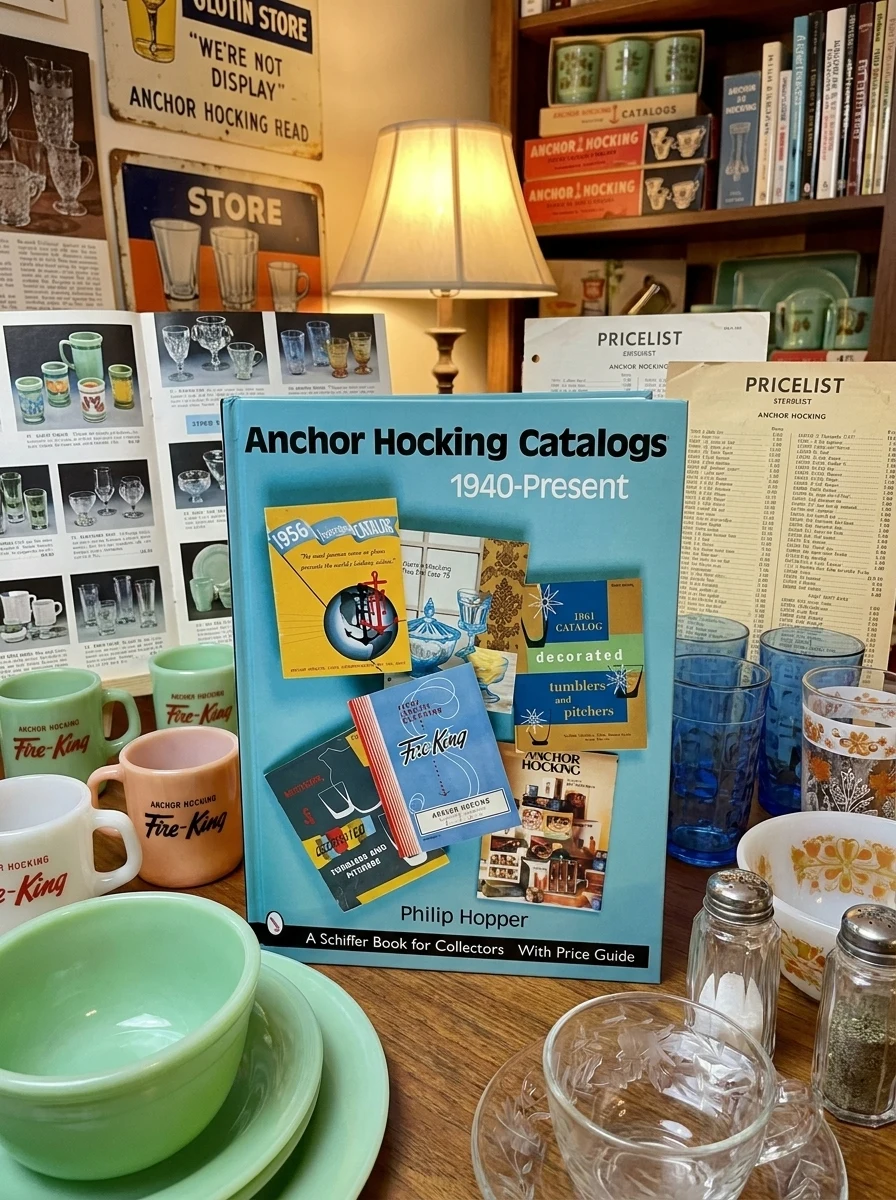

Anchor Hocking Catalogs, 1940-Present Hopper, Philip L
This edition can be ordered. No arrival date is confirmed.
A vibrant archive of mid-century American glassware, capturing the evolution of domestic design through corporate catalogs.
Philip L. Hopper curates a comprehensive visual history of Anchor Hocking’s enduring legacy, spanning from 1940 to the present day. This volume transcends mere nostalgia by offering crisp photography of original advertisements, store displays, and pricelists. Readers will explore diverse product lines including dinnerware, punch sets, and etched glass, supported by detailed identification guides. With valuable collector resources and an index of current market values, this book serves as both an aesthetic journey and a practical reference for understanding the commercial and artistic trajectory of American glassmaking.
This volume sits at the intersection of mid-century American industrial history and domestic design studies, documenting the commercial evolution of everyday household objects through corporate archives. It reflects a broader cultural shift toward appreciating the aesthetic and artistic trajectory of mass-produced goods in post-war America.


📝 Description: Anchor Hocking Catalogs, 1940-Present Hopper, Philip L
💎 Expert review
📖 Why choose it
Why this book is worth reading
This book is an essential resource for collectors and design enthusiasts who wish to understand the artistic and commercial legacy of Anchor Hocking. It offers more than nostalgia by providing crisp photography of original advertisements, store displays, and pricelists that reveal the evolution of domestic design. Readers gain access to detailed identification guides for diverse product lines, including dinnerware, punch sets, and etched glass. The inclusion of current market values transforms this aesthetic journey into a practical reference tool. Whether you are hunting for specific pieces or simply appreciating mid-century American craftsmanship, this comprehensive visual history provides the context and clarity needed to navigate the world of vintage glassware with confidence and appreciation.
⭐ Reader reviews
Reader rating
Was skeptical at first. I found myself reading passages aloud just to sit with them. Will be gifting a copy to a friend.
Hopper curates a vibrant archive that serves as both an aesthetic journey and a practical reference for understanding American glassmaking. The clear photography and detailed identification guides make it invaluable for serious collectors seeking to authenticate pieces or understand market trends. However, readers expecting deep sociological analysis or technical manufacturing processes will find this work lacking in depth. It is primarily a visual catalog rather than a scholarly text on industrial history. Those uninterested in mid-century design or vintage collecting may find the focus too narrow and commercial. It is best suited for those already invested in the hobby who need a reliable, visually engaging companion to their collection.
❓ Frequently asked questions
📖 Who should read this
Dedicated to serious collectors of mid-century modern glassware, interior design historians, and anyone fascinated by the intersection of corporate history and everyday aesthetics. It is essential for those seeking accurate valuation data and provenance research tools.
🎯 Key themes and symbolism
Commercial Design Evolution
The book traces how corporate marketing strategies influenced aesthetic trends, showing how utilitarian glassware was marketed as stylish home decor. It highlights the shift from functional necessity to fashionable lifestyle accessory through changing graphic design and photography styles.
Collector Identification Guide
Beyond images, the text provides essential technical details for authentication. It explains how to read catalog codes, identify manufacturing eras, and distinguish between similar patterns, offering a crucial framework for novices and experts navigating the secondary market.
Mid-Century Domestic Culture
The catalogs reflect broader societal shifts in American household management. The selection of items reveals changing notions of hospitality, wealth, and modern living, positioning glassware as a central element in the post-war domestic ideal and everyday ritual.
💬 Quotes from the book
“The crisp clarity of these catalog pages reveals a time when glass was not just a vessel, but a statement of modern domesticity.”
“From punch sets to salt shakers, each item tells a story of industrial innovation meeting consumer desire.”
📜 Historical context
📚 Glossary
- Etched Glassware
- Pricelist
- Provenance
📔 Questions to reflect on
- How did the advertising imagery in these catalogs shape your perception of 'home' during the mid-20th century?
- What patterns or colors in the collection resonate with your personal aesthetic, and why?
- How might the shift from utilitarian to decorative glassware reflect broader changes in American family life?
🏛 Books from this publisher Schiffer Publishing
All books from this publisher →
 89
89







You might also like
See more → 91
91
 91
91
 91
91
 91
91