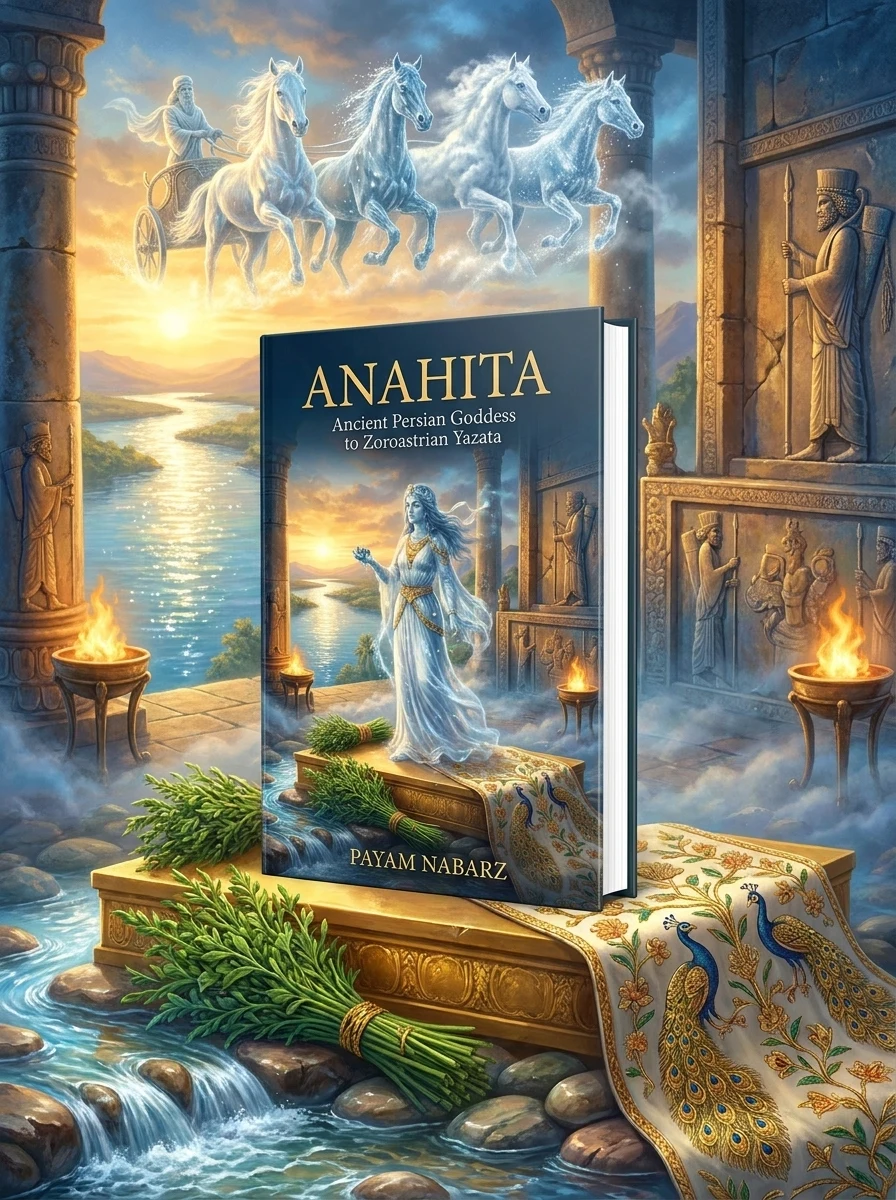


Anahita: Ancient Persian Goddess and Zoroastrian Yazata
Nabarz, Payam

Stock reported in the catalog; fulfillment is confirmed with your request.
Unveil the ancient mysteries of Anahita, the Persian goddess of pure waters and sovereign power.
This compelling volume delves into the profound journey of Anahita, an ancient Indo-Iranian goddess who transitioned into a revered Zoroastrian Yazata, or angel. Celebrated for her striking beauty, strength, and impeccable purity, she is often depicted in a gold-embroidered mantle, holding the sacred baresma. As the divine embodiment of all earthly waters, her full title, Aredvi Sura Anahita, signifies her moist, mighty, and immaculate nature. The text also explores her crucial association with royal authority and her intriguing parallels to other prominent ancient goddesses like Aphrodite, Ishtar, and Isis.
This volume situates itself within the rich tapestry of ancient Indo-Iranian and Zoroastrian religious history, exploring the evolution of divine figures from earlier mythological traditions into structured angelic hierarchies.


📝 Description: Anahita: Ancient Persian Goddess and Zoroastrian Yazata
💎 Expert review
📖 Why choose it
Why this book is worth reading
Readers fascinated by the intersection of mythology, theology, and royal symbolism will find this book a compelling guide. It offers a deep dive into Anahita’s multifaceted identity as both a natural force and a sovereign patron. Those interested in how ancient Persian spirituality influenced broader Indo-Iranian cultures will appreciate the detailed examination of her attributes, such as purity and strength. The text also serves those curious about comparative mythology, highlighting fascinating parallels between Anahita and other major goddesses like Ishtar and Isis. It is ideal for scholars and enthusiasts seeking to understand the nuances of Yazata worship and the enduring legacy of water deities in ancient history.
⭐ Reader reviews
Reader rating
This book provides a focused exploration of Anahita’s transition from an Indo-Iranian goddess to a Zoroastrian Yazata, emphasizing her role in royal authority and her physical depictions. While it offers valuable insights into her purity and connection to waters, the narrative is strictly descriptive rather than analytical. It may not suit readers seeking extensive archaeological evidence or those uninterested in Zoroastrian angelology. Additionally, individuals looking for a broad overview of all Persian deities might find the specific focus on Anahita too narrow. However, for those specifically invested in the theological evolution of this particular deity, it remains a solid, if specialized, resource.
❓ Frequently asked questions
📖 Who should read this
If you are drawn to the mystique of ancient goddesses, the rich tapestry of Persian mythology, or seeking to understand the divine feminine's enduring power across cultures, this book offers profound insights into one of antiquity's most captivating figures. A must-read for scholars and spiritual seekers alike.
🎯 Key themes and symbolism
Divine Evolution & Adaptation
Explore Anahita's fascinating transformation from a powerful Indo-Iranian goddess to an integral Yazata within the Zoroastrian pantheon. The book meticulously traces how her ancient attributes and veneration persisted and adapted within a monotheistic framework, showcasing the resilience of archetypal feminine power across shifting religious landscapes.
Sacred Waters & Sovereignty
Delve into Anahita's profound dominion over all earthly waters, from springs to oceans, and her intrinsic connection to purity and fertility. Beyond her aquatic essence, discover her vital role in the investiture of kings, highlighting her status as a goddess of sovereignty whose favor was essential for legitimate rule and societal well-being.
Cross-Cultural Goddess Parallels
Uncover the striking similarities between Anahita and other revered ancient goddesses across various cultures. This book draws insightful comparisons to figures like the Persian Aphrodite, Ishtar of Mesopotamia, the Roman Venus, and the Egyptian Isis, revealing universal archetypes of divine femininity that transcend geographical and temporal boundaries.
💬 Quotes from the book
“Her chariot, drawn by the elemental forces of wind, rain, cloud, and sleet, is a testament to her untamed power over the very fabric of existence.”
“Clad in a mantle of golden embroidery, she stands as a beacon of strength and unblemished purity, a divine archetype of feminine grace and authority.”
📜 Historical context
📚 Glossary
- Anahita
- Yazata
- Baresma
📔 Questions to reflect on
- Reflect on the concept of a 'goddess of all waters.' How does Anahita's dominion over water resonate with your own understanding of purity, fertility, or life force?
- Consider Anahita's role in the investiture of kings. What does this connection between a divine feminine figure and earthly sovereignty suggest about power and leadership in ancient Persian culture?
- Explore the parallels between Anahita and other goddesses like Ishtar or Isis. What universal aspects of the divine feminine do these shared characteristics reveal across different mythologies?
✍️ More books by this author Nabarz, Payam
All books by this author →
🏛 Books from this publisher Avalonia
All books from this publisher →






You might also like
See more →