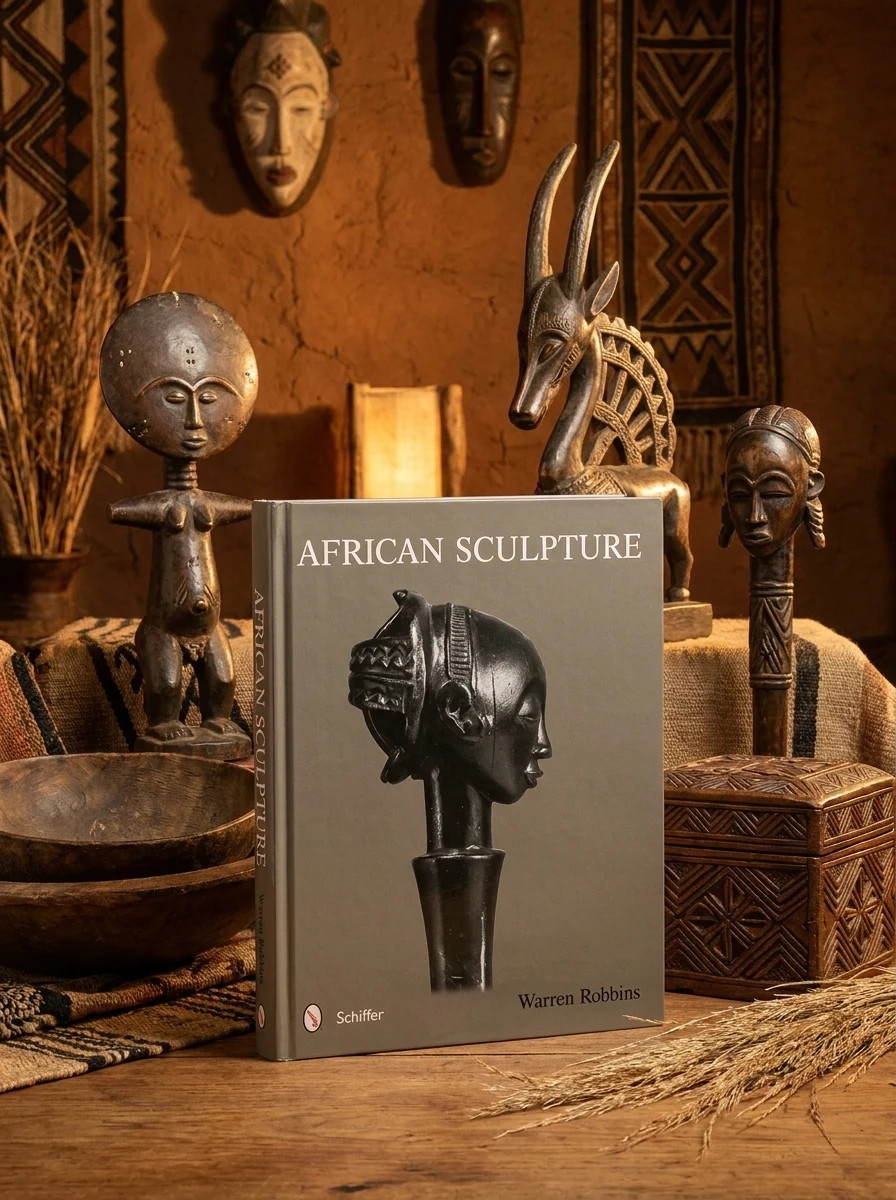


African Sculpture
This edition can be ordered. No arrival date is confirmed.
Explore the classical dignity of African tribal sculpture through 347 evocative photographic works.
Warren Robbins offers a sweeping visual survey of African tribal sculpture, spanning from Senegal to the Congo and Mali to Sierra Leone. This volume features 347 images, including Ashanti fertility dolls, Bambara headpieces, and Bakuba boxes. Robbins challenges the 'primitive' label, framing these pieces as classical art with refined stylistic nuances. The bilingual text and captions provide deep insight into the expressive power and diversity of these heritages, urging preservation of a monumental cultural legacy.
This volume bridges the gap between anthropological documentation and art criticism, positioning African tribal sculpture within the canon of classical art rather than treating it merely as ethnographic artifact. It contributes to the ongoing scholarly effort to reframe non-Western artistic traditions through a lens of refined stylistic nuance and dignity.


📝 Description: African Sculpture
💎 Expert review
📖 Why choose it
Why this book is worth reading
Readers with a deep appreciation for visual aesthetics and cultural heritage will find immense value in this sweeping survey. Warren Robbins invites you to look beyond the simplistic 'primitive' label, offering instead a profound understanding of the classical dignity inherent in works from Senegal to Sierra Leone. The 347 evocative photographs serve as a testament to the expressive power of Ashanti fertility dolls and Bambara headpieces alike. If you seek to preserve and honor a monumental cultural legacy while recognizing the refined stylistic nuances of these heritages, this bilingual volume provides the essential visual and textual context for that journey.
⭐ Reader reviews
Reader rating
Added this to my reference shelf. Solid binding, decent paper — holds up to heavy use. One of my better finds this year.
First purchase from this shop. It connects ideas I'd only seen treated separately elsewhere. You can tell why this work has endured. Deserves a place on any esoteric bookshelf.
Arrived faster than expected and well packaged. Some sections stopped me cold in the best way.
Was skeptical at first. The material is presented clearly and the structure makes it easy to revisit key passages. Not a light read, but far more accessible than I feared.
Robbins delivers a compelling visual argument for the status of African sculpture as high art, supported by extensive photography from diverse regions like Mali and the Congo. However, readers seeking dense theoretical frameworks or historical timelines may find the focus primarily on visual appreciation and stylistic analysis insufficient. This book is not for those who prefer textual-heavy academic discourse over photographic immersion. It is best suited for visual learners and art enthusiasts who value the immediate impact of imagery alongside concise captions that highlight the diversity and expressive power of these traditional forms.
❓ Frequently asked questions
📖 Who should read this
Art historians, anthropologists, and collectors seeking a scholarly yet accessible overview of African aesthetics. Those interested in challenging Western art paradigms will find this study of tribal craftsmanship profoundly illuminating.
🎯 Key themes and symbolism
Classical Artistic Merit
Robbins rejects the colonial 'primitive' classification, instead positioning these works within the canon of classical art. He analyzes the sophisticated stylistic refinements and technical mastery present in various tribal traditions, demonstrating their enduring aesthetic value and intellectual depth.
Cross-Cultural Dialogue
The text bridges the gap between African and Western civilizations, offering a dual perspective on interpretation. By presenting the works through both lenses, the book fosters a nuanced understanding that honors the source culture while engaging Western art historical frameworks.
Preservation and Legacy
A central argument is the urgent need to preserve these artifacts for posterity. Robbins emphasizes the sheer evocative power and diversity of the collection, framing the safeguarding of these objects as a critical duty to maintain one of humanity's greatest artistic heritages.
💬 Quotes from the book
“The works are classical rather than primitive art.”
“View the diversity, expressive quality, and sheer evocative power.”
📜 Historical context
📚 Glossary
- Ashanti Fertility Dolls
- Bambara Headpieces
- Bakuba Boxes
📔 Questions to reflect on
- How does viewing these sculptures as 'classical' rather than 'primitive' change your perception of their artistic value?
- Which stylistic refinement in the images resonates most with your understanding of traditional craftsmanship?
- In what ways does the cross-cultural perspective offered in the text deepen your appreciation of the subject matter?
🏛 Books from this publisher Schiffer Publishing
All books from this publisher →
 89
89





You might also like
See more →
 91
91
 91
91

 91
91
 91
91
 91
91