
US shipping Secure card payment Occult and esoteric books

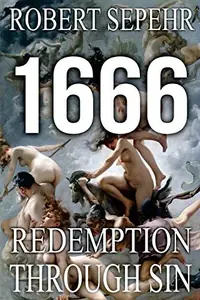
1666 Redemption Through Sin: Global Conspiracy in History, Religion, Politics and Finance

Sepehr, Robert
Reader rating
4.5
(1 reviews) 160 sold
In stock

Stock reported in the catalog; fulfillment is confirmed with your request.

📚 ABOUT THE BOOK

Uncover the shocking 17th-century messiah who preached salvation through transgression.

Step into the astonishing world of Sabbatai Zevi, the enigmatic figure who proclaimed himself Messiah in 1666. This compelling work details how Zevi amassed over a million fervent followers by advocating a radical doctrine: that spiritual redemption could be achieved through acts of sin. It charts the widespread abandonment of traditional religious observances, replaced by audacious practices like ritualistic feasting and sexual promiscuity. The narrative extends to Jacob Frank, Zevi's successor, who further expanded this occult philosophy, cementing its controversial legacy and profound, yet often hidden, historical impact.

Key themes
Antinomian Messianism Hidden Historical Influence Transgressive Spirituality
Historical context

This text explores the radical Sabbatean movement of the 17th century, focusing on the theological inversion where transgression became a path to holiness. It situates itself within esoteric history by examining how religious dissent influenced broader political and financial conspiracies.


Difficulty
●● Moderate
Fans will love it
H.P. Blavatsky · Gershom Scholem · Carl Jung
📜 Esoteric History
🏛 Atlantean Gardens 📅 2015 📖 80 pages 🌐 en 📐 Paperback ISBN: 9781943494019
Fun fact
This book fearlessly unearths one of history's most unsettling and often-ignored spiritual currents, offering a compelling narrative of radical messianic claims and antinomian practices. It's an essential read for anyone intrigued by the darker, more subversive aspects of religious history and how profound esoteric movements can shape human events. While it masterfully illuminates a complex subject, readers seeking a purely objective, dispassionate academic tone might find its evocative style challenging. It stands as a vital and provocative contribution to the study of religious heresy and hidden global influences.

📝 Description: 1666 Redemption Through Sin: Global Conspiracy in History, Religion, Politics and Finance

Most people have heard of Jesus Christ, considered the Messiah by Christians, and who lived 2000 years ago. But very few have ever heard of Sabbatai Zevi, who declared himself the Messiah in 1666. By proclaiming redemption was available through acts of sin, he amassed a following of over one million passionate believers, about half the world's Jewish population during the 17th century. Although many Rabbis at the time considered him a heretic, his fame extended far and wide. Sabbatai's adherents planned to abolish many ritualistic observances, because, according to the Talmud, holy obligations would no longer apply in the Messianic time. Fasting days became days of feasting and rejoicing. Sabbateans encouraged and practiced sexual promiscuity, adultery, incest and religious orgies. After Sabbati Zevi's death in 1676, his Kabbalist successor, Jacob Frank, expanded upon and continued his occult philosophy. Frankism, a religious movement of the 18th and 19th centuries, centered on his leadership, and his claim to be the reincarnation of the Messiah Sabbatai Zevi. He, like Zevi, would perform "strange acts" that violated traditional religious taboos, such as eating fats forbidden by Jewish dietary laws, ritual sacrifice, and promoting orgies and sexual immorality. He often slept with his followers, as well as his own daughter, while preaching a doctrine that the best way to imitate God was to cross every boundary, transgress every taboo, and mix the sacred with the profane. Hebrew University of Jerusalem Professor Gershom Scholem called Jacob Frank, "one of the most frightening phenomena in the whole of Jewish history". Jacob Frank would eventually enter into an alliance formed by Adam Weishaupt and Meyer Amshel Rothschild called the Order of the Illuminati. The objectives of this organization was to undermine the world's religions and power structures, in an effort to usher in a utopian era of global communism, which they would covertly rule by their hidden hand: the New World Order. Using secret societies, such as the Freemasons, their agenda has played itself out over the centuries, staying true to the script. The Illuminati handle opposition by a near total control of the world's media, academic opinion leaders, politicians and financiers. Still considered nothing more than theory to many, more and more people wake up each day to the possibility that this is not just a theory, but a terrifying Satanic conspiracy.

💎 Expert review

💎
Esoterica Books editorial team
Occult literature desk
This title presents a bold exploration of Sabbatean theology, linking religious dissent to broader historical conspiracies. While the subject matter is undeniably provocative for enthusiasts of occult history, it may not suit readers seeking orthodox religious scholarship or those uncomfortable with narratives involving sexual promiscuity as spiritual practice. The text assumes a familiarity with complex theological inversions and does not shy away from controversial claims about global influence. It is best appreciated by those already invested in the study of heretical movements and their enduring legacy in finance and politics, rather than casual observers of religious history.
✓ EDITOR'S REVIEW

📖 Why choose it

📖

Why this book is worth reading

Readers fascinated by the shadowy intersections of faith, power, and hidden history will find this volume deeply engaging. It offers a compelling narrative for those interested in how radical theological ideas can reshape societal structures. If you are drawn to the mysteries of messianic movements and the psychological allure of forbidden doctrines, this book provides a unique lens. It is ideal for scholars of esoteric traditions who wish to understand the lasting impact of Sabbatai Zevi and Jacob Frank on global conspiracy theories. This work appeals to anyone seeking to uncover the hidden currents that have shaped religious and political landscapes through audacious spiritual transgressions.

⭐ Reader reviews

The starting rating comes from the team Esoterica Books —
⭐ Esoterica editorial review Editorial rating 4.5/5
★★★★
This book is for those who dare to explore the darker, more unconventional corners of spiritual history. If you're fascinated by hidden religious movements, the allure of radical messianic figures, and how deep-seated beliefs can be turned on their head, prepare for a provocative journey.

Reader rating

4.5
Based on 1 reviews
5
0
4
1
3
0
2
0
1
0
E
Esoterica Books editorial team

This title presents a bold exploration of Sabbatean theology, linking religious dissent to broader historical conspiracies. While the subject matter is undeniably provocative for enthusiasts of occult history, it may not suit readers seeking orthodox religious scholarship or those uncomfortable with narratives involving sexual promiscuity as spiritual practice. The text assumes a familiarity with complex theological inversions and does not shy away from controversial claims about global influence. It is best appreciated by those already invested in the study of heretical movements and their enduring legacy in finance and politics, rather than casual observers of religious history.

❓ Frequently asked questions

Sabbatai Zevi was a 17th-century Kabbalist who declared himself the Jewish Messiah in 1666, gaining a massive following across the world despite his controversial teachings on 'redemption through sin'.
It's the radical theological concept, central to Sabbateanism and Frankism, that by deliberately engaging in acts traditionally considered sinful or forbidden, one could paradoxically hasten salvation or achieve a higher spiritual state, essentially overturning conventional moral law.

📖 Who should read this

This book is for those who dare to explore the darker, more unconventional corners of spiritual history. If you're fascinated by hidden religious movements, the allure of radical messianic figures, and how deep-seated beliefs can be turned on their head, prepare for a provocative journey.

🎯 Key themes and symbolism

Antinomian Messianism

Explore the audacious claim of Sabbatai Zevi, who inverted traditional piety by asserting that sin itself could be a pathway to divine redemption. This concept fundamentally challenged established religious law, leading his followers to deliberately transgress sacred prohibitions in pursuit of a perceived higher spiritual state or to hasten the messianic era.

Hidden Historical Influence

Uncover how Zevi's movement, despite its controversial nature, captivated a significant portion of the Jewish world and persisted through figures like Jacob Frank. This book delves into the subtle yet profound ways these antinomian currents flowed beneath the surface of history, impacting subsequent esoteric traditions and political movements, often unseen by mainstream narratives.

Transgressive Spirituality

Delve into the shocking practices embraced by Sabbateans and Frankists, which included the deliberate violation of religious taboos such as abandoning fasts, engaging in sexual promiscuity, adultery, and ritualistic orgies. These 'strange acts' were not mere hedonism but were understood by adherents as vital, sacred expressions of their unique path to spiritual liberation.

💬 Quotes from the book

“The very fabric of piety was rent asunder, as followers embraced acts deemed anathema, believing salvation lay precisely in their forbidden embrace.”

“A million souls, adrift in a world yearning for redemption, found in Zevi's radical doctrine not heresy, but the true path to a new, unbound age.”

📜 Historical context

Sabbatai Zevi's emergence in 1666 was a seismic event within Jewish mysticism, particularly Kabbalah, during a period rife with messianic fervor following centuries of persecution. His antinomian doctrine, later propagated by Jacob Frank, represents a radical departure from traditional religious observance, standing as a pivotal, often suppressed, chapter in the history of religious subversion and esoteric thought.

📚 Glossary

Sabbateanism
Antinomianism
Frankism

📔 Questions to reflect on

  1. How might a belief system that advocates 'redemption through sin' emerge, and what societal conditions could foster its growth?
  2. Reflect on historical instances where individuals or groups deliberately broke religious or moral laws in pursuit of spiritual or political goals. What were the outcomes?
  3. Consider the psychological allure of a charismatic figure promising ultimate freedom by overturning established norms. What makes such figures so compelling?

You might also like

See more →