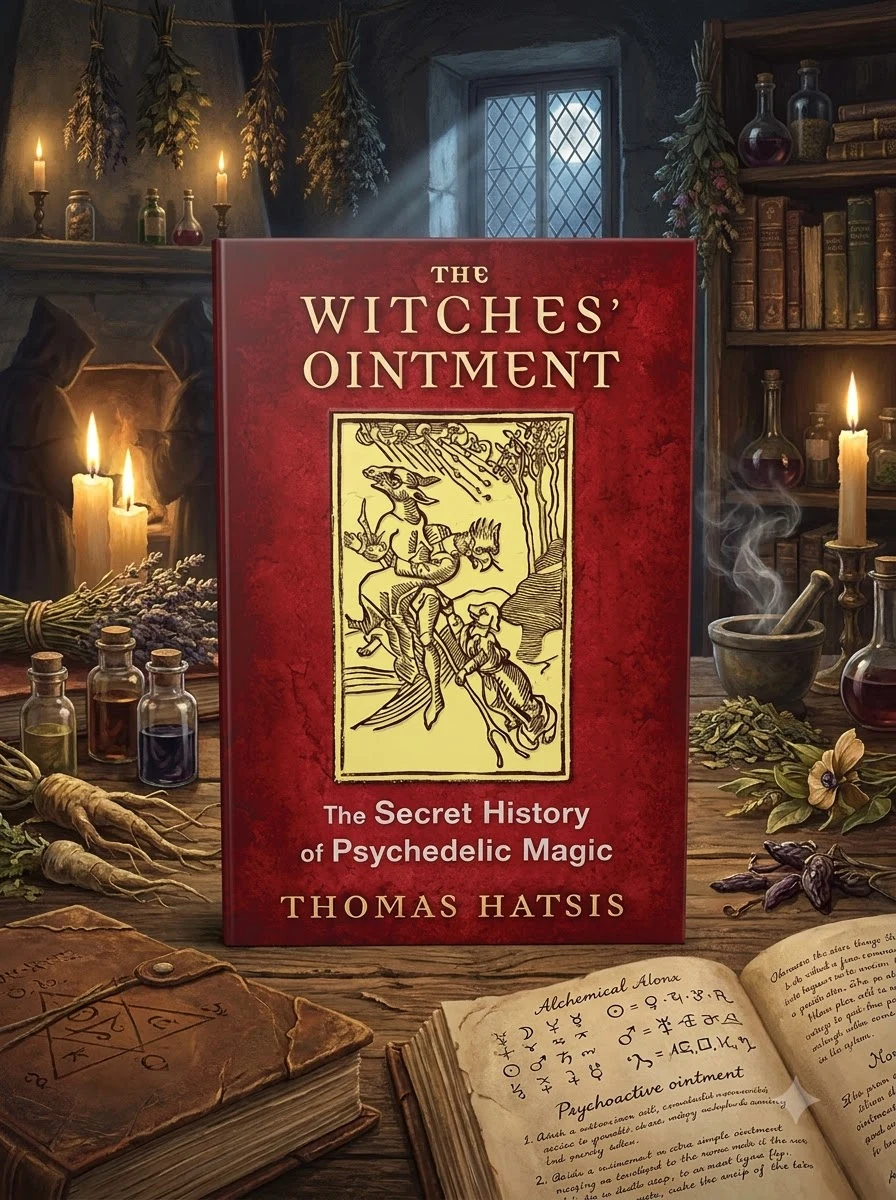
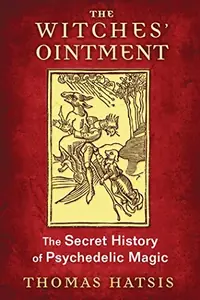
The Witches' Ointment: The Secret History of Psychedelic Magic


This edition can be ordered. No arrival date is confirmed.
Unearth the forbidden history of witches' flight and visionary trance.
Thomas Hatsis meticulously re-examines the infamous 'witches' ointment,' revealing its true origins not as a tool of malevolent sorcery, but as a sophisticated vehicle for psychedelic experience. Drawing from obscure medieval manuscripts, this groundbreaking work uncovers the alchemical and botanical secrets behind these preparations. It challenges centuries of demonization, presenting these 'poisonous' unguents as early entheogens, used by folk healers and mystics to commune with the divine and induce profound altered states, rather than attending imagined Sabbats with Satan. This book offers a radical reinterpretation of European magical history.
This work sits at the intersection of esoteric history and ethnomycology, challenging traditional demonological narratives surrounding European witchcraft by reframing them through the lens of psychedelic pharmacology.


📝 Description: The Witches' Ointment: The Secret History of Psychedelic Magic
💎 Expert review
📖 Why choose it
Why this book is worth reading
Readers fascinated by the hidden botanical and alchemical roots of European magic will find profound value in this radical reinterpretation. Thomas Hatsis offers a compelling alternative to centuries of demonization, presenting witches' ointments not as tools of evil, but as sophisticated entheogens used by mystics for divine communion. This book is ideal for those seeking to understand the true origins of visionary trance and folk healing practices beyond the surface-level myths of Satanism. It appeals to scholars and enthusiasts alike who wish to unearth the secret history of psychedelic magic, providing a nuanced view of how early practitioners utilized these preparations to access altered states of consciousness and spiritual insight.
⭐ Reader reviews
Reader rating
Hatsis delivers a meticulous re-examination of infamous historical texts, offering a scholarly yet accessible argument for the entheogenic nature of witches' ointments. While the botanical and manuscript analysis is rigorous and enlightening, this volume may not suit readers seeking straightforward historical chronicles or those strictly adhering to traditional Christian demonological frameworks. It is best appreciated by those open to challenging established narratives about European magical history. The work succeeds in presenting a radical reinterpretation that respects the complexity of medieval manuscripts without resorting to sensationalism. However, readers expecting simple answers or purely fictional accounts may find the academic depth and controversial thesis demanding.
❓ Frequently asked questions
📖 Who should read this
If you are fascinated by the hidden histories of witchcraft, the intersection of altered states and spirituality, or the demonization of indigenous European folk practices, this book offers a compelling and thoroughly researched re-evaluation that will challenge your preconceptions.
🎯 Key themes and symbolism
Reclaiming Folk Magic
This book thoroughly recontextualizes medieval veneficium, or 'poison magic,' not as inherently evil, but as a diverse practice encompassing healing, prophecy, and spiritual exploration through herbal means. It argues that what the Church later condemned as witchcraft was often a sophisticated system of ethnobotanical knowledge and altered-state rituals, deeply rooted in local traditions.
Psychoactive Formulations Revealed
Hatsis painstakingly reconstructs and shares numerous ancient psychoactive recipes. Sourced from rare, historical documents, these formulations detail the potent herbal mixtures and the ritualistic methods for their preparation and application. The text explores how these unguents, when applied topically, were designed to induce powerful hallucinatory states and surrealistic dreams, facilitating direct spiritual encounters.
Medieval Practitioners' World
The author shines a light on the lives and practices of medieval figures like Matteuccia di Francisco, a woman condemned for witchcraft. By examining her methods, the book illustrates how such individuals utilized hallucinogenic substances in their herbal preparations and love potions. It offers a human perspective on those who engaged with these potent botanical compounds for various magical and healing purposes.
💬 Quotes from the book
“The supposed 'flight' of the witch was less a physical journey to a demonic gathering and more an internal voyage, guided by potent botanical allies that opened portals to the unseen.”
“Unearthing the alchemical grammar of these ancient unguents demands not only botanical insight but also a deep understanding of the cultural anxieties and spiritual longings that shaped their use.”
📜 Historical context
📚 Glossary
- Veneficium
- Entheogen
- Sabbat
📔 Questions to reflect on
- How might our understanding of historical spiritual practices change if we consistently consider the role of altered states of consciousness?
- Reflect on how dominant narratives (e.g., religious institutions) can demonize and distort alternative spiritual or healing practices. Can you identify modern parallels?
- Consider the ethical implications of researching and publishing historical recipes for potent psychoactive substances. What responsibilities do authors and publishers bear?
🏛 Books from this publisher Park Street Press
All books from this publisher →





You might also like
See more →